
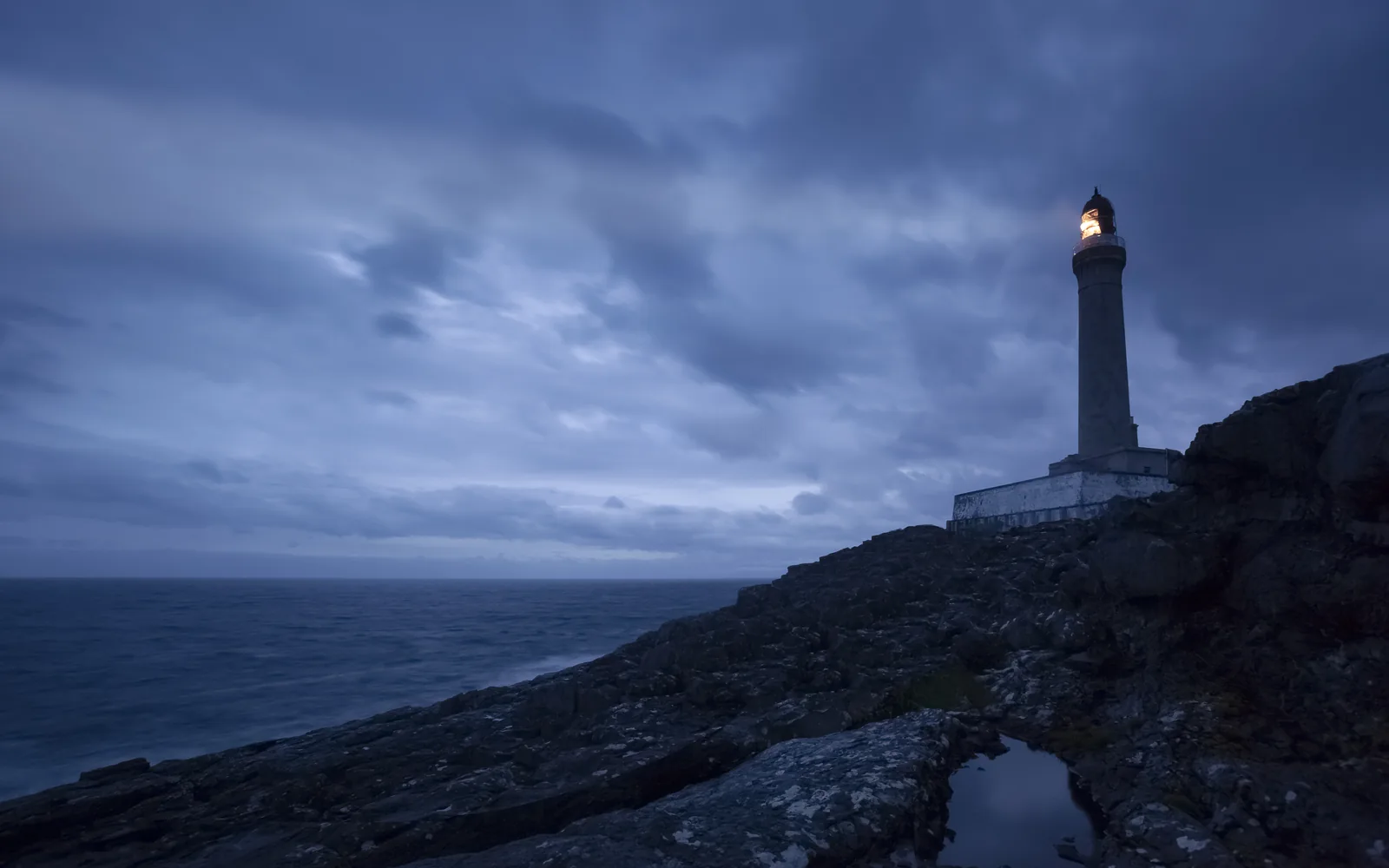
Long Island is 118 miles of sand and moraine pointed directly at the busiest harbor approach in the Western Hemisphere, which is another way of saying it is a very long, very low obstacle that ships have been running into for four hundred years. That geography produced roughly twenty lighthouses, from New York Harbor out to Montauk and around the North Fork.
Most of them you can only look at. Five you can actually walk into, and one of those requires a boat. Here is how to visit each of them, and what makes each worth the trip.
Montauk Point Lighthouse
Montauk, at the eastern tip of the South Fork
Start with the one that started everything. The Second Congress authorized the Montauk Point Light on April 12, 1792, under President George Washington. Construction ran from June to November of 1796 to a design by John McComb Jr., the architect who would later work on New York's City Hall. It was New York's first lighthouse and remains the fourth-oldest active lighthouse in the United States.
The original tower stood 80 feet tall and was placed 300 feet back from the edge of the bluff on Turtle Hill, a margin the builders presumably thought was generous. The Atlantic has since taken most of it. The lighthouse now stands roughly 100 feet from the edge, and the entire modern history of the site is a history of holding that line.
The first serious defense was improvised and remarkable: a terracing system devised by Giorgina Reid, a textile designer with no engineering background, who spent years planting and terracing the bluff by hand. The work was completed in 1998 and is credited with saving the lighthouse. A far larger effort followed, a roughly $44 million stone revetment and restoration project carried out between 2021 and August 2023 that also gave the tower a full repainting.
The light was automated on February 3, 1987, and the property was transferred to the Montauk Historical Society in 1996 under legislation signed by President Clinton. It was designated a National Historic Landmark on March 2, 2012. Today the tower stands 110 feet 6 inches, and the society runs it as a museum with a climbable tower, exhibits on Long Island maritime history, and a 360-degree view from the top that is, on a clear day, the reason people drive three hours to get there.
Fire Island Lighthouse
Fire Island National Seashore, near Robert Moses State Park
At 168 feet, Fire Island is the tallest lighthouse on Long Island, and it has the most emotionally loaded history of any of them. For enormous numbers of people crossing the Atlantic toward New York, the Fire Island light was the first evidence of land. Whatever your family's arrival story is, there is a decent chance this tower is in it.
The current structure was completed in 1858, replacing a 74-foot tower built in 1826 that had proven far too short for the job. Its focal plane sits 168 feet above sea level and the light can be seen more than 20 miles out. The distinctive black and white bands, which read as the lighthouse's signature today, were not original. The tower was cream-colored until 1892, when the daymarks were added so it could be identified by sight in daylight.
The climb is 182 steps. Tower tours run daily year-round subject to volunteer availability, at roughly $10 for adults and $5 for seniors, children, veterans and scout groups. On a clear day the Manhattan skyline is visible from the top. Call ahead at 631-583-5901, because the "subject to volunteer availability" part is not boilerplate.
Horton Point Lighthouse
Southold, on the North Fork
Horton Point is the gentlest of the group and the best one to bring children to. It has watched over Long Island Sound since 1857, and it is operated by the Southold Historical Museum with a small nautical museum inside: marine instruments, paintings, documents and local maritime history.
The climb is short, only two floors, which makes it approachable for visitors who would not attempt the long spiral climbs at Montauk or Fire Island. What you get at the top is a view over the Sound with North Fork farmland and vineyards behind you, which is a combination none of the others offer.
It is generally open weekends, roughly 11:30 a.m. to 4 p.m., from Memorial Day weekend through mid-September, at about $5 per adult or $10 per family. Confirm hours before driving out; volunteer-run sites change schedules.
Huntington Harbor Lighthouse
Halesite, reached by boat from Gold Star Battalion Beach
This one sits out in the water, which means the visit itself is part of the experience. The Huntington Lighthouse Preservation Society runs public tours on selected Sundays through the summer, departing by boat from the Town of Huntington's Gold Star Battalion Beach at 324 West Shore Road.
The 2026 season runs on scattered Sundays with departures between 11 a.m. and 3 p.m., including dates in August and September. The outing takes about an hour and fifteen minutes and includes the boat ride, a guided tour, time inside the lighthouse and a climb of the tower. Pricing runs approximately $35 for adults, $30 for seniors 65 and over, and $25 for children 5 to 12. Everything is weather and wind permitting, which on Huntington Bay is not a formality.
The society's signature event is Lighthouse Music Fest, held annually around Labor Day, with bands playing on the lighthouse itself while an audience arrives by boat, kayak and paddleboard. It is plausibly the only music festival in the world staged on top of a working lighthouse in open water, and it is the group's most important fundraiser.
Bug Light (Long Beach Bar Lighthouse)
Off Orient, between Orient Harbor and Gardiners Bay
Bug Light marks the sandbar dividing Orient Harbor from Gardiners Bay, and it is the hardest of the five to reach. There is no road. You see it from the water or you do not see it at all.
The East End Seaport Museum owns and maintains it and runs a limited series of boat trips out from Greenport. Those excursions are the only public access, and they sell out. Bug Light is one of only a handful of offshore lighthouses anywhere in the United States that admits visitors at all, which makes the trip genuinely unusual rather than merely scenic.
Planning a lighthouse run
You cannot do all five in a day, and you should not try. Three sensible groupings:
- North Fork day: Horton Point in Southold, then a Bug Light cruise out of Greenport if the schedule lines up, with wineries and Orient Point in between.
- South Shore day: Fire Island Lighthouse from Robert Moses field 5, an easy walk along the boardwalk, paired with a beach afternoon.
- Montauk day: the drive out is the commitment. Give the lighthouse and its museum real time rather than treating it as a photo stop, then eat in town.
Huntington sits on its own, because it runs on specific Sundays and a boat schedule.
One practical note that applies to all of them: nearly every lighthouse on this list is kept open by a volunteer organization or a small nonprofit. Admission, membership and gift shop purchases are, quite literally, what keeps the doors open and the bluffs from washing away. Long Island's lighthouses have survived hurricanes, automation, federal budget cuts and the Atlantic Ocean. What they have not survived without is people who show up.
Loading comments…