
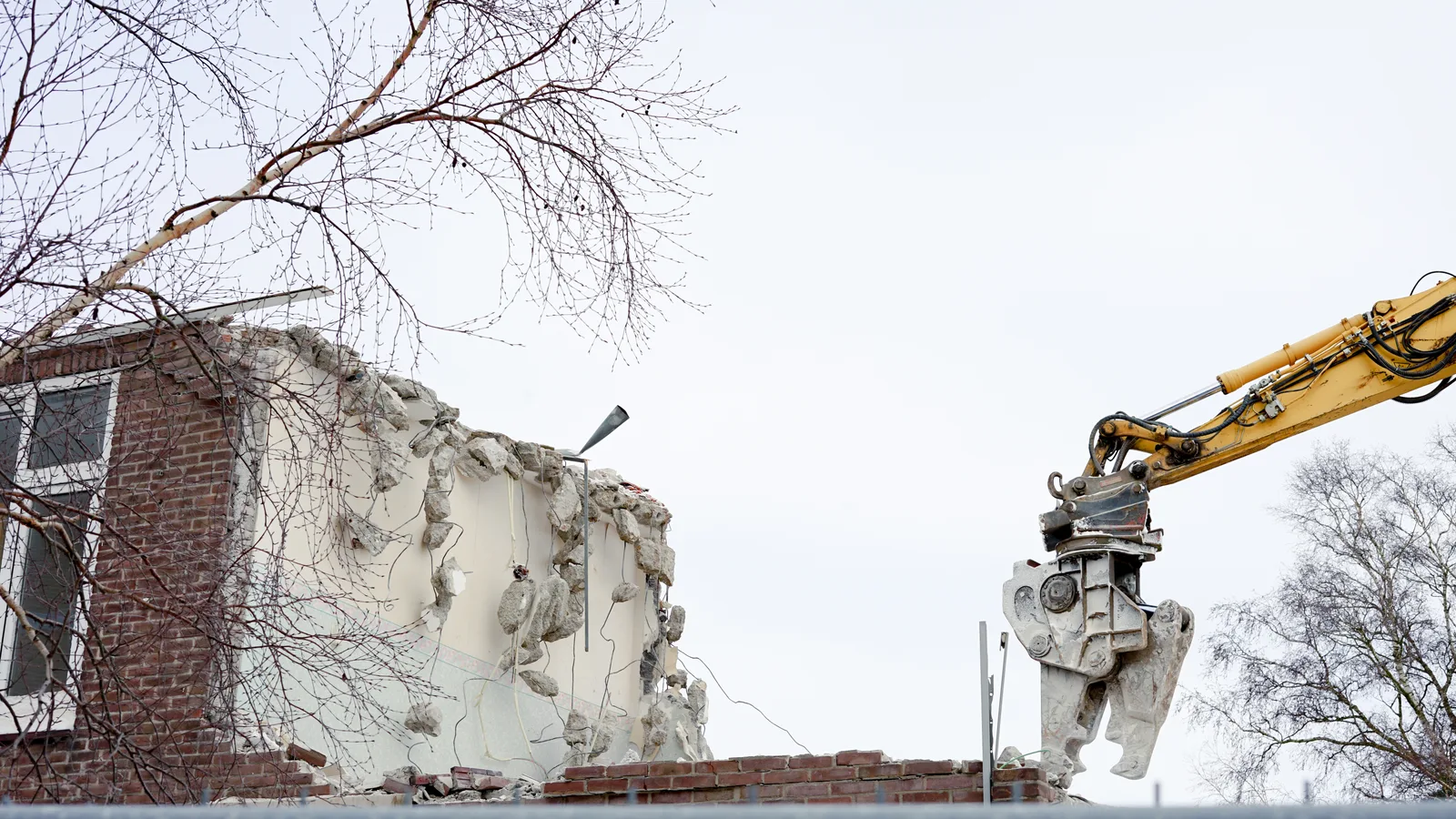
The corner of the old Kings Park Psychiatric Center campus where Building 1 stood for the better part of a century is open ground this weekend. Suffolk County crews brought the building down this past week, and what replaces it is not another building. It is the final piece of plumbing in the sewer system that downtown Smithtown has been waiting on for decades.
The building that outlasted its own hospital
Building 1 went up in the early 1930s near the campus entrance off St. Johnland Road, one of the reception buildings where new patients arrived at what was then one of the largest psychiatric hospitals in the country. The hospital itself opened in 1885 as a Kings County farm colony, back when the thinking was that fresh air and field work could heal what city asylums could not. By the mid 1950s it held more than 9,000 patients across roughly 100 buildings on 800 acres above the Nissequogue River.
The state closed Kings Park Psychiatric Center in 1996, and most of the grounds became Nissequogue River State Park in 2000. But Building 1 kept going. State mental health operations continued using it for adult patient care until 2012, making it the last building on the sprawling campus still doing everyday work, sixteen years after the hospital around it had officially ceased to exist.
Then it joined the rest: fenced, boarded, tagged, and slowly coming apart while the campus settled into its strange second life as a state park threaded between ruins that generations of Long Island teenagers have dared each other into.
Why the county wanted this corner
Suffolk County bought the 17-acre parcel under Building 1 from New York State in September 2022 for $1.7 million, and it was never about the building. The county needed the land for leaching fields, the underground beds where treated wastewater soaks back into the soil after a treatment plant has done its work.
The plant in question is the Kings Park treatment plant, which sits on another piece of the former hospital property. It has been rebuilt and expanded as part of the county sewer district that serves the area, and it is the destination for two downtowns worth of wastewater. The pipes beneath the Kings Park business district went in over the past two years, with the roads repaved behind them. The next and much larger phase is the Smithtown Main Street sewer project, a roughly $101 million effort to finally take the heart of downtown Smithtown off aging cesspools and septic systems.
All of that treated water has to go somewhere, and the answer is the ground where Building 1 stood. County public works officials expect the demolition cleanup and leaching field construction to take about a year.
What sewers actually change on Main Street
If you have ever wondered why downtown Smithtown has never quite matched the restaurant rows of Huntington or Patchogue, the unglamorous answer has always been underground. Without sewers, a Main Street building can only support what its septic system can absorb, and a full-service restaurant kitchen or an apartment floor above a storefront is usually more than it can. Downtowns across Suffolk County that got sewers, Patchogue most famously, saw restaurants, housing and foot traffic follow.
Smithtown's Main Street corridor has been on the wrong side of that line for generations. The sewer project changes the math for every building on the strip: kitchens that can run at full capacity, upper floors that can become apartments, and property owners who can renovate without designing around a cesspool. Kings Park's own downtown, with its pipes already in the ground, is waiting on the same unlock.
The campus keeps changing shape
For Kings Park residents, the demolition is one more chapter in a long goodbye. The state tore down dozens of the campus buildings between 2012 and 2017, but the most famous survivors still stand, including Building 93, the 13-story former infirmary tower that dominates the skyline above the harbor and remains the most photographed abandoned building on Long Island.
The parkland is not going anywhere. The leaching fields will occupy the 17 acres the county bought, and once the work is done the parcel will read as open ground doing quiet work beneath the surface, not as industry. A campus that spent a century taking people in, and three decades after that as a monument to its own emptiness, is starting to do ordinary, useful things for the towns around it.
For anyone who grew up sneaking glances at the ruins from Sunken Meadow Parkway, that is the real story here. The buildings are leaving a few at a time, but what is arriving, a working state park on the water and the infrastructure that lets two downtowns grow, is the version of Kings Park the next generation will take for granted.
Loading comments…