
There is a small group of patients every vascular surgeon dreads seeing on the schedule: the ones who have already used up every option. Their arteries are too diseased for another stent, the angioplasty did not hold, the wound on the foot will not close, and the next conversation is usually about where to amputate. Huntington Hospital just performed its first procedure designed for exactly that moment, and the strangest thing about it is how much of the work belongs to the patient, at home, turning a dial.
A cut in the bone that teaches the leg to grow blood vessels
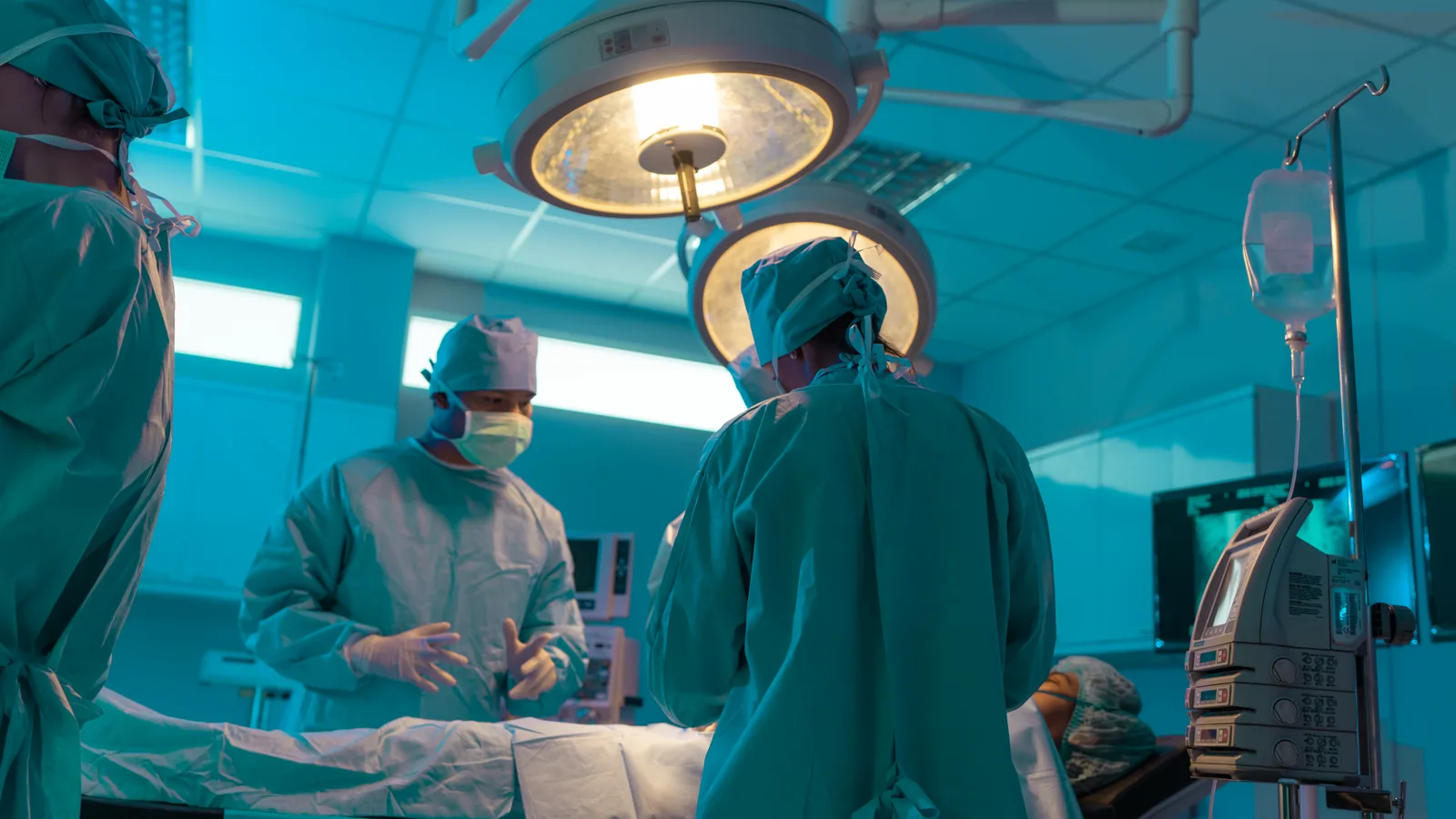
The technique is called transverse tibial transport, and Huntington Hospital announced at the start of September that a team there had performed it for the first time, on a man with severe peripheral vascular disease whose circulation had deteriorated past the point where the usual repairs could help. The operation was done by Dr. Jacqueline Prevete, a surgical podiatrist, working with Dr. Sarrina Shraga, a vascular surgeon.
The mechanics sound almost like carpentry. In an operation lasting about an hour to ninety minutes, guided by live X-ray, the surgeons make a controlled cut in the tibia, the shin bone, and gently lift a segment of its outer cortex. A metal frame is fixed to the leg with pins connected to that freed segment of bone. Then the patient goes home with an assignment: twice a day, turn the dial on the frame, moving the bone segment half a millimeter to a full millimeter per day, every day, for about two months.
That slow, steady pull is the treatment. Bone that is being gradually moved does not just heal; it behaves like bone that is growing, and growing bone demands blood. The body answers by building new vessels and improving circulation in a limb that had essentially stopped being supplied. The version of the hardware used at Huntington, a newer generation device, is built specifically for this use.
Who this is actually for
This is not a treatment anyone will walk in and request on a first visit, and the hospital is direct about that. The candidates are people with critically poor blood flow to the lower legs, very often patients with diabetes or kidney disease or a long smoking history, who have already been through the standard sequence: the angiogram that mapped the blockages, the angioplasty or stent that could not fix them. For that group, the realistic alternatives have historically been managing decline or scheduling an amputation.
Losing a leg below the knee is not a contained event. It reshapes housing, work, driving and independence, and for older patients with vascular disease the years after a major amputation are statistically hard ones. A procedure that gives even some of those patients a route back to a working foot is not an incremental upgrade to care in the area; it is a different category of outcome. Dr. Prevete has described it plainly as a limb salvage procedure for people who may otherwise have no options left.
The realistic version of the promise
The hospital is not claiming a cure. Outcomes depend on how sick the patient is, how advanced the disease was at the start, and on the least glamorous variable in medicine: whether the patient actually turns the dial, twice a day, for two months. The technique has shown promising results in carefully selected cases, which is the honest phrasing of a tool that works when it is matched to the right person rather than a miracle that works on everyone.
What matters for readers on this side of Suffolk is availability. Techniques like this have tended to live at academic centers, which for a Huntington or Northport family means treatment far from home during exactly the two months when someone needs help, rides and daily support. Having it performed at the hospital on Park Avenue puts the whole course of care, from the operating room through the weeks of dial turns and follow-up, inside a community hospital people can reach in minutes.
The first patient is at the beginning of that two-month course now. If the new vessels come in the way the procedure intends, he will have walked into a hospital facing the loss of a leg and walked out with a frame, a dial and a schedule. On Long Island, where diabetes and vascular disease are as common as anywhere in the suburbs, there are more people in that position than most of us guess, and as of this month there is one more door for them that is not the operating room where amputations happen.
Loading comments…