
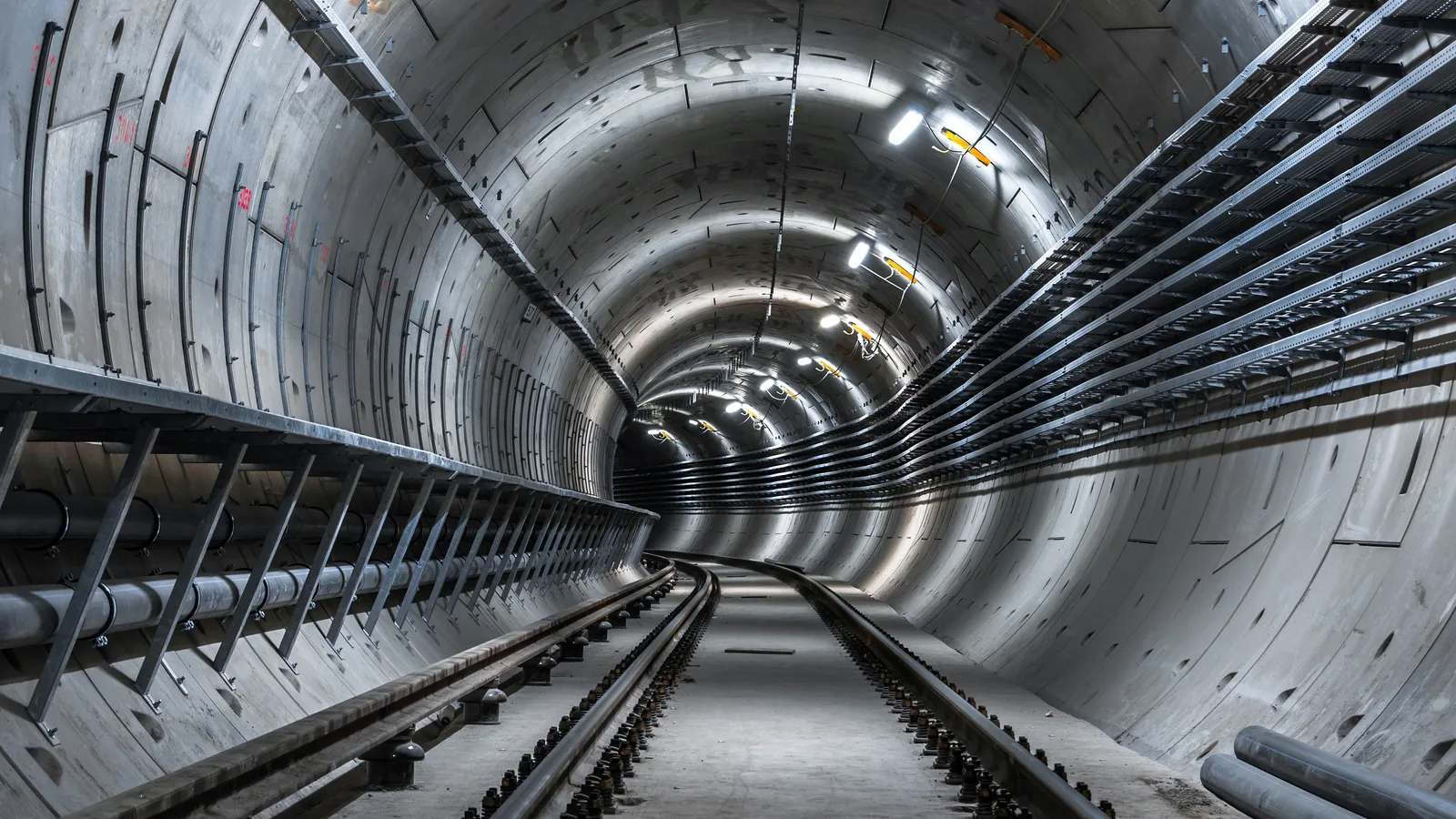
The first of the two East River tunnel tubes that Superstorm Sandy flooded in 2012 is carrying trains again. Amtrak reopened Line 2 on Monday, August 17, closing out a shutdown that began in late May 2025 and marking the halfway point of a $1.6 billion project to rebuild the two damaged tubes end to end. Amtrak planned to mark the reopening with an event at Penn Station and a ceremonial ride through the rebuilt tube Monday afternoon.
If you ride the Long Island Rail Road into Penn Station, this is your tunnel. Every LIRR train that terminates at Penn crosses under the East River through one of four tubes bored more than a century ago, and for the last 15 months the railroad has been squeezing that service through three of them. The fourth is back.
What Sandy did, and why the fix took this long
When Sandy pushed the East River over its banks in October 2012, saltwater poured into Lines 1 and 2 of the four-tube crossing. The water was pumped out in days. The salt stayed. Chlorides soaked into the concrete bench walls and worked on the cables, rails and steel inside them for years, and the tubes, which opened in 1910, became the least reliable link on one of the busiest stretches of railroad in the country.
For a decade Amtrak patched the damage on nights and weekends while keeping the tubes in service. By 2025 the railroad had concluded that patching had reached its limit and took Line 2 out of service entirely, a full closure that started in late May of that year.
What happened next was closer to construction than repair. Crews stripped the tube down to its concrete liner and built it back: new bench walls, new drainage, new track, new power and signal infrastructure, along with related work near the tunnel portals in Long Island City. The job surfaced its own surprises. When workers began mounting overhead power hardware, more than half of the 203 ceiling locations they drilled turned out to have voids behind them, and the anchoring had to be re-engineered before installation could continue. The reopening, originally penciled in for earlier this summer, slipped to August.
What it meant on the platform
The East River tubes are the pinch point for everything east of Penn Station. Amtrak has said the crossing handles more than 450 trains a day, most of them LIRR trains, along with Amtrak intercity service and NJ Transit equipment moves, and the LIRR is by far its heaviest user. Running that traffic through three tubes instead of four left no slack: a signal problem or a disabled train in one tube during the outage rippled across the entire evening rush instead of being routed around.
Long Islanders had one cushion riders did not have when Sandy hit: Grand Central Madison. The East Side terminal, which opened in 2023, gave the LIRR a second Manhattan destination that does not touch the East River tubes at all, and the railroad has leaned on it through the outage.
The breather is short. Line 1 closes this fall
The project is a two-act job, and the second act starts soon. Amtrak plans to take Line 1, the other Sandy-damaged tube, out of service this fall for its own rebuild, an outage planned at roughly 13 months. The full rehabilitation is scheduled to finish in late 2027.
That means the four-tube crossing is whole again only for a matter of weeks. Riders should expect the same arithmetic as the last 15 months, three tubes carrying four tubes worth of traffic, through the end of next year. The difference the second time around is that one of the three will be brand new from the rails up.
What a rider actually gets
Amtrak's case for the full-closure approach is that a tube rebuilt in one continuous effort comes back stronger and faster than one patched over a decade of weekend outages, and Line 2 is now the proof it points to: a 116-year-old tunnel with new track, new power, new drainage and a liner engineered for the next century of storms.
For the daily rider, the payoff is not a ribbon cutting. It is the slow disappearance of a specific kind of morning, the one where a tunnel signal problem at 7 a.m. turns every Penn-bound train on the branch 20 minutes late. The tubes that failed in the rain for a decade are being replaced one at a time by tubes built to shrug the water off. One down, one to go, and for a few weeks this fall, Long Island gets to remember what four working tunnels feel like.
Loading comments…