
On July 16, Amazon filed an application with the Town of Islip to build what would be the largest building Long Island has ever put up for a single company. It is worth being precise about what that filing is, because the number attached to it, $1 billion, has a way of ending the conversation before it starts.
A filing is not an approval. It is the opening of a review that will take a long time and will be argued in public. But it is also the first time the plan exists as a document rather than a rumor, and the document is specific.
What is being proposed
The site is roughly 140 wooded acres in Holbrook, near the Sunrise Highway service road and Beacon Drive, in the Town of Islip. Amazon calls the project Sunrise, a name that has been attached to this land since Indianapolis-based Scannell Properties bought it from the Serota organization in 2021 in a deal reported at about $150 million. Scannell develops industrial and logistics buildings nationally and has built for Amazon elsewhere. The land has sat quiet since.
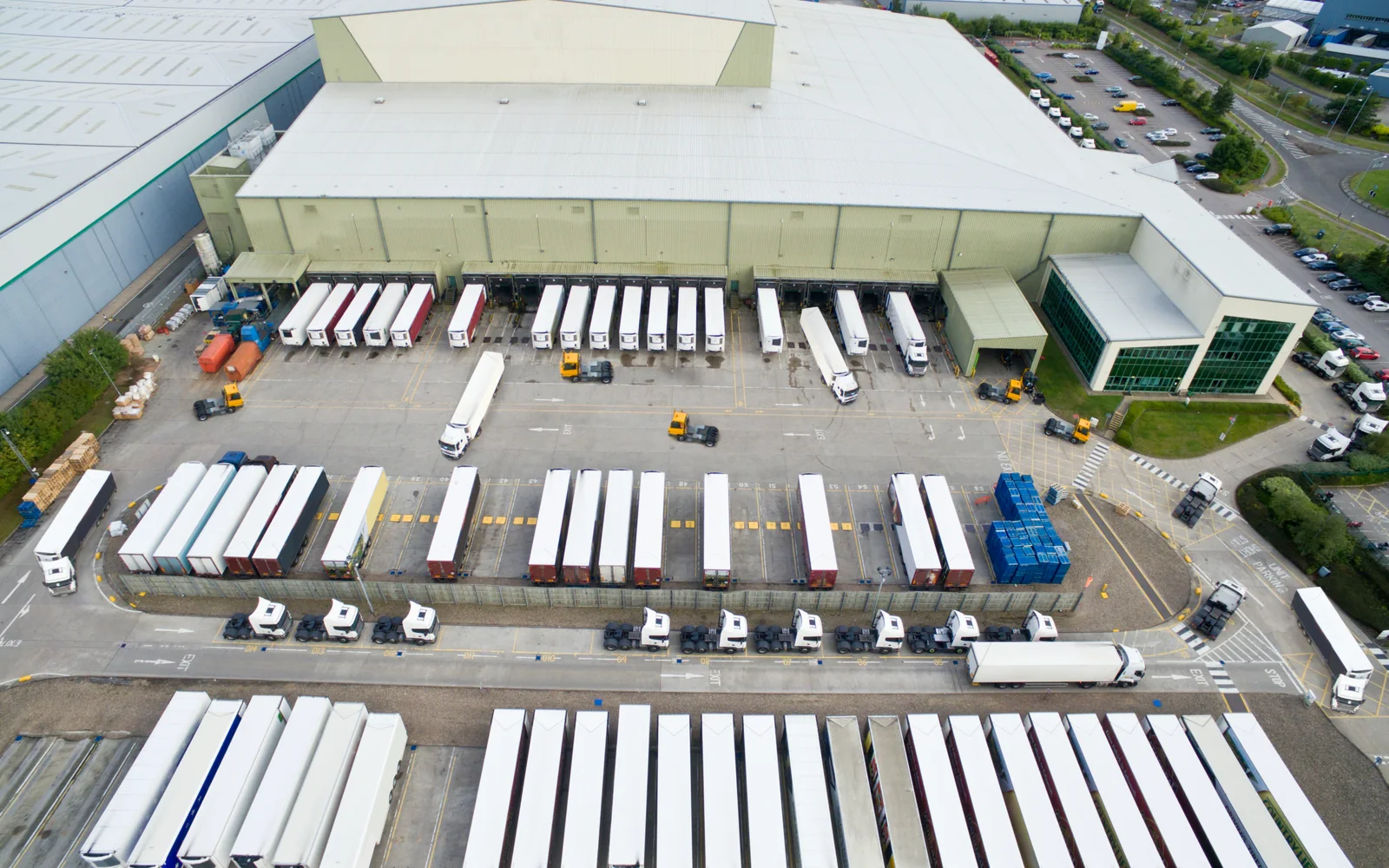
The proposal is two buildings totalling about 4.2 million square feet, operating 24 hours a day, seven days a week.
The larger piece, about 3.7 million square feet, is what the industry calls a sortable fulfillment center. Goods are stored there before anyone buys them. When someone does, the item is picked, packed and sent onward. Ceilings run 76 feet, which is the tell that this is a robotics building rather than a warehouse in the older sense of the word: the height is there so that automated systems can stack inventory far above where a person could reach.
The second building, about 450,000 square feet, is a storehouse where the vehicles of independent delivery contractors collect purchased packages and take them out to customers. An attached wing handles sub-same-day fulfillment, the part of the operation that exists because Amazon has trained a country to expect a package in hours.
Amazon describes the complex as a package origination and fulfillment center serving the Northeast, meaning goods would be processed here before moving out to delivery stations across the region rather than only to Long Island doorsteps.
The jobs
Amazon puts the figure at roughly 1,000 full-time jobs. The company describes a mix: people picking, packing and shipping alongside the robotics, plus robotics engineers, robotics maintenance engineers, and finance and human resources staff.
A thousand jobs is a real number on Long Island, and it is worth setting next to the region's actual employment picture. Private-sector job growth here has been carried almost entirely by health care for years, with most other sectors flat or shrinking. A single facility adding a thousand positions in a non-health-care industry is not a rounding error in that context.
It is also fair to note what the number is not. It is a projection made by the applicant at the point of application, for a building that does not exist, in an industry that has spent a decade automating the work in question. Nobody reviewing this application can hold Amazon to it.
The trucks
Here is the figure that will drive the hearings: about 300 tractor-trailers entering and leaving the site every day, around the clock, plus the delivery-contractor vehicles cycling through the smaller building.
That traffic is the honest cost of the jobs, and it lands on a specific set of roads. Sunrise Highway carries it first. Everything after that is local.
The zoning problem
The land is not currently zoned for this. More than a decade ago it was rezoned away from industrial toward commercial and mixed-use, for a residential community that was never built. So Amazon needs Islip to zone it back to industrial.
That is not a technicality. A zoning change is a legislative act by the Town Board, taken in public, and it is the point in the process where a town gets to say no. Everything else in this review, the traffic studies, the drainage plans, the environmental findings, feeds into that one decision.
What the environmental review will look at
The application goes through the State Environmental Quality Review Act, along with the applicable federal, state, county and local requirements. On a largely wooded 140-acre parcel in central Suffolk, four things dominate that review.
Land clearing, because the trees are the site. Stormwater, because 4.2 million square feet of roof and acres of truck court produce runoff that has to go somewhere. Groundwater, because Long Island drinks from a sole-source aquifer and central Suffolk sits over the recharge area, a subject this region has had ample reason to learn about the hard way. And habitat, because the parcel sits in the part of the Island where pine barrens ecology and industrial zoning have been arguing with each other for forty years.
If it is approved, Amazon estimates construction would take 18 to 24 months.
Why Holbrook, and why now
There is a market answer, and it is not complicated. Long Island has almost no large industrial space left.
CBRE's figures for the second quarter of 2026 put the region's industrial vacancy rate at 7.0 percent, down 70 basis points in three months. Leasing activity reached 905,000 square feet, a 43 percent jump from the previous quarter, and net absorption cleared 800,000 square feet, driven by wholesale, retail, e-commerce and logistics tenants. What that describes is a market where demand keeps arriving and supply does not, because there is very little land here to build a big box on and considerable resistance to using what remains.
A 140-acre parcel already assembled, already owned by an industrial developer, already sitting on a state highway, with a lapsed residential plan and a zoning history that ran the other way inside living memory, is close to the last of its kind in Nassau or Suffolk.
That is the whole argument, on both sides. Amazon is proposing this in Holbrook because there is nowhere else on Long Island left to propose it. Which is also, precisely, why the people who live in Holbrook are going to have something to say.
Loading comments…