
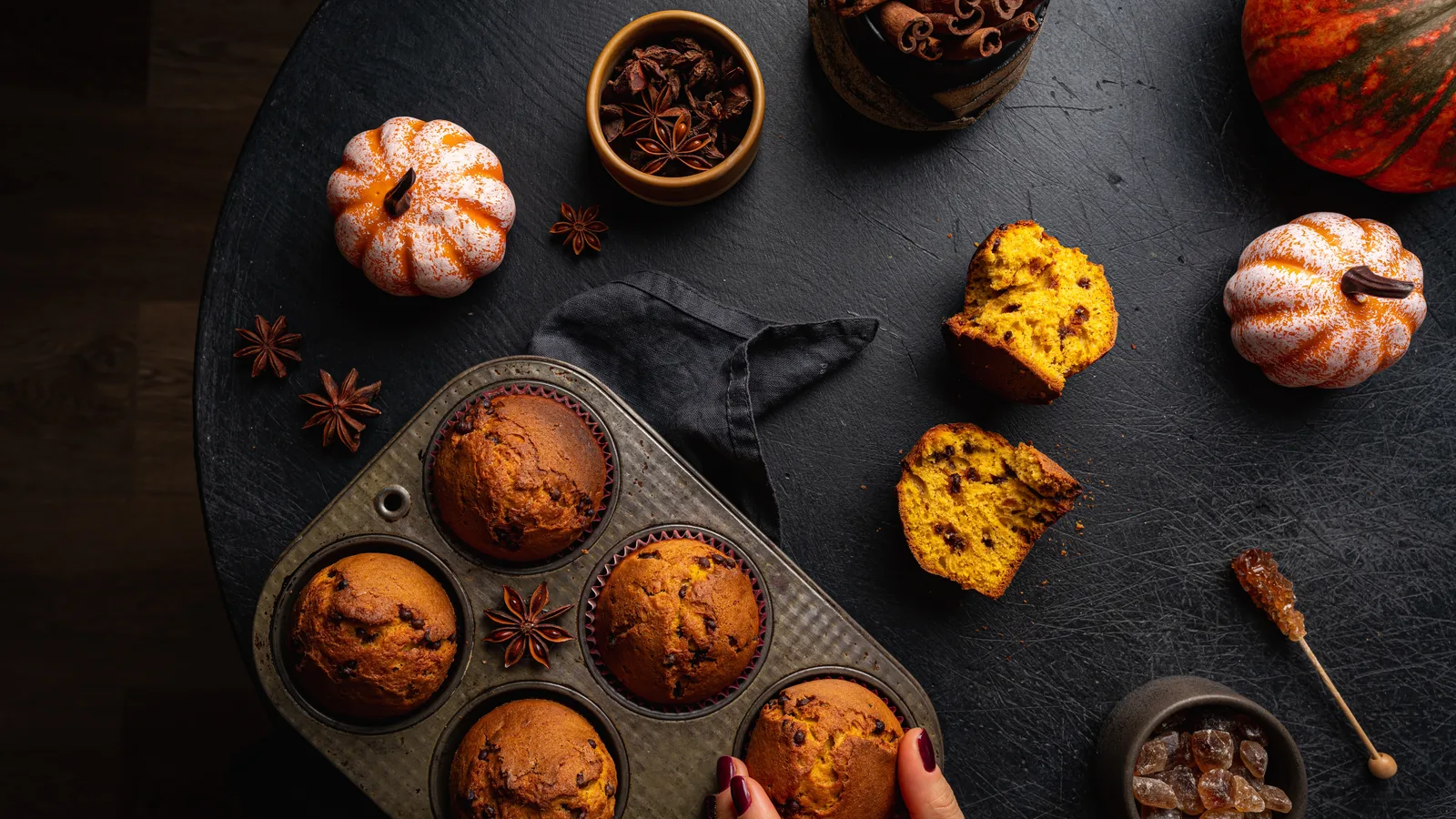
The newest bakery in Southampton does not take money, keeps school hours, and stands next to a security desk. The Little Free Bakery at Southampton Intermediate School is stocked by the 19 students of the school's new baking class, and anyone who walks through the front of the building, staff or visitor, is invited to take a sample.
The school district announced the project this week, and it comes with a premise: every recipe starts with an agricultural ingredient grown on Long Island or elsewhere in New York State.
From a cheese pumpkin to a muffin, the long way
The class, taught by family and consumer sciences teacher Christina Cassel Duryea, builds on the school's home and careers program. For the first fall project, students took Long Island cheese pumpkins, the flat, ribbed heirloom variety the region has grown for generations, roasted them, pureed them, and turned the result into pumpkin muffins. No cans involved.
A second bake paired local honey with cornmeal milled from New York popcorn kernels for honey cornbread. And after a class trip to the Milk Pail in Water Mill, where the students picked apples, the kitchen produced apple cider donuts alongside fresh-pressed cider.
The syllabus ahead reads like a farm stand inventory: potatoes, oats and maple syrup are all scheduled, and the class will make butter from scratch.
A business course wearing an apron
The baking is half of it. The course also walks students through recipe development, calculating what a batch costs to produce, and how food gets packaged and marketed, the parts of a bakery that happen before anything reaches a shelf. A student who follows a batch from raw pumpkin to wrapped muffin has touched sourcing, production, costing and presentation, which is the whole arc of a food business compressed into a school kitchen.
Duryea has framed the project as proof that agriculture is not something that stops at the farm gate: it runs through everyday life, including the hallway of a middle school. The class traces each commodity backward as well, looking at how the raw crops in the recipes become the everyday ingredients on a supermarket shelf.
That is a lesson with particular weight on the East End, where the farms the students draw from, like the Water Mill orchard they picked, are a short drive from the classroom.
Where to find it
The Little Free Bakery stands near the security desk at Southampton Intermediate School, and the samples go to whoever is in the building when a batch lands. For everyone else, the district shares the students' work, and the occasional recipe inspiration, on its social pages. The next batch, by the syllabus, involves potatoes.
Loading comments…