
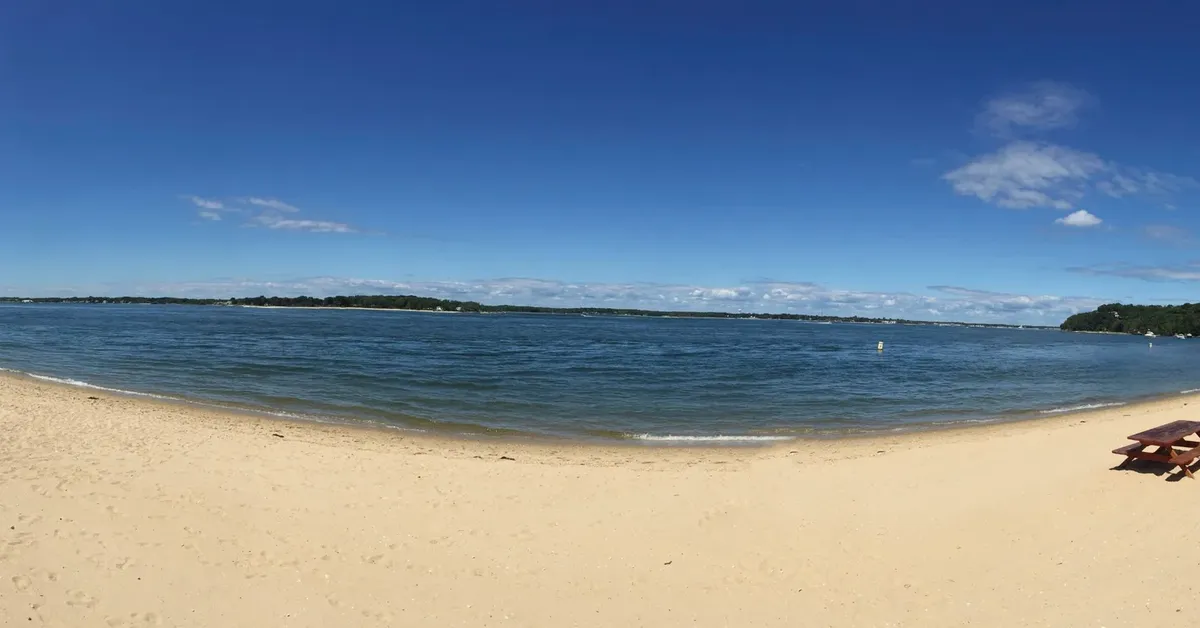
Shelter Island sits in the water between the two forks, and the only way onto it is a boat. That single fact does more to shape the place than anything else about it. There is no bridge, no through traffic, and no way for anyone to arrive by accident. Everyone who is on the island that day made a decision and paid for it.
Most people who write about Shelter Island reach for the word tranquil and stop there. What follows is the practical version: which ferry, what it costs, and the two properties that account for most of what is worth doing once you are across.
Two ferries, two companies, two different decisions
The island is served by two entirely separate operators, and which one you want depends on where you started, not on which is better.
South Ferry runs between Shelter Island and North Haven, which is the Sag Harbor side. It runs continuously, every 10 to 15 minutes, from 5:20 a.m. to 11:45 p.m. Sunday through Thursday, and until 1:45 a.m. on Friday and Saturday. Published fares are $18 one way for a car under 22 feet and driver, or $25 round trip if you complete it the same day. Each additional passenger is $2 one way, walk-ons are $2, a bicycle is $5, a motorcycle is $9. Children under 8 and anyone in a car seat ride free with an adult.
North Ferry crosses to Greenport on the North Fork. Last boats run at 11:45 p.m. from Shelter Island and midnight from Greenport Sunday through Thursday, with the Friday and Saturday last boat from Greenport pushed to 1:00 a.m. through Labor Day. North Ferry publishes its own fares separately, so check northferry.com rather than assuming the South Ferry numbers carry across.
The detail that catches out first-timers: South Ferry is cash only, paid onboard. There is no card reader and no app. Regular travelers buy ticket books, ten auto trips for $115 one way or $150 round trip, and there are weekly commuter passes with resident and non-resident pricing.
Mashomack Preserve is the reason to come
The Nature Conservancy's Mashomack Preserve covers 2,350 acres of Shelter Island, with 11 miles of coastline and a mix of tidal creeks, oak woodland, freshwater and salt marsh. It is not a park with a nature area attached. It is a substantial piece of the island held out of development permanently.
More than 200 bird species have been recorded there, 79 of them nesting. Osprey work the creeks. Scarlet tanagers and Baltimore orioles come through the woodland; red-tailed hawks hold the fields; black ducks, Canada geese and hooded mergansers use the water. On land there are foxes, raccoons, deer, muskrats, painted turtles, black racers, and in late summer the monarchs and dragonflies that make the open fields worth standing still in.
The oddest corner is the Pine Swamp Complex, a pocket of sphagnum moss and white pine that has no business being on Long Island's climate map, and which shelters two state-protected orchids.
Trails are open dawn to dusk year round, with January access on weekends only. The Harman Hawkins Visitor Center is universally accessible; restrooms are open 8 a.m. to 4 p.m. daily and the exhibits 10 a.m. to 3 p.m. Thursday through Saturday. No pets, at all. That rule catches out a lot of day-trippers who assumed a leash would cover it.
Sylvester Manor is not a pretty old house
Sylvester Manor, at 80 North Ferry Road, is 236 acres holding a 1737 Manor House, a restored nineteenth-century windmill, a working farm, and an Afro-Indigenous Burial Ground. It describes itself, accurately and without softening, as the most intact remnant of a former slaveholding plantation north of Virginia.
The Manhanset people lived on this land for millennia before Europeans settled it in 1652. It stayed in the same family for eleven generations, until 2014, when it passed to the nonprofit that runs it now. It was placed on the National Register of Historic Places as a Historic District of national significance in 2015.
That is an unusually direct reckoning for a historic house on Long Island, where plantation history in the North is more often left unsaid, and it is the single most interesting thing on the island for anyone who cares about how this region actually got here.
The grounds and walking trails are open March through October, sunrise to sunset, seven days a week. There are Manor House tours, guided heritage tours, concerts and cultural events, and summer youth programs for ages 2 to 14. The seasonal Farmstand sells the farm's produce from 21 Manwaring Road. The office answers at 631.749.0626.
Planning the day rather than winging it
Shelter Island rewards a plan more than most day trips, for a structural reason: the ferry is a fixed cost in both money and time at each end, so an unplanned afternoon burns a disproportionate share of the day on logistics.
A workable shape is arrive mid-morning, walk Mashomack while the birds are still active, eat, then take Sylvester Manor in the afternoon when the light on the grounds is better anyway. Bring cash for the ferry, water for the trails, and a tick check for afterward, because this is East End woodland and the deer are not shy.
The best time to go is not July
The island in high summer is the island plus everyone else's summer plans. Late September and early October give you the same water, the Manor grounds still open, warmer light and a ferry queue that moves.
Winter is a different proposition: Mashomack drops to weekend-only access in January, Sylvester Manor's grounds close from November, and much of what makes a day here work goes quiet. If you are coming between November and February, go for the walk and the water, and check what is open before you pay for the crossing.
Loading comments…