
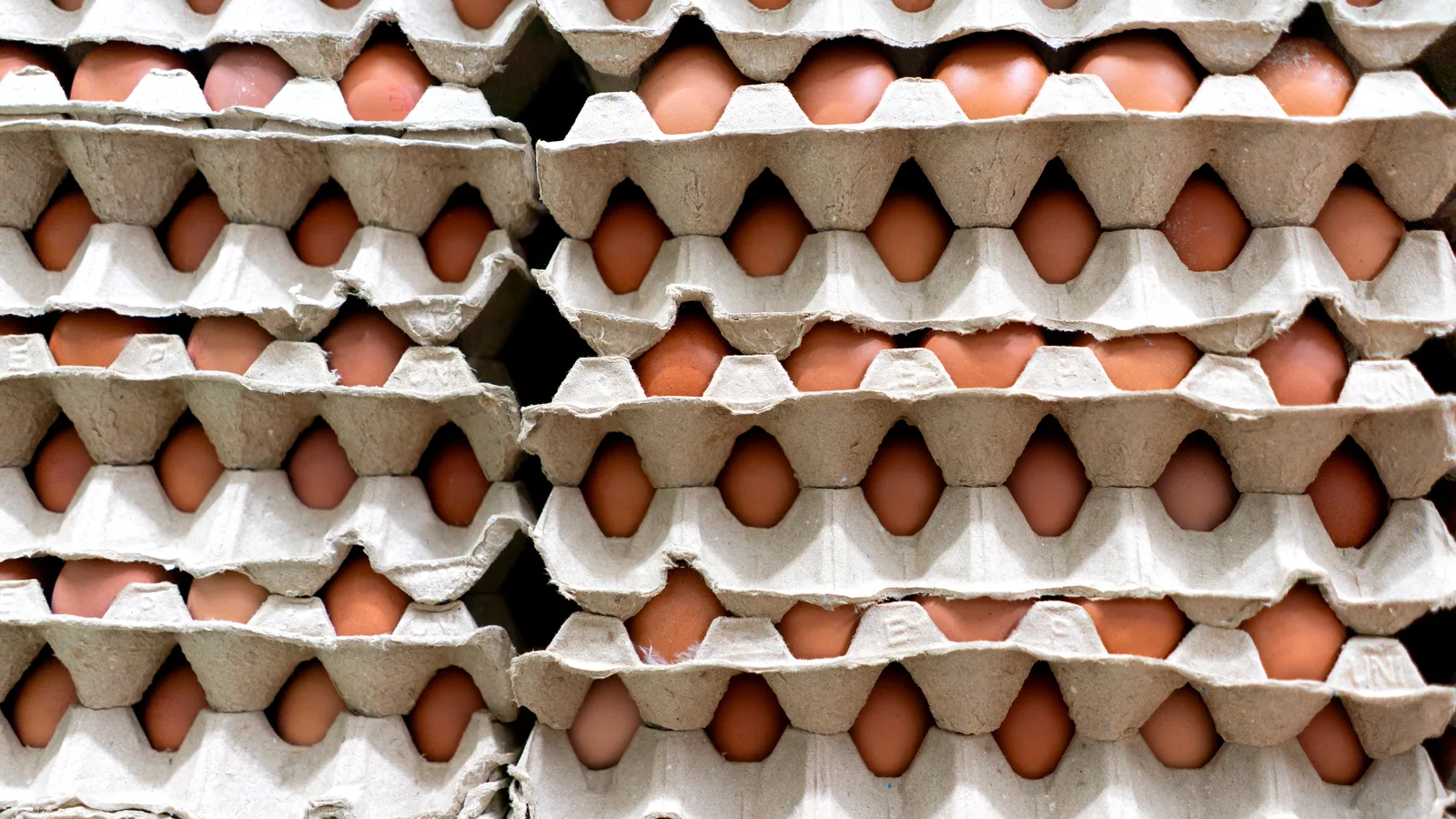
On Thursday morning, 21,600 cartons of eggs arrived at the Long Island Cares warehouse in Hauppauge. That is 259,200 eggs, and every one of them was paid for by the egg producers a multistate investigation found had worked together to push egg prices up.
The delivery is Long Island's largest share yet of a settlement New York led against three of the country's major egg companies, and the eggs now head out through the food bank's pantry network across Nassau and Suffolk, free to the families who need them.
How the price of eggs was moved
The mechanism at the center of the case is one most shoppers have never heard of. A pricing service called Urner Barry publishes daily egg price quotes, and much of the industry writes its supply contracts against those quotes, the way mortgages track an interest rate index. Move the index and you move the price of eggs in thousands of stores at once, without any of them knowing why.
According to the New York Attorney General's office, that is what happened. From roughly June 2022 through March 2025, Cal-Maine Foods, Versova/Centrum and Hickman's Egg Ranch coordinated their bidding activity, submitting waves of bids at higher prices that led Urner Barry to raise its quotes. Retailers paid more, shoppers paid more, and the stretch in question covers exactly the years when a carton of eggs became the single most quoted symbol of grocery inflation.
The investigation ended in a settlement announced in June: the companies agreed to donate 53 million eggs to food banks and nonprofits across seventeen participating states, pay a combined 3.3 million dollars, and submit to compliance monitoring, including antitrust officers installed at each company.
New York's share, and Long Island's
New York, which led the case, is receiving about 4.9 million of those eggs for food banks and community organizations statewide. The deliveries have been rolling out region by region since the summer. Island Harvest took in more than 140,000 eggs in August, and Thursday's shipment to Long Island Cares is nearly twice that size.
Long Island Cares, the regional food bank Harry Chapin founded in 1980, distributes through its own pantries and a network of partner food-assistance agencies in both counties, which is how a warehouse delivery in Hauppauge becomes cartons in refrigerators from Elmont to Riverhead. Refrigerated staples like eggs are among the hardest things for a pantry to keep on the shelf, which is what makes a quarter-million-egg delivery different from another pallet of canned goods.
The arithmetic helps make the delivery concrete. If a household goes through two dozen eggs a month, Thursday's shipment covers 10,800 households for that month. Spread across two counties it will move fast, which is exactly the point: eggs do not sit in a warehouse the way canned vegetables do, and Long Island Cares' job for the next few weeks is getting them out the door while they are fresh.
What it means if your grocery bill still stings
Nobody is mailing refund checks for the eggs Long Island bought between 2022 and 2025. The settlement works the other way: the companies that profited from higher prices are paying in product, directed at the households that felt those prices hardest. It is restitution by the dozen.
For a family using a local pantry, the practical effect is simple. Eggs, which food banks usually struggle to supply, will be easier to find on Long Island shelves this fall. Long Island Cares maintains a directory of its member pantries and distribution sites across Nassau and Suffolk, and the eggs move through that same network, with nothing extra asked of anyone picking them up.
And for everyone else, the delivery is a rare visible ending to a story that usually stays abstract. The price of eggs was not just bad luck and bird flu. Some of it, investigators concluded, was arranged. A quarter of a million eggs in a Hauppauge warehouse is what the arranging cost them here.
Loading comments…