
A Long Islander with a bad back will, over the course of one frustrating year, often see an orthopedist, a neurologist, a physical therapist, a pain management physician and possibly a massage therapist. What that patient will almost never see is any evidence that those five people have spoken to one another.
Closing that gap is the entire organizing idea behind the 2026 Pain Management Symposium, which returns to The Piermont in Babylon on Thursday, September 10. The Long Island Health & Wellness Society is putting seven specialists on a single stage for an hour and calling the session, pointedly, "Connecting the Dots." Tickets run $50 to $100, and every dollar of that leaves the room for a scoliosis charity that a Long Island fourteen-year-old started in her parents' house.
The essentials
- What: The second annual Pain Management Symposium, hosted by the Long Island Health & Wellness Society
- When: Thursday, September 10, 2026, from 5:00 p.m.
- Where: The Piermont, 494 Fire Island Avenue, Babylon
- Cost: $50 to $100
- Included: Dinner, cocktails, clinical exhibits and a professional headshot
- Proceeds: 100 percent of ticket revenue goes to the Curvy Girls Scoliosis Foundation
Registration runs through the Society's event page.
What "Connecting the Dots" is actually about
The headline panel runs from 7:15 to 8:15 p.m. and seats seven specialists across pain management, neurosurgery, physical therapy, massage therapy, orthopedics and neurology. Read that list again slowly, because the composition is the argument.
Those fields treat substantially the same patient and almost never coordinate. A herniated disc is a surgical problem to one of them, a movement problem to another, a nerve problem to a third and a soft tissue problem to a fourth. Each is partly right. The patient, meanwhile, tells the same story at every new intake desk, absorbs a slightly different explanation each time, and pays a copay for the privilege.
An interdisciplinary panel does not fix that by itself. What it does is cheaper and more useful than it sounds: it puts a Babylon physical therapist in a room with the neurosurgeon she has been faxing referrals to for four years and has never met. Referral networks on Long Island are built almost entirely out of that kind of contact, and a thirty-second conversation over a dessert plate has redirected more patient care on this island than most published papers. A thirty-minute audience Q&A follows the panel at 8:15.
How the evening runs
The Society has published a full run of show, and it is structured less like a conference and more like a good wedding, which appears to be deliberate.
- 5:00 to 6:00 p.m. Cocktail hour alongside the clinical exhibits
- 6:00 to 6:30 p.m. Welcome remarks, delivered outside on the pier
- 6:30 to 7:15 p.m. Dinner service
- 7:15 to 8:15 p.m. Panel discussion, "Connecting the Dots"
- 8:15 to 8:30 p.m. Audience Q&A
- 8:30 p.m. onward Dessert, raffles and open networking
Worth knowing before you plan the rest of your night: the event is headlined as a 5:00 to 9:00 p.m. affair, but the published schedule carries dessert and networking to 10:00 p.m. Budget for the later end of that if you intend to work the room, because the room is the point.
The venue helps. The Piermont sits at the end of Fire Island Avenue on the Great South Bay, a waterfront catering house with floor to ceiling glass and open verandas. Welcome remarks on the pier in early September, with the light going down over the bay, is a genuinely good piece of staging for what could easily have been a hotel ballroom and a folding table of lukewarm coffee.
The headshot is a smarter perk than it looks
Registration includes a professional headshot, shot on site by Len Marks Photography, the Huntington studio that handled portraits at last year's symposium.
This reads like a party favor and is not one. Ask any independent practitioner on Long Island when they last updated the photograph on their practice website, their hospital profile, their LinkedIn and the referral directories that patients actually search. The honest answer is usually a number of years that makes them wince. For a solo physical therapist or a private practice orthopedist, a current professional portrait is a real marketing asset that ordinarily costs more than the ticket, the dinner and the parking combined.
Where the money goes, and why the choice fits
Every dollar of ticket revenue goes to the Curvy Girls Scoliosis Foundation, a 501(c)(3) that runs peer-led support groups for girls living with scoliosis.
The choice is not a generic charity tie-in, and the local connection is the good part of this story. Curvy Girls was started in 2006 by Leah Stoltz, then a fourteen-year-old on Long Island who had been diagnosed with scoliosis in middle school and was heading toward spinal fusion surgery. She felt alone, so she gathered three other girls. After the group was featured on the TeenNick HALO Awards in 2009 it grew, and it has since expanded past 100 chapters worldwide. Stoltz now serves as president of its board.
The groups are teen-run by design. The girls talk about the things that clinical appointments skip: how to dress around a brace, how to push back when a doctor talks over you, what to say to friends. Their own framing is that the brace supports the body and the group supports everything else.
Which is exactly why the pairing works. A room of spine and pain clinicians spends the evening arguing about how to treat the curve, and the proceeds go to the organization handling what the treatment does not reach. That is a sharper piece of programming than most charity partnerships manage.
For exhibitors and sponsors
The Society sells clinical exhibit space and four sponsorship tiers, which is worth flagging for the medical device reps, imaging centers, regenerative medicine practices and private practices that make up much of Long Island's health economy.
- Diamond, $10,000. A five minute stage introduction, a full page magazine advertisement, an individual press release, a six foot vendor table and five tickets
- Platinum, $5,000. Half page advertisement, pre and post event promotion with a press release, a vendor table and four tickets
- Gold, $2,500. Quarter page advertisement, social promotion, a vendor table and three tickets
- Trailblazer, $1,000. Half page advertisement and digital recognition, with two tickets and no vendor table
Swag bag inclusion and standalone magazine advertising are each available as $250 add-ons. Every tier above Trailblazer includes a table on the exhibit floor during the opening cocktail hour, which is the window when attendees are actually browsing rather than seated.
The second year is the real test
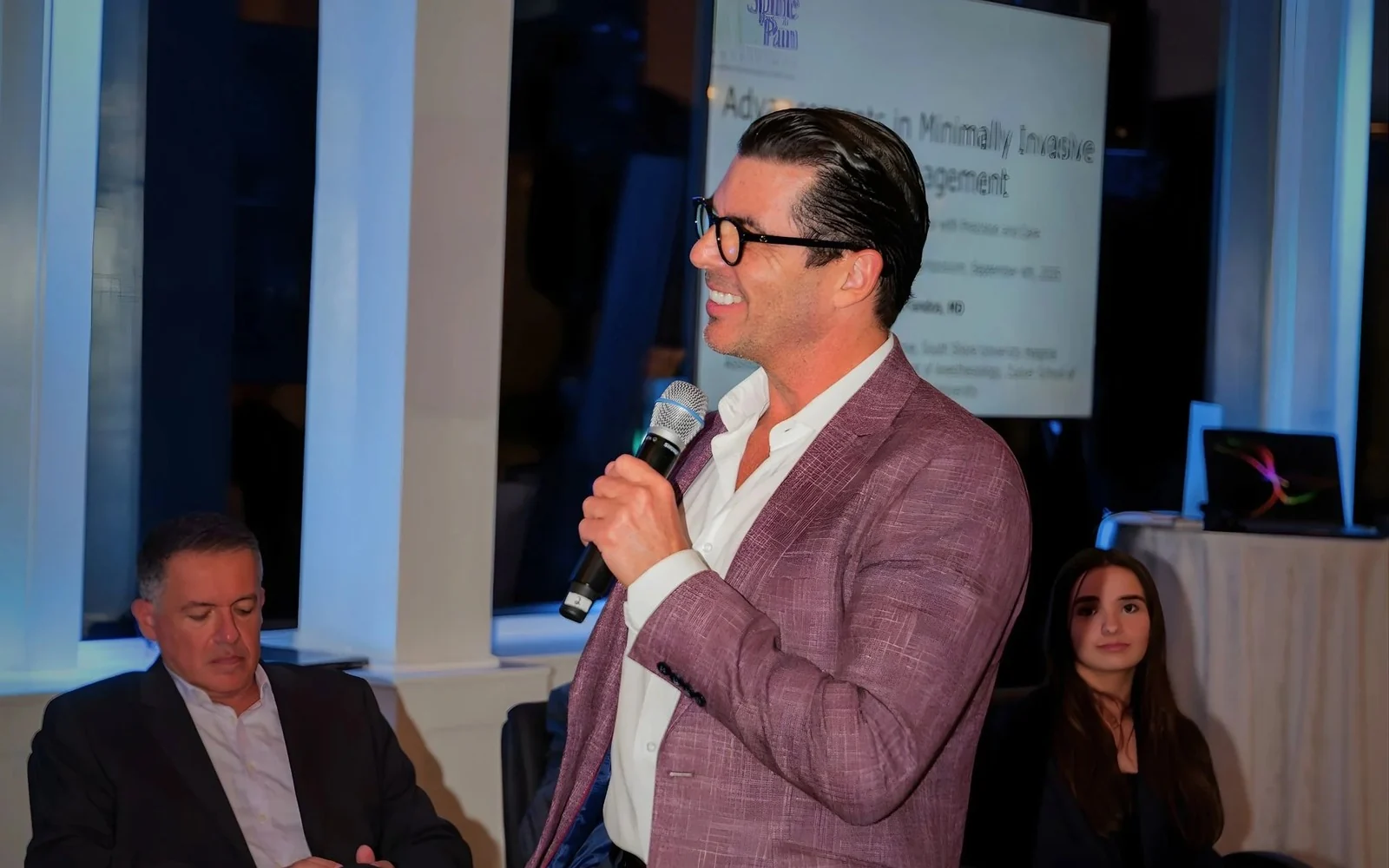
The inaugural symposium ran at the same venue in September 2025, with a program that included a talk on advancements in minimally invasive pain management. It drew a full room, and the Society has since built out a magazine, a resource library and a panelist application process around it.
Year one of anything can run on novelty and goodwill. Year two is where you find out whether a regional professional society has actually taken root or simply threw one good party. Long Island has a genuine surplus of independent practitioners working in parallel and a genuine shortage of places for them to compare notes across specialty lines. If the Piermont room is full again on September 10, that says something about how much the second thing was needed.
Tickets and sponsorship packages are available through the Long Island Health & Wellness Society. Seats are limited and the room sold out last year.
Photo: Long Island Health & Wellness Society
Loading comments…