
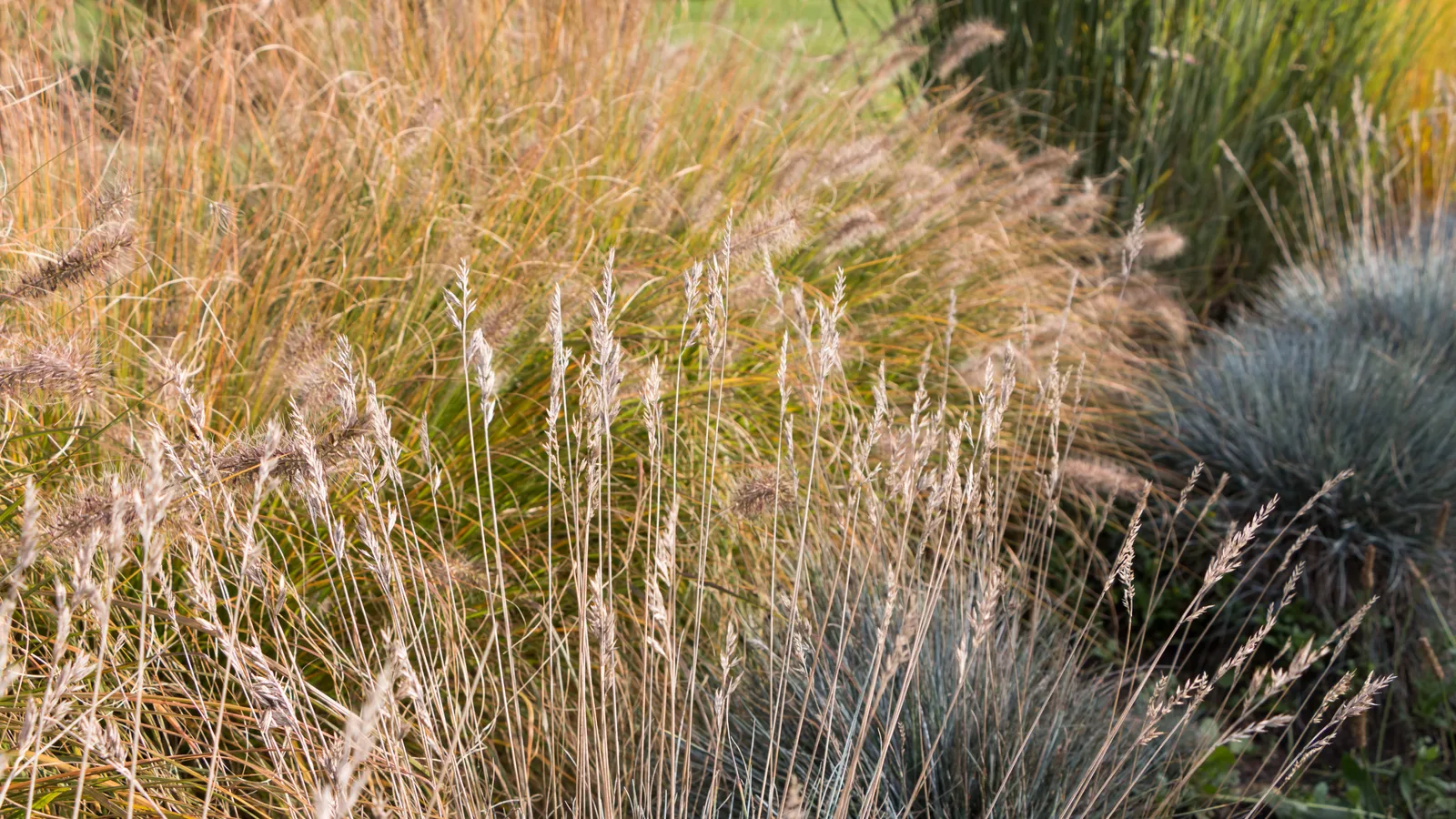
The last time Planting Fields added something this big to its landscape, the Olmsted Brothers were still drawing the plans and the 1930s had not yet ended. On Saturday, October 17, that changes: the Oyster Bay estate opens the Oudolf Garden, a one-acre, 24,000-plant landscape designed by Piet Oudolf, the Dutch master whose plantings run the length of Manhattan's High Line.
The name on the garden
If you have walked the High Line and wondered why an elevated rail bed full of grasses and seed heads feels more alive than most flower beds, you have met Oudolf's work. He is the planting designer behind that park's meadows, the Lurie Garden in Chicago's Millennium Park and the gardens at the Battery at Manhattan's tip, and over four decades he has changed how public gardens get made: perennials and grasses chosen for structure as much as bloom, planted in drifts that are meant to be beautiful in January as well as June.
By the foundation's count, this is his first new public garden in New York in more than a decade. Getting the next one meant a trip to Oyster Bay rather than Manhattan, and Planting Fields has spent the past two years making the case that its acre deserved him, running the project under a campaign it called The Most Beautiful Acre on Long Island.
What 24,000 plants look like
The garden sits at the heart of the estate, built around a structure that was there long before it: the Rose Arbor, a feature dating to about 1906, restored for the occasion and lined with 31 newly fabricated arbors. Around it, Oudolf laid out a meadow of perennials and grasses designed to carry all four seasons, with grassy mounds that lift visitors just high enough to read the whole composition, a bed of 15 trees and shrubs anchoring the west end, and four benches whose locations Oudolf chose himself, each one aimed at a view he wanted people to sit in front of.
The planting count is the number that stops people: more than 24,000 plants on a single acre. That density is the Oudolf signature. The gardens are planted like ecosystems rather than displays, thick enough that they knit together into something that moves with the wind and keeps its architecture after frost, when the seed heads and standing grasses take over from the flowers.
The estate it joins
Planting Fields is a 409-acre state historic park, the former Gold Coast estate of William Robertson Coe, with a Tudor Revival mansion at its center and a landscape the Olmsted Brothers, the firm founded by the sons of Central Park's designer, shaped across the 1920s and 1930s. The foundation that stewards it calls the Oudolf Garden the most significant addition to that landscape since the Olmsted work ended, which is a careful way of saying nothing on this scale has happened here in roughly 90 years.
The project was backed by New York State Parks and private supporters including Bank of America, and the foundation kept the fundraising deliberately small-bore at the bottom end: anyone can sponsor one of the garden's plants for as little as 25 dollars and attach a personal message to it, which means some portion of the acre now belongs, in sentiment at least, to the people who will be walking through it.
Going this weekend
The garden opens to the public on Saturday, October 17. The park is open 9 a.m. to 5 p.m. daily, and Saturday also happens to be the opening day of Catalyst 2026, an installation by the artist Fiona Tan at the estate, so a first visit can cover both.
Mid-October is not a consolation date for a garden like this. Autumn is when Oudolf's plantings do their most distinctive work, the grasses at full height and the whole acre turning gold and rust, and visitors this weekend will see it closer to its designer's intent than a June crowd will. It took a century for Planting Fields to add its next great garden. Seeing it in week one, in its best season, is the kind of timing Long Island rarely gets handed.
Loading comments…