
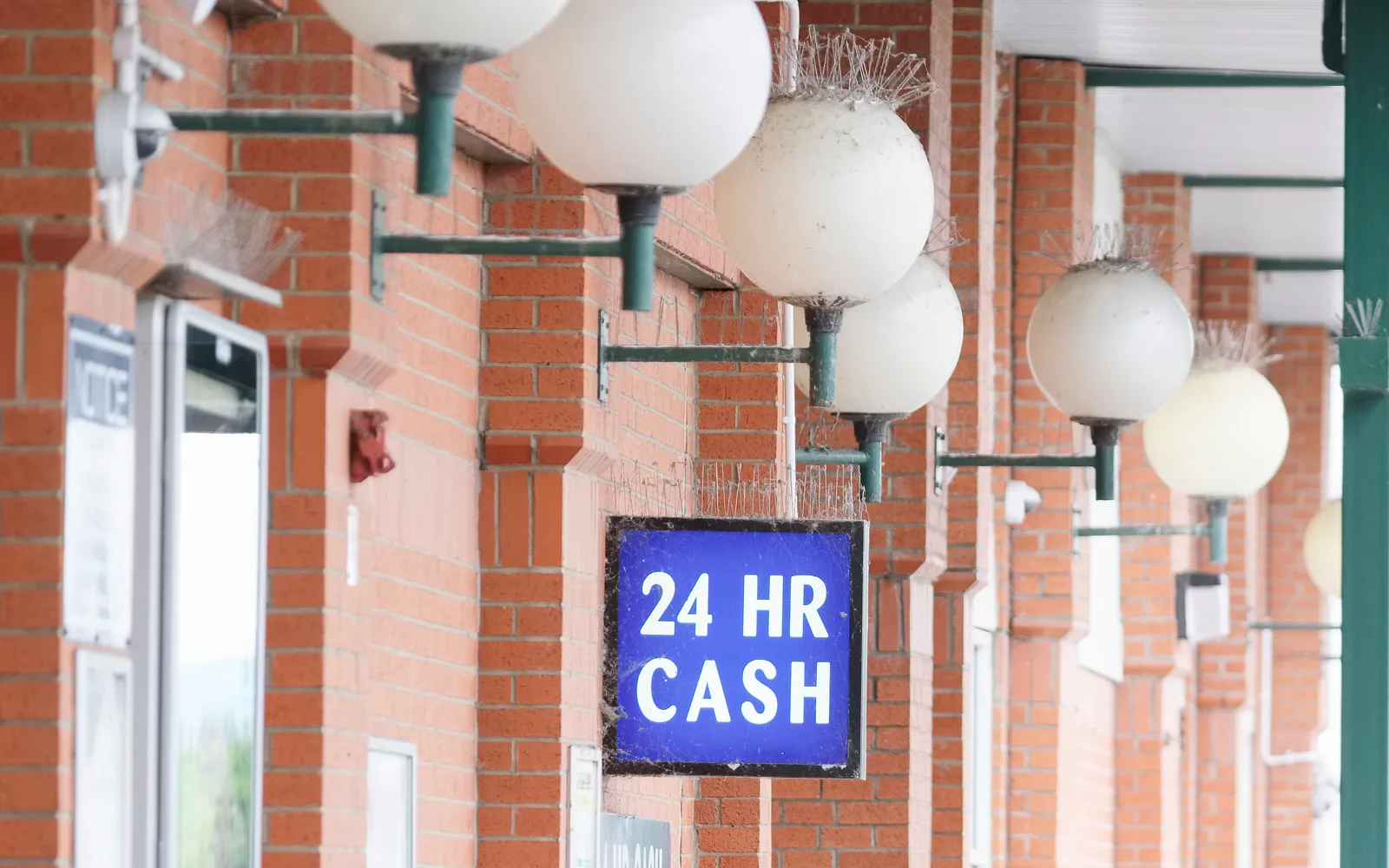
A town changes its rules in two ways. It can amend the code, in public, with hearings and a vote. Or it can leave the code alone and grant variances one at a time until the written rule and the actual street have nothing to do with each other.
Long Island does a great deal of the second kind, and next week two zoning boards on opposite sides of the Nassau line will hear three requests that show what it looks like.
Commack: fifteen signs
The Town of Smithtown Board of Zoning Appeals meets August 11. Case 19554 is Commack 2170, LLC, at 2170 Jericho Turnpike, on the south side of the turnpike about 410 feet east of Veterans Memorial Highway. The property is zoned Wholesale Service Industry.
The proposal is a one-story building of 3,694 square feet with a canopy. It is not a large building. The list of relief it needs is long.
Front yard setback reduced from 50 feet to 35. Setback from any lot line for a trash enclosure reduced from 10 feet to 1. Parking reduced from 69 stalls to 53. Required truck loading spaces reduced from one to zero. Parking setback from the front property line cut from 25 feet to 17, from the side line from 6 feet to 1, and from the rear line from 6 feet to 1.
Then the signs. The request asks to increase the number of ground signs from a maximum of one to fourteen. It asks to increase wall signs from a maximum of one to four. It asks to raise the maximum height of a wall sign from 15 feet to 18 feet, four separate times, for four separate signs. And it asks to allow three wall signs that do not face a public street.
Add it up and the code contemplates two signs on that parcel. The request contemplates eighteen sign approvals covering fifteen signs.
None of that is illegal to ask for. A variance request is a request, and a zoning board exists precisely to decide whether the hardship is real and whether the neighborhood can absorb it. But a sign code that allows one ground sign is making a statement about what a commercial corridor should look like, and fourteen is not a rounding error on one.
Carle Place: signs that are not on a wall
The Town of North Hempstead Board of Zoning Appeals meets the following morning, August 12. Its commercial calendar carries appeal 21864, brought by 440 Old Country Road, LLC, for signage at 440 Old Country Road in Carle Place, zoned Business-A. The calendar identifies the signage as Raising Cane's.
The request cites nine separate code sections. Read plainly, and the town's own calendar does write it plainly, it seeks to construct wall signage that is not attached to a wall and projects more than 12 inches from a wall, signs that exceed the number allowed on multiple walls, signs that are too tall, signs that are too large, signs that are too high above the ground, too many ground signs on a site, ground signs that are too large, ground signs without enough space between the bottom of the sign and the ground, and signs painted on a wall, which is not an allowed sign type at all.
That last one is worth pausing on. The other eight ask the board to allow more of something the code already recognizes. The ninth asks it to allow a category of sign the code does not contemplate.
Old Country Road is one of the most heavily signed commercial corridors in Nassau County, which is either the argument for granting this or the argument against it, depending on where you sit.
Manhasset: the third one
The same North Hempstead calendar carries appeal 21862, Midwood Investments and Development, for an Ernesta sign at 1522 Northern Boulevard in Manhasset, also Business-A.
It is a smaller ask and a familiar one: a sign that exceeds the allowed maximum vertical measurement, sits too high above grade, is too big, and exceeds the number of allowed signs on a wall. Four variances for one storefront.
Why this is a business story and not a nuisance story
It is easy to read a sign variance as an aesthetic complaint, and easy to dismiss it on the same grounds. The more interesting question is what it costs.
A tenant that needs fourteen ground signs is usually a multi-tenant building, and the signs are how the small tenants at the back get found. A drive-through that needs signage not attached to a wall is usually managing a queue, and the signs are how cars sort themselves before they reach the window. In both cases the signage is not decoration. It is the operating system of the site, and a code written for a different retail era did not anticipate it.
Which means these requests are evidence of a mismatch. Either Long Island's sign codes are out of step with how commercial property actually works now, in which case the honest fix is to amend them, or they are correct and these should be denied. What tends to happen instead is neither: the codes stay on the books, the variances get granted case by case, and a corridor changes character without a single public vote on whether it should.
How to be heard
The Smithtown Board of Zoning Appeals meets Tuesday, August 11 at 6 p.m. The North Hempstead Board of Zoning Appeals meets Wednesday, August 12 at 10 a.m. at 210 Plandome Road in Manhasset.
Both are public hearings. Neither will be crowded.
The case records are available from each town, and the case numbers above are what to ask for. If you have ever driven a stretch of Jericho Turnpike or Old Country Road and thought somebody should have said something, these are the mornings when somebody could.
Loading comments…