
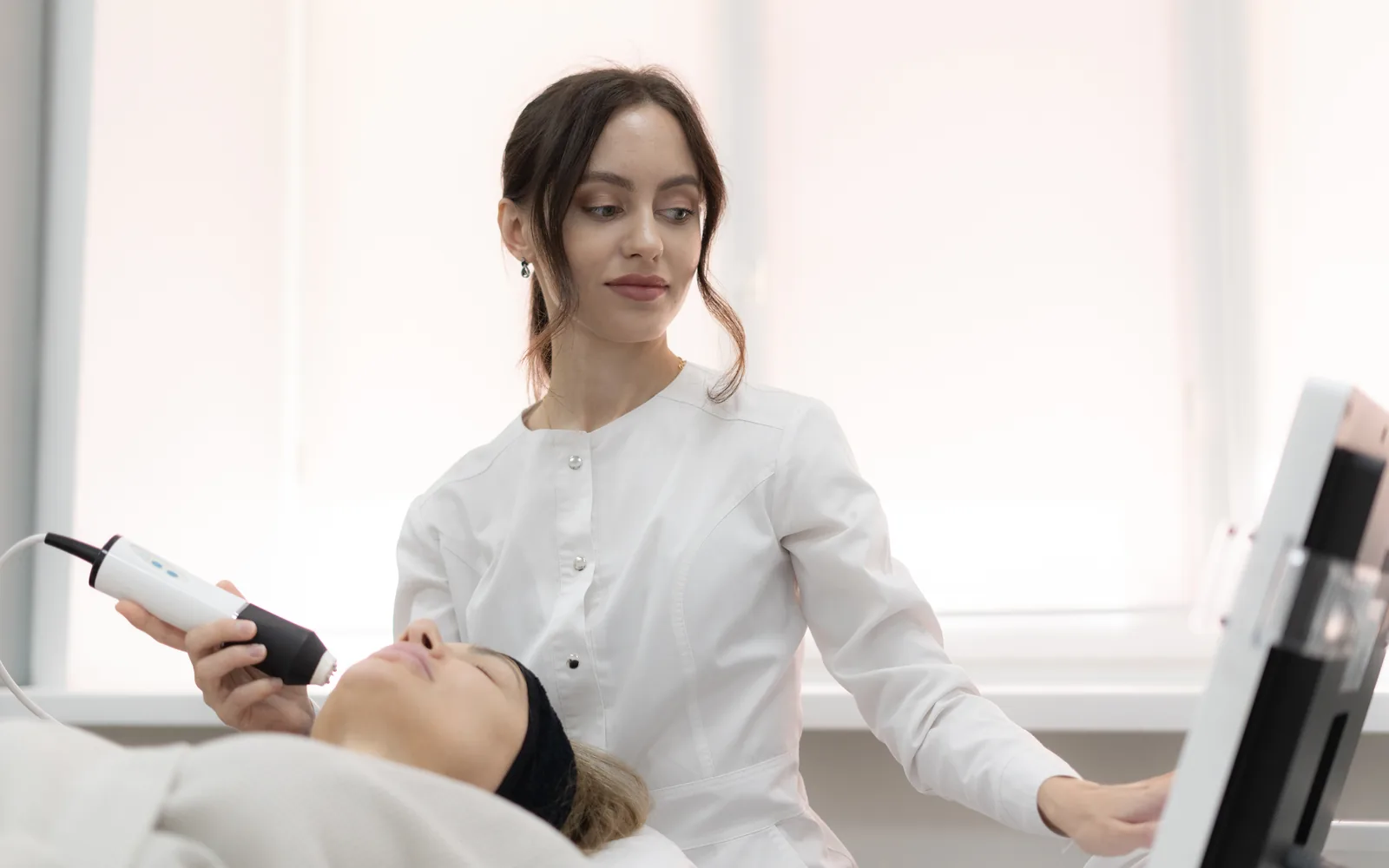
They are in the strip malls now. Between the nail salon and the pizzeria, in the storefront that used to be a travel agency, on the second floor above the bank on Main Street. Neuromodulators, filler, laser resurfacing, microneedling, body contouring, IV drips. Long Island's med spa business has expanded faster than almost any consumer category in the region.
Most of these businesses are run responsibly by people with real credentials. Some are not. The difference is not visible from the sidewalk, because the good ones and the risky ones use the same marble reception desk, the same eucalyptus diffuser and the same before-and-after grid on Instagram.
What follows is not medical advice, and it is not a warning against cosmetic treatment. It is a description of what New York actually requires, so you can tell which kind of business you are sitting in.
New York has no single med spa regulator, and that is the root of it
This is the fact that explains almost everything confusing about the industry. There is no "med spa license" in New York State. Depending on what a business offers, it may fall under the Department of State, the State Education Department, the Department of Health, or some combination of all three.
A business can therefore be entirely legitimate in one respect and operating outside the law in another, and no single agency is watching the whole picture. The Department of State publishes consumer guidance on exactly this point, because it comes up constantly.
The bright line: medical procedures are medical
New York licenses estheticians and cosmetologists under what it calls appearance enhancement. Those licensees may perform traditional spa services. They may not perform medical procedures, and the state's list of what counts as medical is broader than many consumers assume. It includes:
- Injections of any kind, including neuromodulators and dermal fillers
- Laser treatments
- Microneedling
- Chemical peels
- Radiofrequency procedures
There is also a naming rule that gives you a free clue from the outside. A provider offering these medical services is not permitted to use the word "spa" in the business name. It is not a perfect test, and plenty of compliant practices have soft branding, but a storefront advertising injectables under a name built around "spa" is worth a second look.
Who may legally inject you in New York
This is the question that matters most, and it has a precise answer.
Physicians, nurse practitioners and physician assistants
Physicians, nurse practitioners and physician assistants can prescribe and administer cosmetic injectables. New York grants nurse practitioners full practice authority, so an NP can evaluate, prescribe and treat without physician oversight. Physician assistants work under a supervising physician relationship, though the supervising physician does not necessarily have to be on the premises.
Registered nurses, with a critical condition attached
A registered nurse may inject, but only after a prescriber has performed a good-faith examination of that patient and issued an order. This is the rule most often broken, and the one most worth understanding.
An RN cannot perform the initial assessment on a new patient, and a standing order does not cure that. Standing orders cover follow-up dosing for an established patient, not the first evaluation of someone who walked in this morning. If you are new to a practice and no physician, NP or PA ever assesses you before a needle comes out, that is not a technicality. That is the safeguard being skipped.
Who may not inject, at all
Licensed practical nurses, medical assistants, estheticians and cosmetologists may not administer cosmetic injections in New York. No amount of manufacturer training, weekend certification or years of experience changes that.
Ownership and medical direction
Medical practice ownership in New York is restricted. Practices delivering medical services must be owned by licensed physicians or by professional entities organized by them, and a facility offering med spa services is expected to have a medical director who is a licensed physician or nurse practitioner.
Ask who the medical director is. The answer should be a name, not a job title, and that person should be reachable rather than a signature on a wall.
Seven questions to ask before you book
- Who exactly will perform my treatment, and what is their license? Not their title. Their license. "Aesthetic injector" and "medical aesthetician" are marketing terms, not credentials.
- Who is the medical director, and are they involved in my care?
- Will a physician, NP or PA examine me before my first injection? If the answer is vague, that is your answer.
- How many times have you performed this specific procedure? Experience with filler is not experience with lasers on your skin type.
- What complications have you had, and how were they managed? A confident practitioner will discuss this openly. Vascular occlusion from filler is rare and time-critical, and a good practice keeps hyaluronidase on site and knows the protocol.
- What product are you using, and may I see the vial? Legitimate practices use FDA-approved products obtained through authorized channels. Counterfeit and gray-market injectables are a real problem.
- What happens if something goes wrong after hours? There should be a specific person to call.
How to verify, before you go
- Professional entities: the New York State Education Department maintains an online verification database covering licensed professionals and professional entities organized as PCs or PLLCs.
- Physicians: the Department of Health's Office of Professional Medical Conduct publishes disciplinary history. Searching a doctor's name takes about a minute.
- Appearance enhancement licensees: the Department of State's Division of Licensing Services handles esthetician and cosmetology licensing.
Where complaints go
The split regulatory structure applies here too, so the right agency depends on who the provider is.
- Physicians and physician assistants: the Department of Health, at 1-800-663-6114.
- Unlicensed practice, or professionals licensed by the Education Department: the State Education Department.
- Estheticians, cosmetologists and other appearance enhancement licensees: the Department of State, Division of Licensing Services.
- Cases involving unlawful harm: local law enforcement.
None of this means don't go
Cosmetic medicine performed by qualified people in properly run practices is safe, common and, for many people, genuinely worth it. Long Island has excellent practitioners, including plenty who left hospital medicine to do this work and brought their standards with them.
The point is only that the industry's growth has outpaced consumer knowledge, and that the questions above take five minutes and cost nothing. A practice that welcomes them is telling you something. So is one that does not.
Loading comments…