
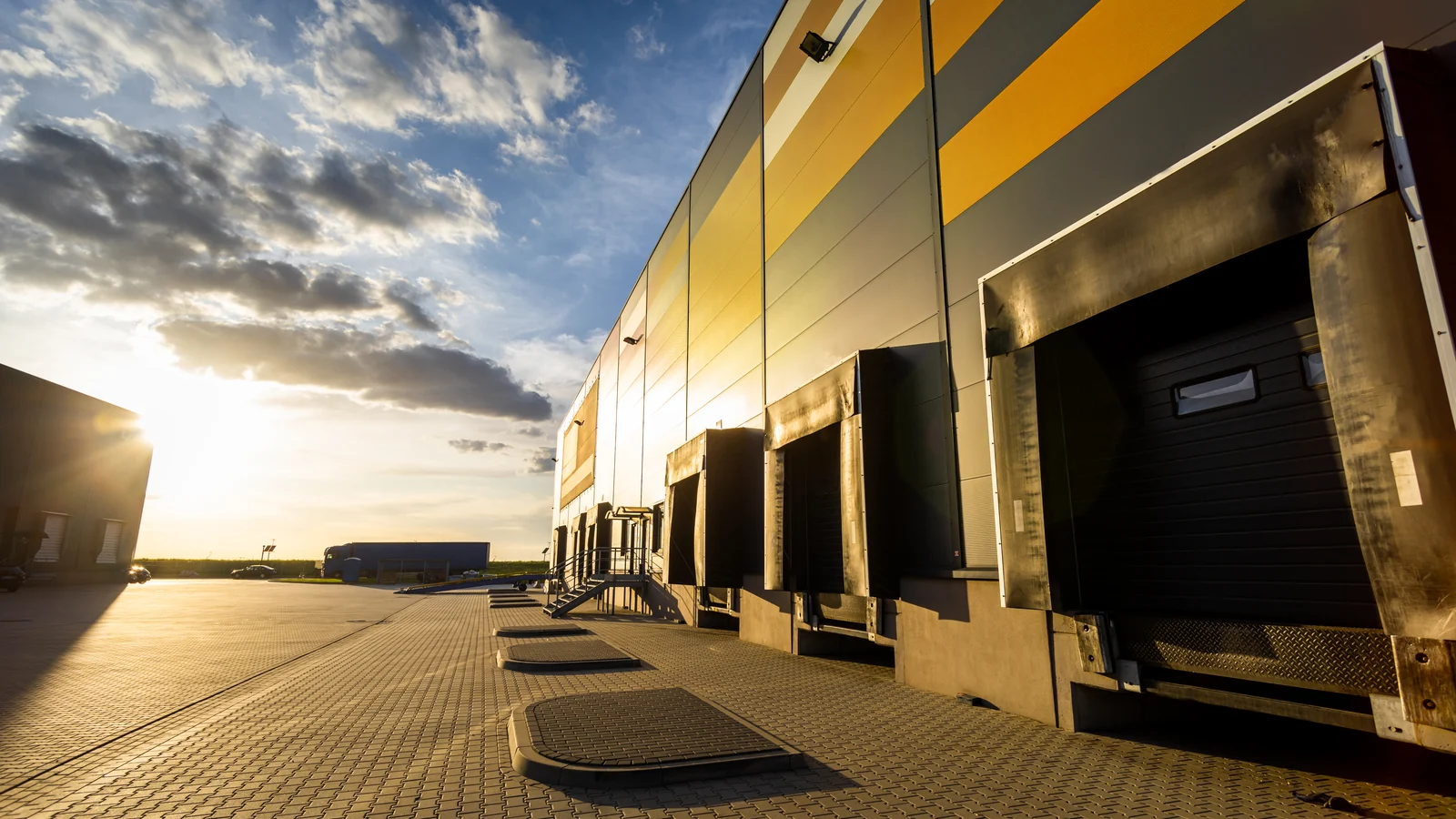
Long Island's commercial property market gets discussed in two parts. Office, because it has a story attached about where people work. Retail, because everyone drives past it. The third part is bigger than either in the number of Long Islanders it employs, and almost nobody writes about it, because a warehouse in Hauppauge does not photograph like a downtown.
CBRE's second-quarter figures for the Long Island industrial market landed with a set of numbers that all point the same direction.
Vacancy fell to 7.0 percent, down 70 basis points from the first quarter. Leasing activity totaled 905,000 square feet, a 43 percent increase quarter over quarter. Net absorption cleared 800,000 square feet. The demand came from wholesale and retail, e-commerce, and logistics tenants, across several mid-sized transactions rather than one headline deal.
Read those four numbers together, not separately
Any one of them could be noise. Together they describe something specific.
Net absorption is the honest one. It measures the change in occupied space, so it nets out a tenant who signs a new lease while vacating an old building. Leasing activity can be inflated by churn. Absorption cannot. More than 800,000 square feet of net absorption means roughly that much more Long Island industrial space had something in it at the end of June than at the start of April.
The 70 basis point drop in a single quarter is fast for industrial. Warehouse leases are long, tenants move rarely, and the denominator only changes when something is built. A vacancy rate that moves that far in three months moved because space was taken, not because supply shrank.
The 43 percent leasing jump matters mostly as confirmation. A quarter with strong absorption but flat leasing would suggest one or two large tenants expanding into space they already controlled. Strong absorption plus a leasing surge across several mid-sized deals is a broader base.
"Several mid-sized transactions" is the phrase to underline. A market carried by one 500,000-square-foot lease is a market carrying one tenant's risk. A market carried by a spread of mid-sized deals is harder to knock over.
Why 7 percent is tighter than it sounds
Seven percent vacancy sounds like meaningful slack. For this asset class in this geography, it is not much.
Long Island's industrial market has a structural supply constraint that has nothing to do with the economy. There is very little land here zoned for it, the parcels that exist are mostly built on, and the modern distribution box that logistics tenants want, with high clear heights, deep truck courts, and abundant loading, is very difficult to fit on a legacy Long Island industrial parcel laid out for light manufacturing in the 1960s.
So the headline vacancy overstates real availability. A share of any industrial vacancy figure is functionally obsolete space: low ceilings, one loading door, an awkward yard, a location that cannot take a tractor-trailer turn. That space counts as available and cannot actually serve the tenants driving the demand.
Which means the effective vacancy facing a logistics tenant looking for a modern box on Long Island right now is tighter than 7.0 percent, and probably considerably tighter.
What this does to the people who rent it
Industrial rent is a business input for a very large number of Long Island companies that are not warehouses. It is the cost floor under a contractor's material storage, a distributor's inventory, a caterer's cold storage, a landscaper's yard, a small manufacturer's floor, and the last-mile facility that gets a package to a house in Wantagh.
In a market this tight, three things follow, and tenants tend to discover them in this order.
Renewal leverage disappears first. A landlord with a 7 percent market and a shortage of modern product has little reason to negotiate hard against an existing tenant's renewal, because the replacement tenant is easy to find. Concessions shrink next: free rent, tenant improvement allowances and flexible terms all thin out when space clears quickly. And relocation stops being a lever. A tenant whose rent rises can normally threaten to move. When there is nowhere comparable to move, the threat is not credible, and both sides know it.
The practical advice that follows is unglamorous. If you occupy industrial space on Long Island and your lease expires within twenty-four months, start now. Renewal negotiations in a tight market are won by whoever has time, and the tenant who opens the conversation eighteen months out has options that the tenant who opens it at ninety days does not.
The thing the number does not tell you
CBRE's quarterly release did not publish an average asking rent alongside these figures, which is worth stating plainly rather than filling in from an older quarter. Asking rents on Long Island industrial had already been running at record levels through the start of the year, and a quarter that adds this much absorption into this little supply does not usually push rents down. But the specific figure is not in the release, and a number that is not published is not a number.
The other absence is the construction pipeline. Vacancy falling is only half of a supply story. The question that determines whether 7 percent is a floor or a waypoint is how much new industrial space is actually being delivered on Long Island over the next two years, and on an island where the binding constraint is land and zoning rather than capital, the answer has consistently been: less than the market wants.
If that stays true, this is not a cyclical tightening that resolves itself. It is a structural one, and the cost shows up in the price of everything that moves through a building here on its way to somebody's door.
Loading comments…