
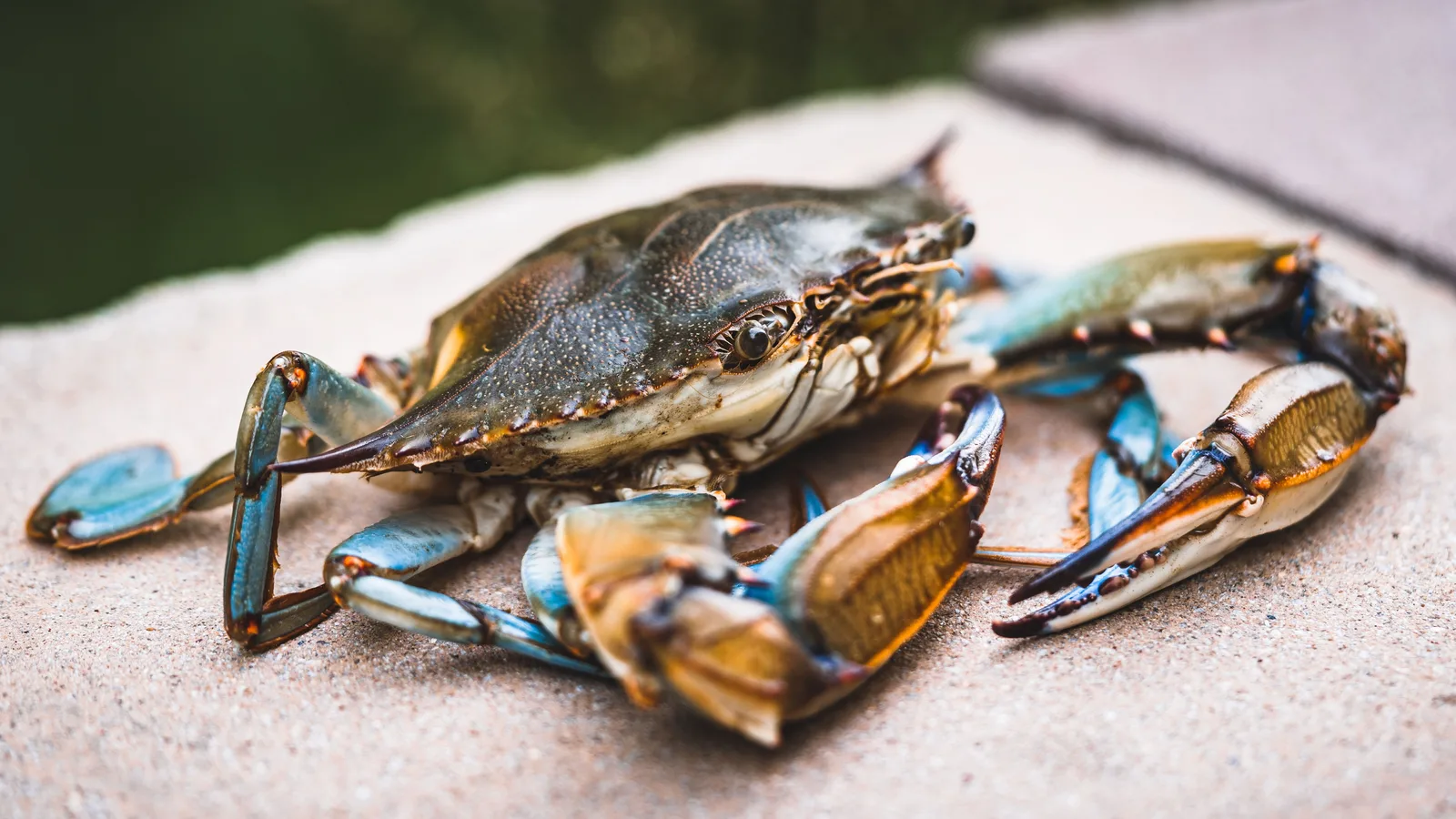
Labor Day emptied the parking lots, and that is exactly the point. The bays around Long Island hold their summer warmth deep into October, the blue claws are as big as they get all year after a season of molting, and the piers that were shoulder to shoulder in July are suddenly quiet. If there is a best month to stand on a dock with a chicken neck on a string, this is it. It is also, reliably, the moment somebody asks where to go, so here is the answer, with the rules attached.
The rules are simpler than you think
Crabbing is one of the last genuinely free things to do on the water here. The state Department of Environmental Conservation asks nothing of a recreational crabber in New York: no fee, no sign-up, nothing to carry in your wallet. That is not a loophole, it is the rule, stated plainly on the DEC's own crabbing pages. The saltwater registry that anglers sign up for covers fish. If all you are doing is pulling crabs, you can walk onto a pier with a bucket and start.
What the DEC does ask is that you know three numbers. The daily limit is 50 crabs per person. A hard shell blue claw has to measure at least 4 and a half inches across the shell, spike to spike, to keep. And any crab carrying eggs, the orange sponge tucked under the apron, goes back in the water every time, no exceptions. Your catch is for your table, never for sale.
Gear rules are just as short. A baited handline and a dip net are always legal, and so are collapsible traps. If you set the rigid, non-collapsible kind of pot, the requirements get real: a marked buoy with your contact information, at least 25 feet of clearance from navigation channels, an escape panel, and in designated waters a terrapin excluder device on every funnel. That last one protects diamondback terrapins, the small native turtles that drown in unmodified pots, and the DEC takes it seriously.
Nassau: the pier past the Wantagh marina
Nassau County's most dependable public option is the fishing pier at Wantagh Park, just beyond the marina on the county park's south end. The county keeps it open year round when weather allows, and it costs nothing. The surrounding waters of the East Bay system are classic blue claw territory, and the pier draws a steady crowd of regulars who have been dropping traps there for decades.
Captree, where weekdays just became free
Captree State Park, at the eastern tip of Jones Island where the Ocean Parkway ends, is built for exactly this. The state park has two large fishing piers, and its own literature pitches them to people who want to catch a few crabs without a boat. The timing note that matters: as of September 8, the park's 8 dollar vehicle fee is collected only on weekends and holidays through mid-October. Show up on a Tuesday and the pier, the parking and the sunset over the Great South Bay are all free.
Brookhaven runs 16 piers, and the Great South Bay ones produce
The Town of Brookhaven maintains sixteen public fishing piers and docks, and the list reads like a crabber's map of the south shore. The Blue Point Fishing Pier at the end of Blue Point Avenue and the neighboring Corey Beach put you right on the bay. Sandspit Marina on Brightwood Street in Patchogue is a longtime local favorite. The Forge River Fishing Pier on Riviera Drive in Mastic reaches into one of the crabbiest little rivers on Long Island.
The north shore side of the same list is worth knowing too. The Cedar Beach Fishing Pier at the end of Harbor Beach Road in Mount Sinai sits on the mouth of Mount Sinai Harbor, and the Stony Brook Fishing Pier on Shore Road works the harbor there. Sound-side crabbing runs a little leaner than the Great South Bay, but the setting argues for itself.
How the regulars actually do it
The classic method has not changed in a hundred years. Tie a chicken neck or a chunk of bunker to a handline, drop it to the bottom, and wait for the line to go tight and start moving. Then pull it up slowly, hand over hand, and slide the net under the crab before it breaks the surface. The crab lets go the instant it sees daylight, which is why the net does the catching, not the line.
Traps do the patient work. Bait a collapsible trap, drop it off the end of the pier, and check it every fifteen or twenty minutes rather than constantly. A moving tide beats slack water, and the first hours of the morning and the last light of the evening beat midday. Bring a ruler, a lidded bucket or cooler, and a pair of tongs, because a blue claw that just lost an argument with a net is in no mood to be picked up politely.
The window, and one thing worth checking
The season never technically closes, but the practical one does. As the water cools through late October the crabs move off to deeper channels and bury in for the winter, and the piers go quiet until spring. That gives you six weeks or so of the best of it.
One honest footnote: the state Department of Health publishes advice about eating crabs from local waters, including how often and which parts, and it varies by area. If crabbing is about to become a weekly habit rather than a September afternoon, its guidance is worth five minutes of your time.
The whole enterprise costs a few dollars of chicken and an afternoon. The bay is still warm, the crowds are gone, and the crabs do not know summer is supposed to be over. Go before the water figures it out.
Loading comments…