
Development approvals are full of conditions, and almost all of them are things a village demands and a developer accepts reluctantly. Setbacks, screening, hours for deliveries, a traffic signal somebody has to pay for.
Floral Park's approval for the largest redevelopment proposed on its stretch of Jericho Turnpike in years contains a condition that runs the other way, and it is strange enough to be worth sitting with.
The developer offered, on its own initiative, never to allow electric vehicle charging anywhere on the property. Not in the garage. Not in the parking areas. Not in an accessory structure. Not for residents, not for the public, not later.
The village accepted the offer, and wrote it into the decision as binding on every future owner.
What was actually approved
First, the narrow point, because it is the one most likely to be reported wrongly.
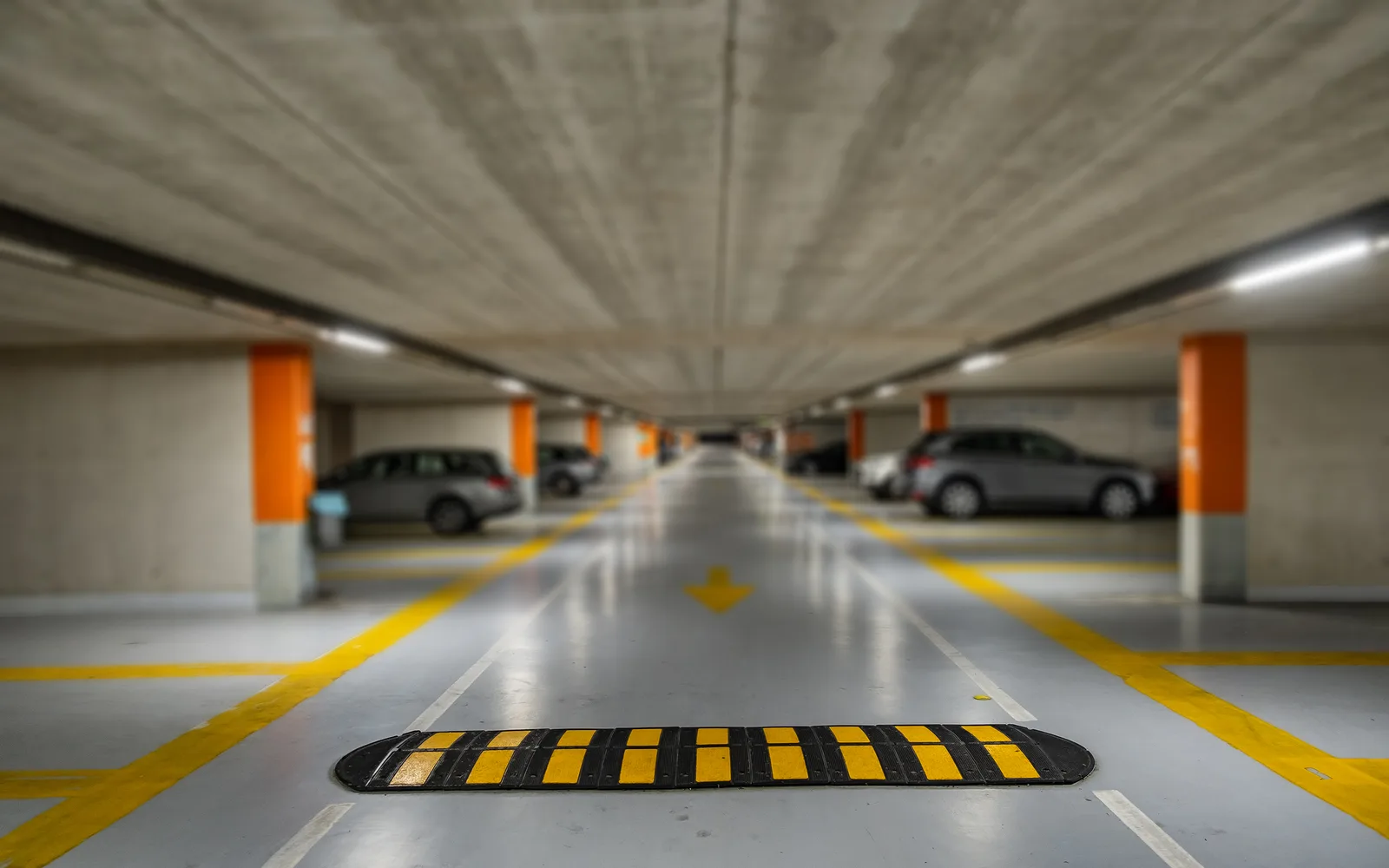
The project is not approved. What the developer, Stella Cerrone LLC of Huntington Station, received in a twenty-six-page decision dated April 21 was the village's specific go-ahead for below-grade parking, under the section of the village code that governs it. That is one approval, for one element, on a site assembled from more than twenty tax lots at 144 to 162 Jericho Turnpike and 3 Van Buren Avenue.
Trustee Michael Longobardi made the point himself at the board's July meeting, after the zoning hearing in June. He said no decision had yet been rendered, that only the request for underground parking had been approved, and that several more hearings and steps stood between the project and either full approval or denial.
Height, massing and the number of apartments were expressly sent onward to the Board of Zoning Appeals and the Architectural Review Board. The unit count is not settled, which is why nobody should be quoting one.
The list of things that will never happen there
What the decision does settle is a set of permanent prohibitions, and the electric vehicle ban is only the most conspicuous.
Charging stations and charging equipment are barred from the property outright, at both public and private access points. The developer has to write the restriction into every lease, into tenant rules and into property management protocols, and post signage telling occupants and visitors. The village reserved the right to enforce it by periodic inspection. It binds successors in interest.
Rooftops are similarly closed. No roof decks, no tenant, resident, guest or commercial use of any rooftop area. The roofs are to remain non-habitable and inaccessible except to authorized maintenance staff.
Cellular antennas are prohibited in any form.
The entire property is to be smoke-free, covering tobacco, marijuana and vaping, again written into leases.
There is more, and some of it is genuinely good for neighbors. Overhead utility lines on Jericho Turnpike and Van Siclen Avenue have to be buried. There will be no vehicular access at all from South Tyson Avenue, with the curb cuts removed. Van Siclen Avenue is limited to deliveries, ingress and egress, and trash. Every apartment gets one designated parking space at no charge, and the landlord is barred from discounting rent to a tenant who gives the space up, which is a quietly clever way of stopping a building from renting to more cars than it can hold.
The Floral Park Police Department gets access to the building's security cameras, its key-card systems and its garage door controls.
Why a developer would volunteer this
Here is the part that explains the rest of it.
The decision classified the project as an Unlisted action under the state's environmental review law and issued a negative declaration, meaning no environmental impact statement is required. In reaching that conclusion, the decision's own reasoning states that the prohibitions on electric vehicle charging stations, cellular antennas and rooftop access mitigate potential traffic, safety, visual and intensity-of-use impacts.
Read that again, because it is the whole mechanism. Each restriction is not just a concession. Each one is evidence in the record that the project's impacts are smaller than they might otherwise be, and that evidence is what supports the finding that a full environmental review is unnecessary.
In that light, an offer to permanently forgo EV charging is not an odd act of hostility toward electric cars. It is currency. A developer under pressure to get past a review threshold has an incentive to hand over anything it does not need, and charging infrastructure that does not exist yet costs nothing to give away today.
The cost lands on whoever owns the building in fifteen years, and on whoever rents there.
The problem with permanent
New York has spent a decade building policy on the assumption that residential parking will need to charge cars. The state's own climate targets, its building code direction and its utility planning all point one way.
A restriction that binds successors in interest, written into leases and enforced by inspection, points the other, and it does so at a downtown apartment building where residents will have nowhere else on site to plug in.
Whether a village can practically hold a covenant like that against a future owner in a changed legal landscape is a real question, and not one this decision answers. What the decision does establish is that Floral Park asked for the restriction to be permanent, and got it in writing.
Nassau County's Planning Commission looked at the proposal in January and returned it with a recommendation that the village take whatever action it deemed appropriate, which is the county's way of declining to weigh in.
What is still to come
The consequential hearings have not happened. Height, bulk and unit count go to the zoning and architectural boards, and those are the decisions that determine what the building actually is.
The financing terms are partly pre-set. If the developer seeks Industrial Development Agency assistance, any payment-in-lieu-of-taxes deal is capped at twenty years with no later extension, and a host community benefit agreement is required within thirty days.
The school district question, the one that decides most Long Island housing fights, was addressed in the record with two competing multipliers for how many school-age children an apartment generates: 0.09 per unit from a 2019 Stony Brook study, and 0.20 per unit from a 2023 analysis. On a building of any size, the gap between those two numbers is the entire argument.
Floral Park's board meets once a month through the summer, with its next meeting on August 12. The hearings that matter come after it.
Loading comments…