
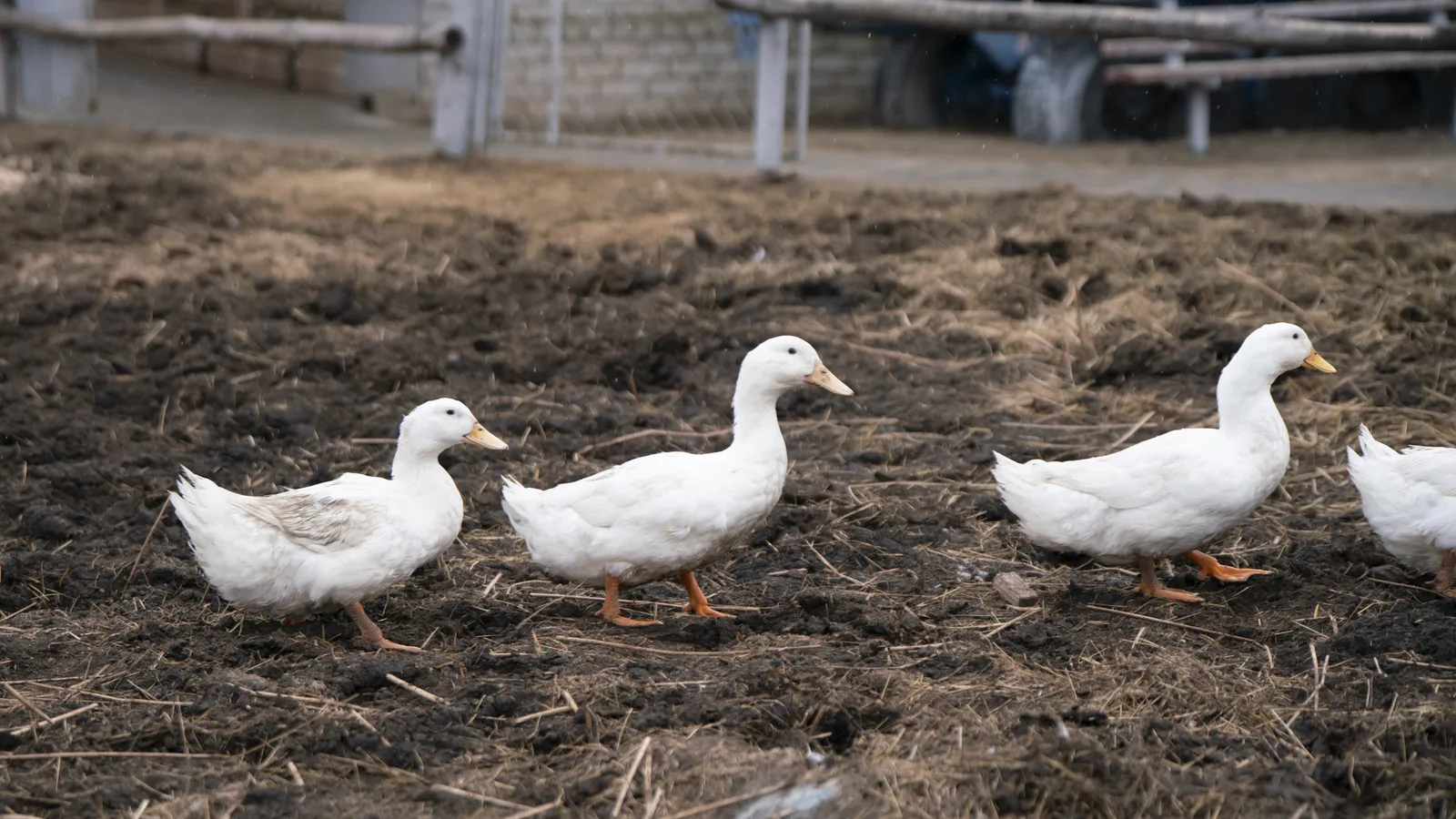
The comeback that Long Island's food world has been waiting on since January 2025 is no longer a projection. Crescent Duck Farm in Aquebogue, the last commercial duck farm on Long Island and the reason the phrase Long Island duck still appears on menus across the country, resumed full production in early September, roughly 19 months after avian flu forced it to destroy every bird it had.
From zero birds to a working farm
In July, we traced the rebuild as it was happening: the H5N1 detection in January 2025, the loss of a flock of roughly 100,000 birds, the 15,000 eggs that state and federal officials allowed the family to save after they tested negative, and the slow work of raising a new generation off-site while the century-old farm was disinfected and cleared, barn by barn, by federal inspectors. At the time, the farm was targeting a return to market this fall.
Fall arrived and so did the ducks. The farm turned its production lines back on at the start of September, and the clearest sign that this is real is the payroll. Crescent employed 72 people before the outbreak and had to let 55 of them go when the flock was destroyed. A year ago the payroll was down to 18. It now stands at 62, with 39 people hired in the space of about two weeks, and nearly all of them are the same workers who were laid off in the winter of 2025. On a farm that has been run by the same family since 1908, the workforce came back the way the bloodline did: mostly intact, carefully rebuilt, and local.
Why it took three extra months
The original plan called for full production in June. The farm pushed it to September deliberately, after a hard winter left wild birds hungry, concentrated around scarce food and open water, and more likely to carry the virus onto a farm. Waiting out the spring migration season cost a quarter of revenue-producing time and was, in hindsight, the conservative call that a business with exactly one flock to lose had to make.
Even now, the farm is running at about three quarters of its former capacity by choice rather than necessity, scaling back up in stages instead of betting everything on a single season. The operation that once processed around a million ducks a year, roughly four percent of all the duck eaten in the United States, is treating its own recovery the way it treated those 15,000 quarantined eggs: too valuable to rush.
Where you can actually buy it
Crescent has always worked through distributors, which is why its name shows up on white-tablecloth menus more often than in home kitchens. But there are two places on the East End where the comeback is already on the counter.
Miloski's Poultry Farm on Route 25 in Calverton, the neighboring family business that sheltered and raised Crescent's salvaged ducklings during the quarantine, sells fresh Crescent duck from Wednesdays through the weekend. If you want to taste the reason Suffolk County was once duck country, that farm stand is the shortest path to it.
In Riverhead, Jerry and the Mermaid has been putting Crescent duck breast on its specials board throughout the farm's limited-production stretch, a seafood restaurant buying duck for no reason other than keeping a 118-year-old neighbor alive, and it plans to add roast duck as supply returns to normal. Expect the farm's name to start reappearing on Long Island menus generally this fall and winter as distribution ramps back up. When you see it, that dish is the comeback.
The threat has not gone anywhere
The farm has spent the rebuild hardening itself. Screens, netting and site changes are designed to make the property less inviting to the wild waterfowl that carry the virus, and the operation's biosecurity, already strict before the outbreak, has been tightened further. The family's owner has been equally public about the limit of all that effort: without access to poultry vaccination, which federal policy has long restricted because of export-certification rules, a farm's only defenses are diligence and luck. A second outbreak would end the business, and everyone involved knows it.
Why this one farm matters
Long Island supported more than 90 duck farms in the 1950s and produced most of the duck eaten in America within living memory. That industry shrank for half a century under taxes, land prices and environmental costs until exactly one farm remained. When the flu hit in January 2025, the realistic outcome was that the count would go to zero and Long Island duck would become a historical term, like so much else out here that survives only as a name on a sign.
Instead, the fourth generation of one Aquebogue family spent 19 months and an enormous amount of borrowed patience putting it back. The ducks are in the barns, the crews are on the clock, and the product is in a Calverton farm stand four days a week. The Island still makes the thing it is named for. This fall, that is worth a drive east and a spot in your oven.
Loading comments…