
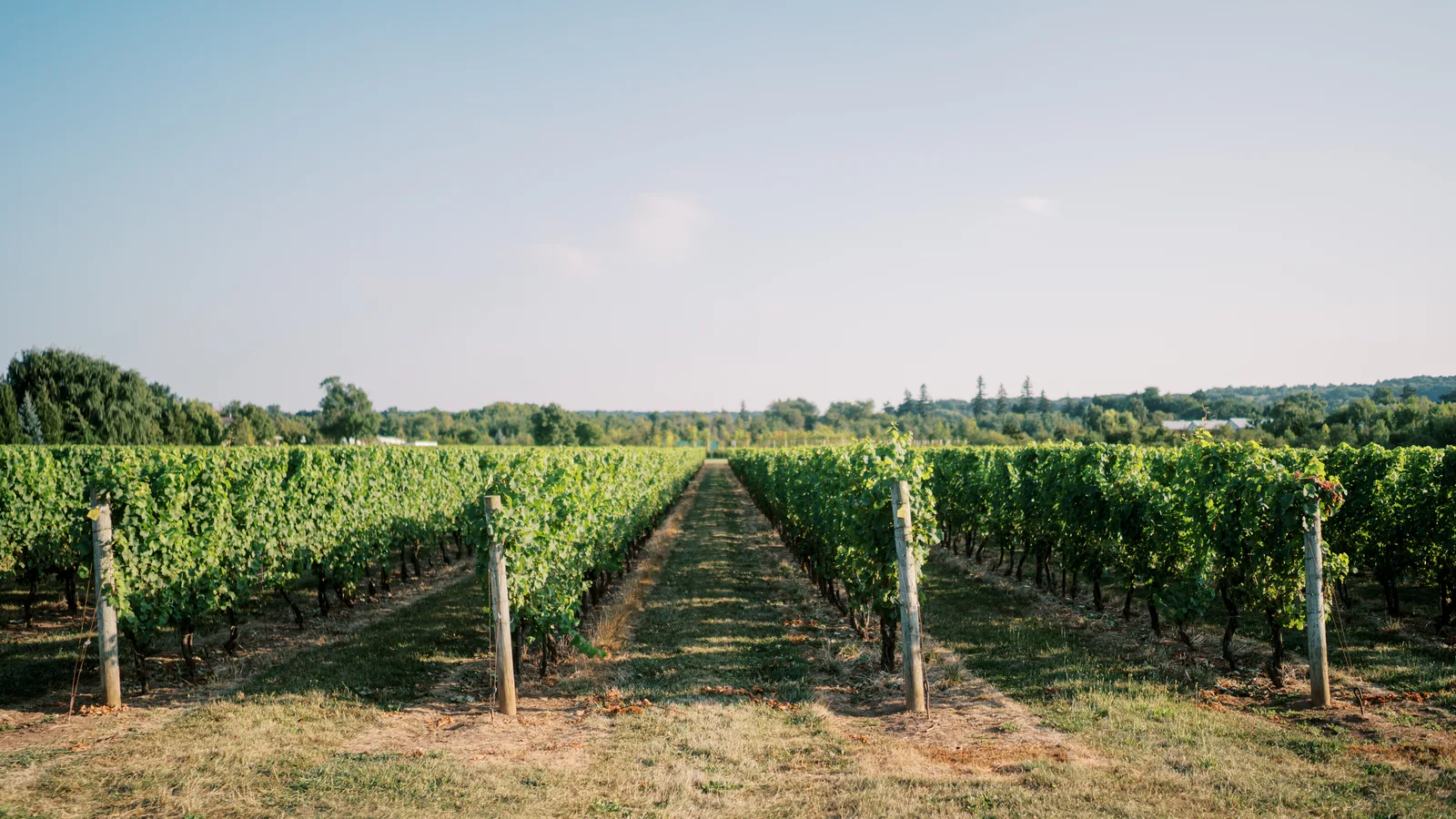
For more than three decades, the vines on Tuthills Lane in Jamesport have done their work anonymously. The Merlot, Chardonnay and Cabernet Franc grown there went into other wineries' bottles, under other wineries' labels, and the farm's name appeared nowhere a wine drinker would ever see it. That era has formally ended. As of August 20, Terramare LLC, doing business as THEO Vineyard at 480 Tuthills Lane, can do the one thing the farm has never been able to do: turn its own grapes into wine and sell the result right there on the property.
The farmer who planted it all
The vineyard's story runs through one of the most respected figures in Long Island wine. Sam McCullough joined The Lenz Winery in Peconic, one of the North Fork's founding estates, in 1989, and made his name over the following decades managing its vineyard. In the early 1990s he bought his own parcel in Jamesport, and by the vineyard's own telling he began planting it in 1993, starting with Merlot and Chardonnay, adding Cabernet Franc in 2000, then Malbec, Petit Verdot and Cabernet Sauvignon in 2001.
What he built was a grower's vineyard in the purest sense. The fruit from Tuthills Lane earned a reputation among North Fork winemakers, and the farm sold its harvest to wineries that turned it into finished bottles. The wine was praised. The vineyard that grew it stayed invisible.
New hands, same vines
In 2025, McCullough sold the farm to Chris Ariens, who renamed it THEO Vineyard in honor of his great-great-grandfather Theodore Ariens, an immigrant who put down roots in Wisconsin as a farmer. The sale did not sever the connection: McCullough stayed on as a consultant, which means the person who planted every row still has a hand in how the fruit is farmed.
The corporate trail connects cleanly to the new owner. Terramare LLC was registered with the state in June 2024 with Ariens as its agent, and THEO Vineyard is the name it trades under. The vineyard's stated intention has been to carry on the legacy of selling high quality fruit that makes award winning wines, and the change adds a second path: some of that fruit can now stay home.
What 1,500 gallons buys
What THEO can now do is small by design. The farm can produce up to 1,500 finished gallons of wine or cider a year, roughly 7,500 bottles, made exclusively from New York grown agricultural products, and it can sell and pour what it makes at the farm itself, the same way the region's full farm wineries do. The arrangement exists for working farms exactly like this one.
For scale, 1,500 gallons is a rounding error next to the region's established producers. It is also more than enough to put a first label on a shelf, stock a farm stand, and find out what the vines can do when their fruit is not leaving the property. The small-scale route was built as a stepping stone, and plenty of the North Fork's now familiar names started at a similarly modest size.
A region that started the same way
There is a neat symmetry in the timing. The North Fork's first vinifera vines went into former potato fields in 1973, planted by people betting that sandy glacial soil and a maritime climate could make serious wine. Fifty years later the region holds more than fifty vineyards, wineries and tasting rooms, and the bet has long since paid off. A newcomer built on thirty-year-old vines, farmed by the same hands that planted them, joins that lineage with an advantage most startups never get: the vineyard is already mature.
What happens next is the part worth watching. The ability to make wine is not yet a bottle of wine, and THEO has not announced when a first vintage might be poured or what visiting the farm will look like. But the waiting phase is over, the vines are in their prime, and the North Fork's roster of wineries just grew by one. For anyone who drives Sound Avenue every fall wondering what is behind the rows they pass, Tuthills Lane just became a name to remember.
Loading comments…