
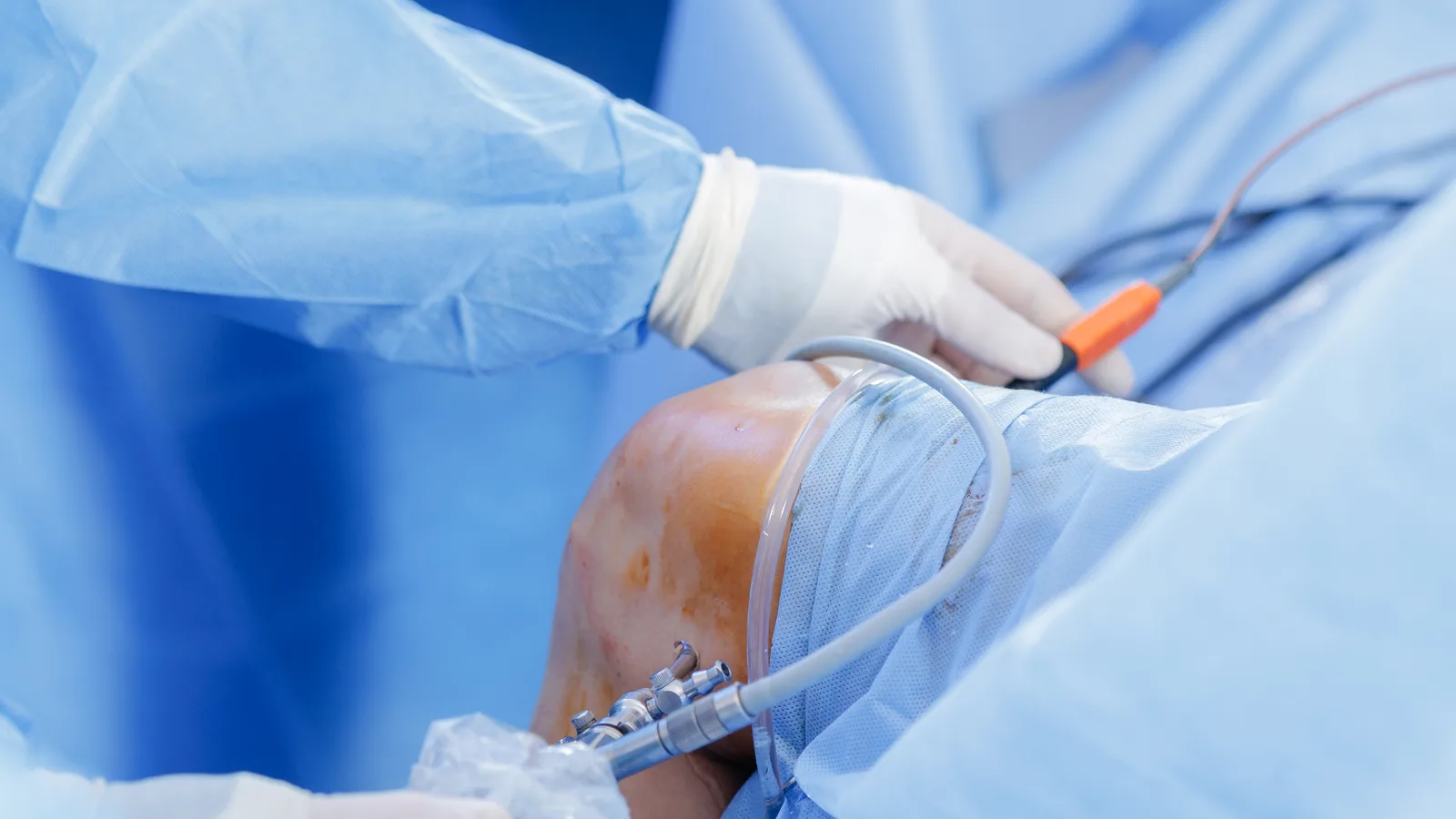
The newest surgical robot on Long Island does not tower over the operating table. It is a wireless device small enough to be held in a surgeon's hand, and Syosset Hospital is the first hospital on the Island, and the first anywhere in the Northwell Health system, to put it to work on knee replacements. Northwell announced the milestone on August 24, after orthopedic surgeon Ayal Segal used the system, called TMINI, to replace the knee of a longtime Massapequa resident.
A robot that follows the surgeon's plan
TMINI, short for miniature robotic system, is made by the California medical technology company THINK Surgical. The process starts before anyone reaches an operating room: the patient gets a CT scan, and the scan becomes a three-dimensional model of the knee. The surgeon uses that model to build a personalized surgical plan, deciding exactly where bone will be prepared and how the implant will sit before the first incision is made.
In the operating room, the handheld robotic device assists the surgeon in executing that plan, helping place cuts and pin locations along the precise lines the model calls for and compensating for the natural movement of a human hand. The surgeon stays in control of the operation throughout. The robot's job is not to operate. It is to make sure the operation lands exactly where the plan says it should.
Why this one is different
Robotic assistance in joint replacement is not itself new to Long Island. Northwell hospitals have used robotic platforms for knee work for years, and other systems on the Island have their own. What sets TMINI apart, and what Northwell highlighted in bringing it to Syosset first, is that it is an open platform. Most robotic surgery systems are built by implant manufacturers and only work with that manufacturer's implants, which means the choice of robot quietly decides the choice of hardware that ends up in a patient's leg.
TMINI works with implants from multiple manufacturers. A surgeon who has spent a career with a particular implant, and knows exactly how it behaves over ten and twenty years in a patient, can keep using it and still get the robotic precision. For patients, that means the implant is chosen because it is the right one for their anatomy and their surgeon's experience, not because it is the one the robot happens to be compatible with.
The first patient is already up
The first TMINI knee at Syosset belonged to Jane Bilella Fitzpatrick of Massapequa, who had lived with debilitating knee pain for years, long enough that walking, stairs and time with family had all become negotiations. According to Northwell, she is recovering and looking forward to getting back to the activities the knee had taken off the table.
She has plenty of company. Knee replacement is one of the most common major operations in America, with hundreds of thousands performed every year, and Long Island's aging population makes it a staple of every hospital system here. Syosset Hospital in particular has spent years positioning itself as Northwell's orthopedic specialty campus, with a Center for Orthopedic Excellence that draws joint replacement patients from across Nassau and western Suffolk.
What it means if your knee is next
For a reader who has been putting off a knee consultation, the practical takeaway is that the menu of options in Nassau County just got wider. Robotic precision no longer requires committing to one manufacturer's ecosystem, and the hospital offering the new approach is a community-scale campus on the Jericho Turnpike corridor rather than a trip into the city. Anyone weighing a replacement should still ask the questions that matter most: how many of these procedures the surgeon has done, which implant they recommend and why, and what recovery actually looks like week by week. But the technology conversation on Long Island now includes a robot that fits in a hand, and for the moment, Syosset is the only place here having it.
Loading comments…