
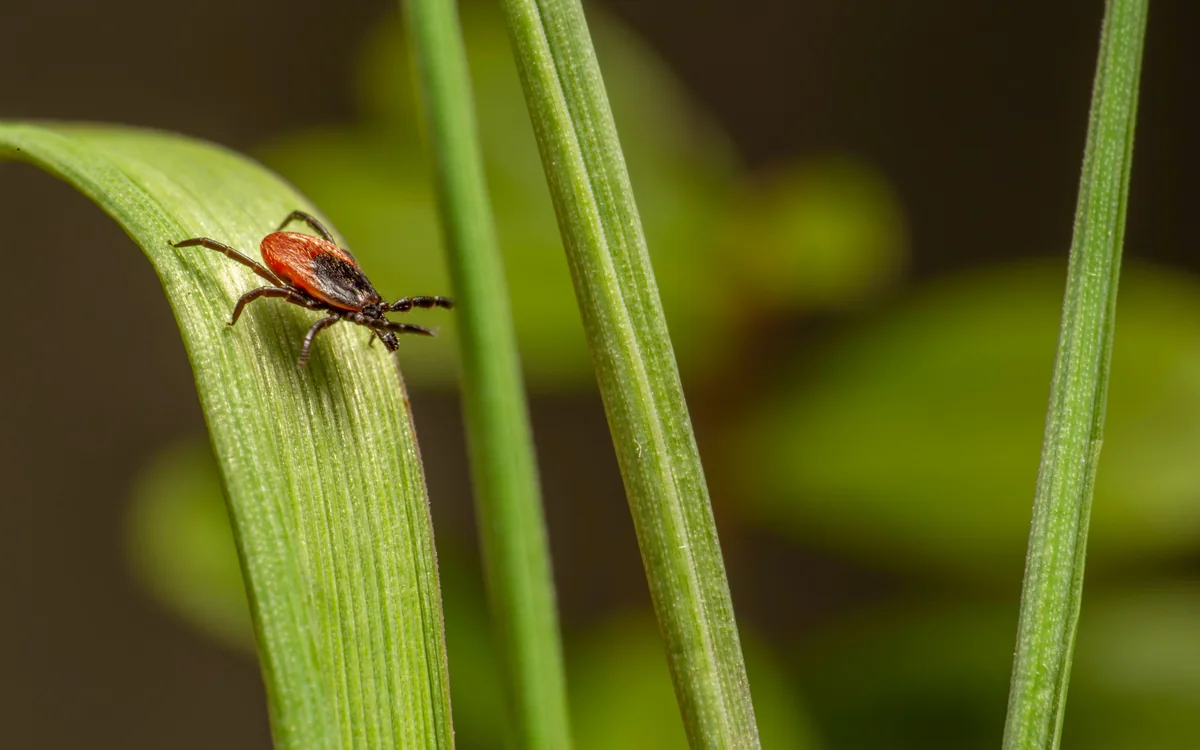
Suffolk County doctors say this year's tick season showed up ahead of schedule, and it arrived busy. New CDC data show emergency-room visits for tick bites nationally are at their highest weekly rate since 2017, a trend the agency says holds true in New York as well.
Physicians across Suffolk County report tick activity starting earlier than usual in 2026. "We are already seeing tick activity in Suffolk County and throughout New York State. Timing seems to be a bit earlier than in past years," said Dr. Andrew Handel, Assistant Professor of Pediatrics at Stony Brook's Renaissance School of Medicine and a pediatric infectious disease specialist at Stony Brook Children's.
Dr. Handel also sees patients at the Stony Brook Regional Tick-Borne Disease Resource Center, located at 182 West Montauk Highway in the Hampton Bays Atrium. The center opened in August 2023 and is described as the first and only dedicated tick clinic in the Northeast, giving East End residents and their doctors a specialized local resource when a bite raises questions.
It is not just an earlier start that has caught doctors' attention. Dr. Conan Tu, an internist at Optum Medical Care of New York and New Jersey based in Bethpage, said the ticks themselves, and the bites they cause, have been shifting. "Over the last several years, there's definitely been a change in tick-bite patterns. We've seen an increase in bites in general and also a change in the ticks that are affecting us," Dr. Tu said.
Suffolk County has long been considered one of the nation's Lyme disease hotspots and is also described as an epicenter for babesiosis, a tick-borne parasitic infection. Both conditions have made tick awareness a routine part of spring and summer life on Long Island for years.
What is newer, according to doctors, is the growing footprint of the lone star tick, which is especially prevalent on the East End. In some people it bites, the lone star tick can trigger alpha-gal syndrome, an allergy to red meat that can develop even in people who have eaten meat safely their entire lives. Doctors say it is one more reason to take tick bites seriously, even ones that do not immediately cause a rash or fever.
State officials are also treating this season as one that calls for extra caution. On April 30, 2026, New York's Department of Health, Department of Environmental Conservation, and State Parks issued a joint statewide advisory on tick precautions, a coordinated warning meant to reach residents before peak outdoor season.
Behind the scenes, Suffolk County's Department of Health Services has been tracking the problem for years through an ongoing tick pathogen surveillance program, run in partnership with the state health department since 2016. The program monitors ticks countywide for the pathogens behind Lyme disease, babesiosis, anaplasmosis, and ehrlichiosis, giving health officials a real-time picture of what residents are up against each season.
For now, the message from Suffolk County physicians is straightforward: ticks are active earlier and in greater numbers than in past years, and East Enders in particular should be aware of the lone star tick's link to alpha-gal syndrome alongside the more familiar risks of Lyme disease and babesiosis.
Anyone who suspects a tick bite has made them or a family member ill is encouraged to contact their physician and to consult resources from the New York State Department of Health or the Suffolk County Department of Health Services for guidance specific to their situation.
Loading comments…