
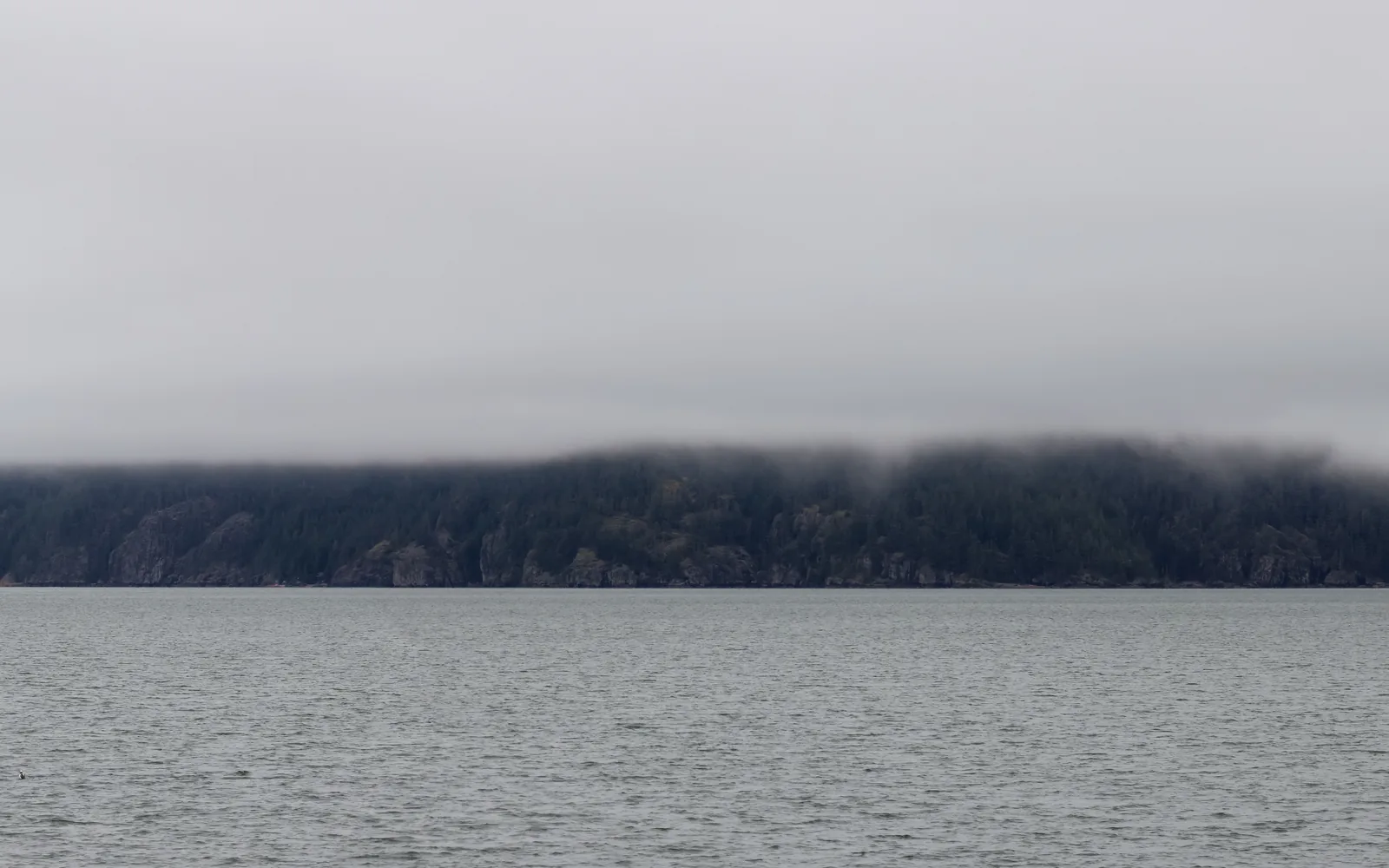
From the ferry terminal at Orient Point you can see it on a clear day, a low green ridge sitting about a mile off the end of the North Fork. Almost nobody reading this has set foot on it. For roughly 375 years Plum Island has been a place you needed permission to visit, and for the last seven decades the permission came from the federal government.
That may be about to change. On July 15, Suffolk County Executive Ed Romaine announced that the county intends to acquire the 822-acre island from Washington, and to plan for what happens to it afterward.
The announcement is not a purchase, and it is not a done deal. It is Suffolk raising its hand early, before a very slow federal process reaches the point where hands can be raised at all.
What is actually out there
Plum Island is about three miles long and a mile wide, sitting in the water between Orient Point and Gardiners Bay, inside the Town of Southold. It has been federal property in one form or another since the late 1800s.
The Army built Fort Terry there around 1897 as a coast artillery post guarding the approach to Long Island Sound, and its concrete batteries are still standing. The Plum Island Light Station, first lit in 1827 and rebuilt in its current form in 1869, marks the Plum Gut, one of the fastest and least forgiving tidal channels on the East Coast. Both the fort and the light station are on the National Register of Historic Places.
Then there is the lab. In 1954 the U.S. Department of Agriculture opened the Plum Island Animal Disease Center to study foot-and-mouth disease and other livestock pathogens somewhere they could not reach a barn. The Department of Homeland Security took over the facility in 2003. Its research mission has been winding down as the work shifts to the National Bio and Agro-Defense Facility in Manhattan, Kansas.
The part that surprises people is the ecology. Because most of the island has been closed to the public and off limits to development for more than a century, it has become one of the least disturbed pieces of land in the region. The Preserve Plum Island Coalition, a group of more than 120 organizations, says nearly a quarter of all bird species known in North America north of Mexico have been recorded there, along with more than 111 species of conservation concern. Seals haul out on the rocks in winter. Rare coastal plant communities survive on ground that never got a subdivision.
The island was almost sold once already
This is the second act of a fight that started in 2008, when Congress ordered Plum Island sold at auction to help pay for the Kansas replacement lab. That put an 822-acre island in the Peconic region on the open market, and it is what brought the coalition into existence.
The sale order stood for twelve years. In December 2020 Congress reversed it, and the repeal was signed into law on December 27 of that year, along with $18.9 million toward environmental cleanup. The auction was off. What the island would become instead was left open.
The process that has to run first
Federal real estate does not simply transfer because a county asks. The sequence works like this. When the science mission ends, Homeland Security issues what is called a Report of Excess, which tells the rest of the federal government the property is available. Other federal agencies get first look. Only if none of them claims it does the property get declared surplus, and only then can a local government formally express interest.
The Preserve Plum Island Coalition says no federal agency is currently known to be seeking the property. The county expects a surplus declaration could come early next year.
Suffolk's route in would be a public benefit conveyance, the mechanism by which surplus federal land goes to a state or local government for a public purpose rather than to the highest bidder. Romaine has said the county is seeking state funding to commission a comprehensive business and operations plan covering security, infrastructure, conservation, continued scientific research and public access, and to study ferry service options around the Peconic Estuary.
Louise Harrison, Long Island project manager for Save the Sound, called the announcement "a giant step that inspires our imaginations about the possibilities for future partnerships."
Southold still holds the zoning
One detail gets lost in the excitement about a county takeover. Whoever ends up owning Plum Island, the Town of Southold controls what can legally be built on it.
For about a century the island had no underlying town zoning at all, because it was military or federal property. That changed in 2012, when Southold adopted zoning specifically for Plum Island in anticipation of the ordered sale. The regulations permit research uses, limited residential development tied to those uses, and renewable energy production, while restricting the kind of intensive development that a developer would have wanted from an auction purchase.
In practice that means the town is a partner in this whether or not it is at the negotiating table, and Southold officials have made the point that a transfer raises real questions about who manages the place day to day.
The unglamorous questions
An island is a large object to inherit. Plum Island comes with its own power generation, its own water supply, a harbor, a ferry operation that currently exists to move federal employees, decades of buildings in varying condition, and an environmental cleanup that the 2020 law funded but did not finish.
There is also the matter of getting people there. Any meaningful public access means a boat, a dock, a schedule and somebody responsible when the weather turns in the Plum Gut. That is the sort of thing the county's proposed operations plan exists to answer, and it is why the answer is a study rather than a ribbon cutting.
None of that makes the idea unreasonable. It makes it a long project. Suffolk County has just told Washington, roughly a year before the question formally comes up, that when the island is finally offered, it would like it to stay in public hands.
Loading comments…