











The western end of Shinnecock Bay has gone nine years without a brown tide bloom, more than 100 acres of new eelgrass have been documented there, and both juvenile clams and clam landings are up twentyfold. Those are the results of the Shinnecock Bay Restoration Program, laid out at Stony Brook Southampton on November 13 at a program on the bay's culture and conservation, according to Stony Brook University.
How the bay came back
Christine Santora, assistant director for policy and outreach at Stony Brook's Institute for Ocean Conservation Science and program manager of the restoration program, described a western bay that had lost much of its shellfish and eelgrass after decades of overfishing, nutrient pollution and harmful algal blooms.
The program combined research, field monitoring and outreach. Its crews placed adult hard clams in protected sanctuaries, built oyster reefs and expanded eelgrass meadows. Not everything worked at first. Juvenile clams planted early on were quickly eaten, and some oyster bags sank into the mud. Monitoring showed what was failing, so the team switched to adult clams and to spreading eelgrass seed instead.
Members of the Shinnecock Nation serve on an Indigenous Advisory Council that supports the restoration, and in 2022 Shinnecock Bay was designated a Mission Blue Hope Spot.
The results, by the numbers
- Nine years without a brown tide bloom in the western bay.
- More than 100 acres of new eelgrass documented.
- Twenty times as many juvenile clams.
- Twenty times the clam landings.
The baymen's side of the story
The day, called Working Waters: Culture and Conservation and organized by Stony Brook's Collaborative for the Earth, brought more than two dozen students and faculty to the Southampton campus and its Marine Sciences Center. It opened with a screening of The Bonackers, filmmaker Joanne Friedland Roberts's documentary about South Fork baymen, followed by a discussion with Roberts about balancing conservation with the livelihoods of fishing families.
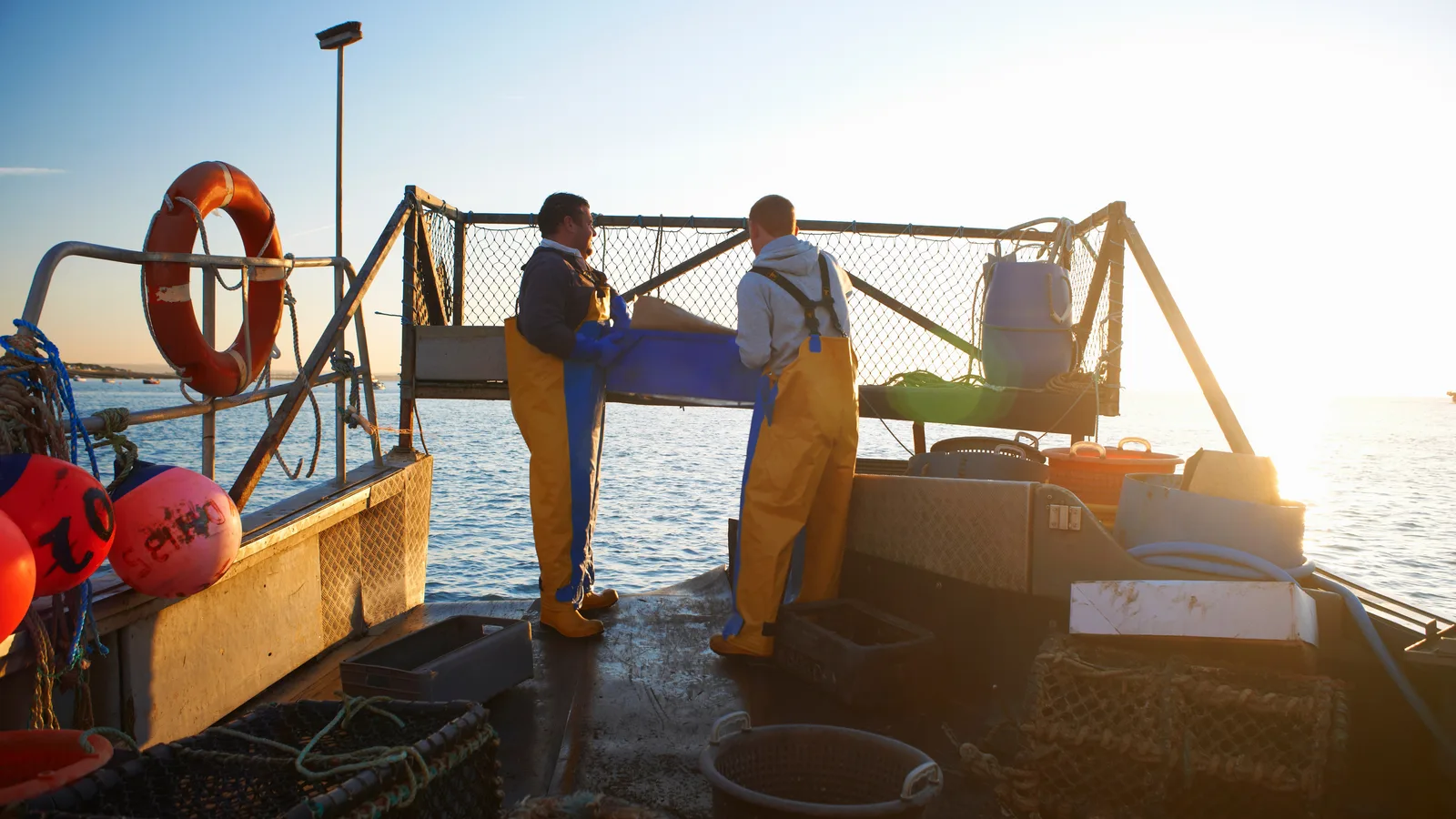
Ed Warner, a fifth-generation bayman who learned the work from his father and grandfather and now works the water with his own son, joined Joyce Novak, executive director of the Peconic Estuary Partnership, for a question-and-answer session. Warner spoke about the cost of getting started and the other hurdles facing new baymen, the difficulty of processing seafood locally, and the scallop populations still waiting to recover.
Inside the Marine Sciences Center
Rain canceled a planned boat trip on Shinnecock Bay, so Chris Paparo, the center's facility manager and field station naturalist, moved indoors with a talk on the South Shore food web, from forage fish to sharks, seals and seasonal visitors. He encouraged eating local seafood such as black sea bass and scup, and urged students toward internships and volunteer work on the water.
Marine lab technician Katie Santoro then led a tour of the center's wet lab, where teams work on shellfish restoration and study how eelgrass grows in warmer, more acidic water.
Learn more
Stony Brook University's report on the day links to the Collaborative for the Earth's own site, where the group posts its programs.
Loading comments…