
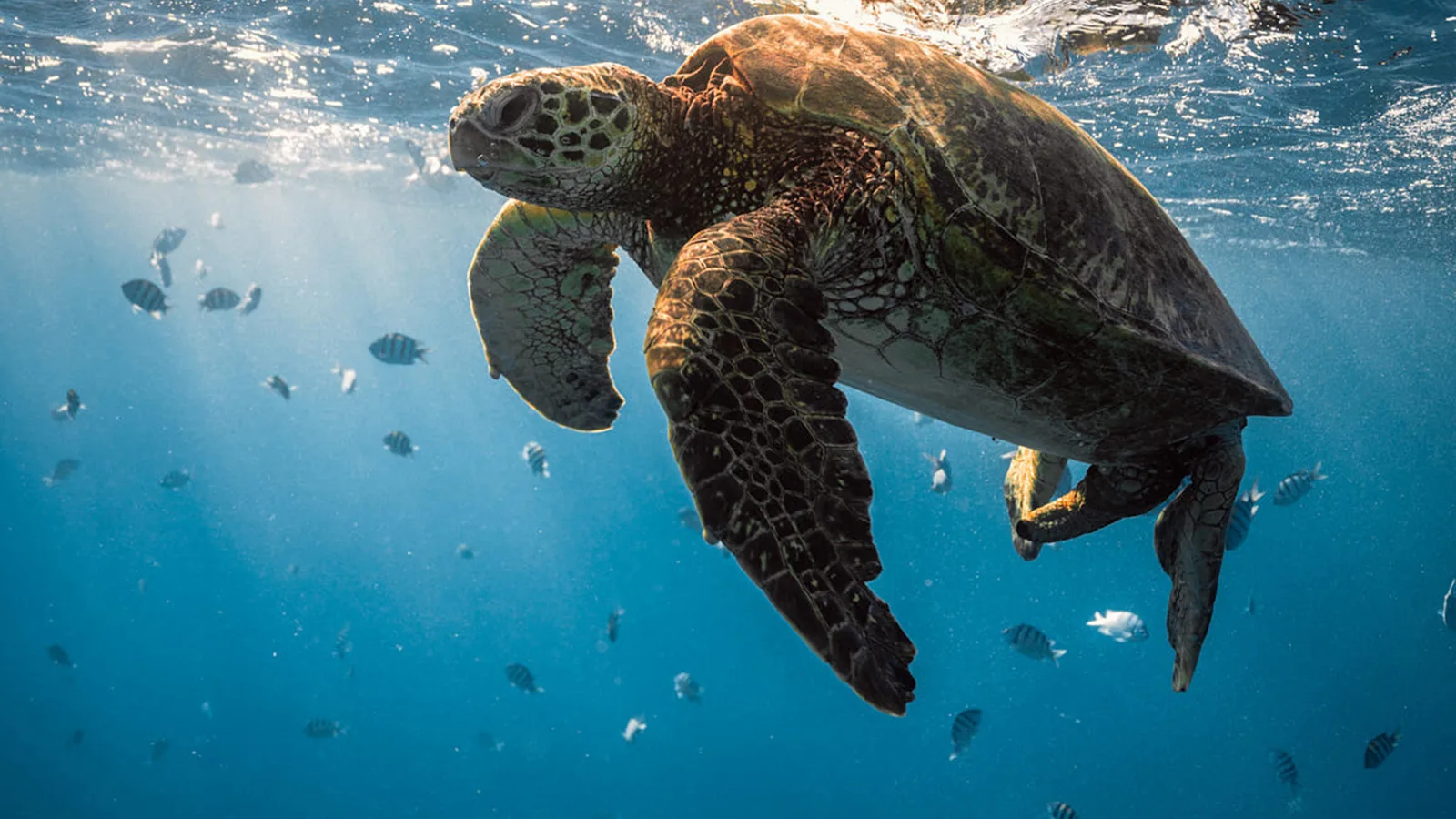
Just after 6 p.m. on August 12, six sea turtles crossed a stretch of sand at Tiana Beach in Hampton Bays and swam into the Atlantic. Each one had spent the better part of a year in a rehabilitation tank in Riverhead, and each one had arrived there the same way: washed up on a Long Island beach in the cold months, too weak to swim, on the wrong side of a migration it never made.
The release was run by the New York Marine Rescue Center, the Riverhead nonprofit that has handled sea turtle and marine mammal rescues in New York waters since 1996. It was free, it was open to anyone who wanted to stand on the beach and watch, and it marked the end of a rescue season that began last November, when the first of this winter's cold-stunned turtles started turning up on North Fork beaches.
A ferry slowed down for her
One of the six has a better story than most turtles ever get. Arugula, a green sea turtle, was first rescued in December 2024 at Navy Beach in Montauk, rehabilitated in Riverhead, and released back into the ocean in the summer of 2025. She was supposed to head south. She did not go far enough.
Almost exactly a year later, in December 2025, she stranded again, this time in Port Jefferson Harbor near the ferry dock. The crew of the Grand Republic, the Bridgeport and Port Jefferson ferry, spotted her in the water. The captain slowed the boat and used it to guide her toward the dock, where the dock supervisor lifted her out. She went back to the same Riverhead tanks, put weight back on through the winter and spring, and on August 12 she went home for the second time in her life, carried across the same beach as the first time.
A sea turtle rescued twice, two winters in a row, by two different corners of Long Island, is a strange kind of local celebrity. She is also a walking argument for why the rescue center wants people to know what a stranded turtle looks like, because both times, somebody noticed her in time.
Five gemstones from a cold November
The other five turtles were all rescued in a five-week stretch last fall, and all of them were named for gemstones. Emerald, a green sea turtle, was found November 11. Amethyst, a Kemp's ridley, the most endangered sea turtle in the world, came in November 15. Peridot, another green, was found November 18 near 67 Steps Beach in Greenport. Citrine followed on November 20, and Tanzanite, the last of the group, on December 6.
All of them were cold-stunned. Sea turtles are reptiles, and their body temperature follows the water around them. The ones that linger in Long Island bays too far into the fall get caught when the temperature drops fast. They become lethargic, they stop eating, and eventually they stop being able to swim at all. The tide delivers them to the beach, and from there they have hours, not days. The turtles that get spotted go to Riverhead. The rehab that follows is slow on purpose, because warming a cold-stunned turtle too quickly can kill it. For this group it took roughly nine months from stranding to release.
Three of them are phoning home
Before the release, Peridot, Emerald and Amethyst were fitted with satellite transmitters, part of a partnership between the rescue center and the state Department of Environmental Conservation. The tags report where the turtles go after release, which is a polite way of saying they answer the question every rehab center lives with: does any of this work?
The early data from tagged turtles is how researchers learn where rehabilitated animals actually spend their time, which habitats they return to, and whether they clear Long Island waters before the next cold snap. Arugula, the two-time patient, is the case study for why that matters.
What to do when you find one
Cold-stun season comes back every November, and the North Fork and the Sound-side beaches are where it lands. A stranded sea turtle usually looks dead. It usually is not. It is cold, slow and shutting down, and the worst thing a well-meaning beach walker can do is put it back in the water that stunned it. The right move is to note where it is, keep dogs and gulls away, and call the rescue center's stranding hotline so a trained responder can collect it.
If you would rather meet the turtles at the happy end of that pipeline, the center announces its public releases a day ahead on its social channels, and its two big fundraisers of the season, the Turtle Crawl on September 26 and a 5K on October 17, both support the tanks in Riverhead that turned six beached reptiles back into ocean animals this week. Somewhere off the South Shore right now, three of them are sending back their coordinates, and one of them has already promised nothing.
Loading comments…