
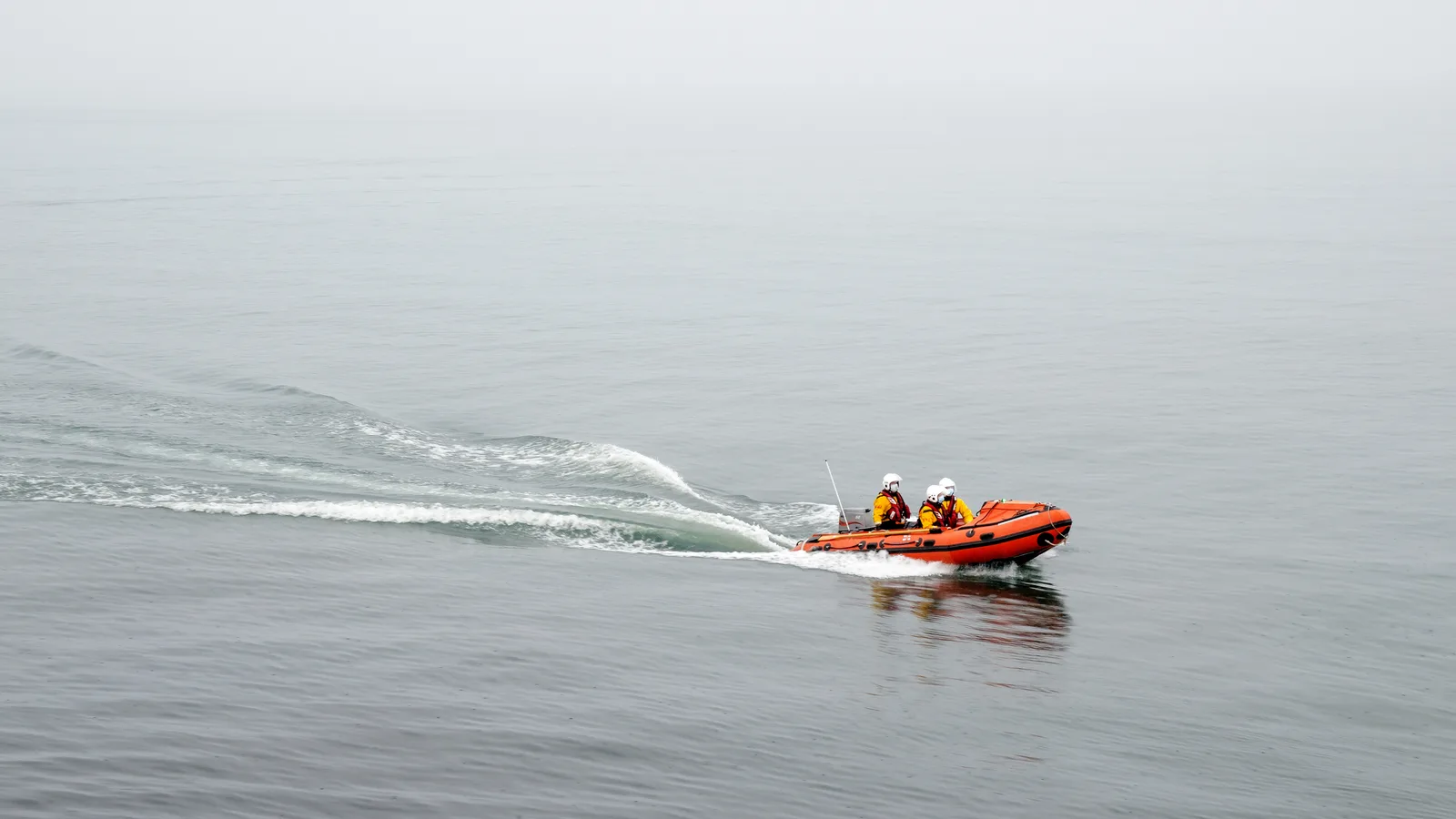
A 25-foot fishing boat carrying a Copiague family ran out of water in the mouth of the Fire Island Inlet late Saturday night, and the rescue that followed needed a machine most Long Islanders have never seen work: the Suffolk County Police Marine Bureau's hovercraft.
Four people were aboard the boat when it grounded on the falling tide the night of August 22: a 30-year-old man, a 30-year-old woman, their 2-year-old son and the boy's 62-year-old grandfather. The child's mother called 911 at 11:22 p.m. By the time officers reached the family and began taking them off the boat it was 1:52 in the morning, and the way they finally got there is the interesting part.
Where the water disappears
The Fire Island Inlet is the busiest cut on the south shore, and it is also one of the most treacherous, because the sand under it never stops moving. Shoals build and shift with every storm and every tide cycle, and a channel that carried a boat through in June can sit inches deep by August. At low tide, broad flats emerge around the inlet's mouth where the chart still suggests navigable water.
That is what caught the family's boat, a 25-foot Parker, which grounded as the tide fell and left the four of them stranded in the dark with water too shallow for any rescue boat to cross and too deep and soft to walk out of. Marine Bureau officers Keith Miller and Robert King answered the call aboard Marine Juliet, one of the bureau's patrol vessels, and could get no closer than half a mile. A conventional hull needs water, and there was no water to be had.
Two feet of air
The solution rode on a cushion of air. Officers Rob Jenkins and James Matriciano brought the bureau's hovercraft, designated Marine Hovercraft Tango, to Oak Beach and launched it from the shoreline. A hovercraft does not care whether what is underneath it is water, sand, mud or some combination of all three, because it never touches any of it: fans inflate a skirt of air beneath the craft and it slides over the surface. Flats that stopped a patrol boat half a mile out are simply terrain to it.
Tango crossed the shallows, reached the stranded Parker and began taking the family off at 1:52 a.m. All four were carried to the New York State Boat Basin nearby. The toddler was taken to Good Samaritan University Hospital in West Islip and treated for minor injuries. His parents and grandfather came through the night unhurt.
The quiet lesson in the timeline
Two and a half hours passed between the 911 call and the family stepping off their boat, and none of that time was wasted. It is roughly what it takes to discover that the direct route will not work, truck a specialized craft to the nearest launch point and cross a half mile of flats in darkness. The family did the single most important thing right: they stayed with the boat and called immediately rather than trying to walk or swim for shore. A grounded boat is uncomfortable but visible and stable. A person in the water or on soft flats at night is neither.
For everyone else still squeezing trips out of the season's last weekends, the inlet's message is worth taking seriously. The flats around Fire Island Inlet move constantly, the difference between floating and stuck can be a single hour of tide, and the deepest-looking route is not always the charted one. Check the tide before an evening run, give the inlet's edges more room than the chart suggests, and know that if the sand does catch you, the Marine Bureau owns a machine built for exactly that problem, and it works in the dark.
Loading comments…