
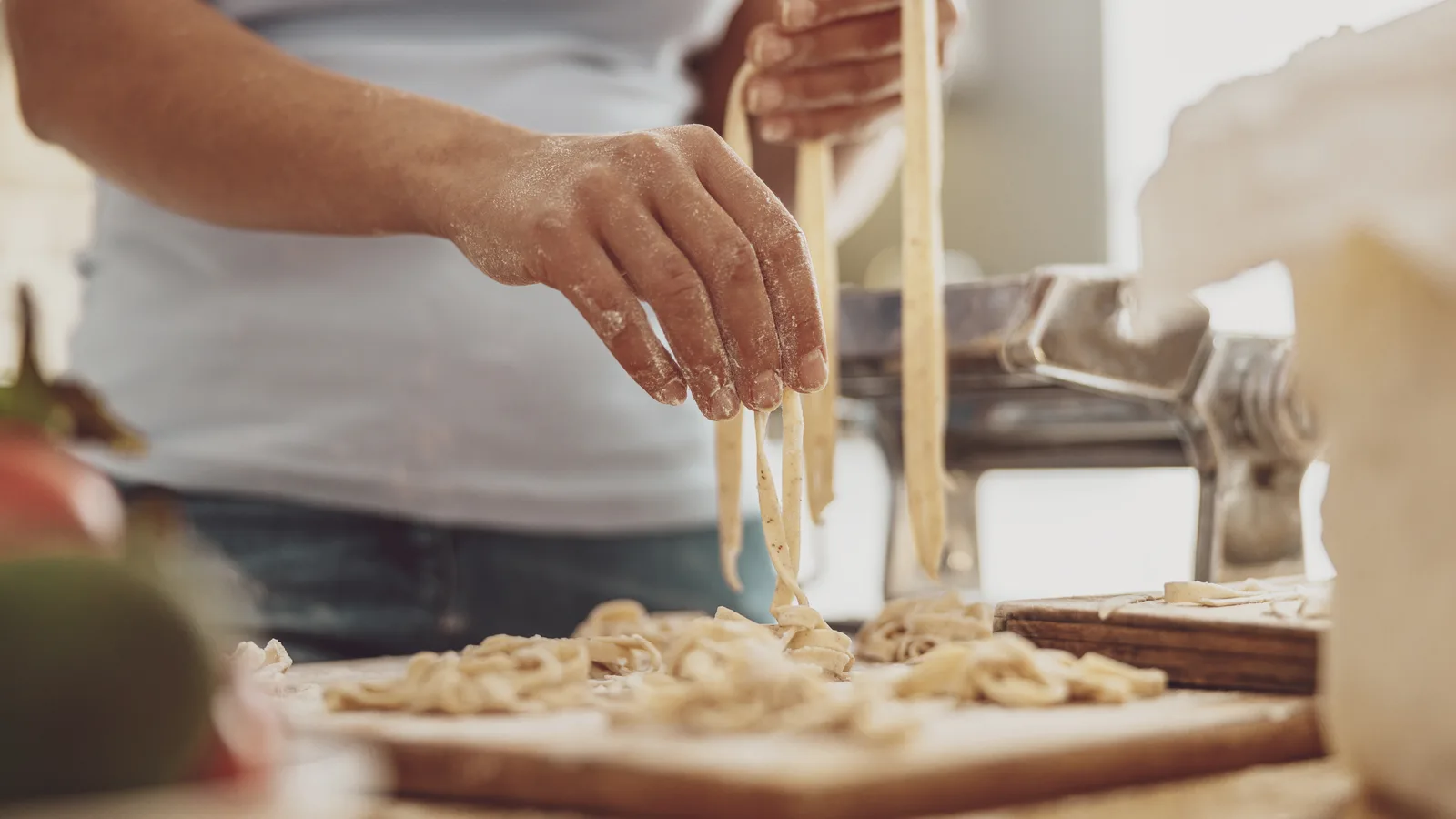
Milbar Boulevard in East Farmingdale is not where anyone goes looking for lunch. It is a short industrial street in the grid off Route 110, the kind of block where the neighbors are machine shops, contractors and loading docks. But at number 111, inside the warehouse of an Italian food importer called Sapori del Vallo, there is a working restaurant: fresh pasta made on the premises, bread and mozzarella from the same building, pizza out of a brick oven, tables where the customers eat a few steps from the pallets. And the one thing missing from that meal, a glass of wine, is now on the way.
SDV Imports, Inc., the company behind Sapori del Vallo, is preparing to add wine service to the dining tables at 111 Milbar Boulevard, under the simple trade name Sapori. State records show the address has never poured a drink of any kind. When the first glass lands, it will be a first for the building.
The plan, in plain terms
The plan covers wine, beer and cider served with food at tables, not spirits, so nobody should expect a negroni program on an industrial block. What it does is close the one gap in a meal that is otherwise startlingly complete: a plate of pasta rolled in the next room, at a place that imports its own olive oil, currently served without anything to pour alongside it.
Wine is not being served today, and the company has not announced a start date. What the move signals is that the company has decided the dining side of the operation is permanent enough to build on, which is its own kind of announcement.
A restaurant where a forklift should be
Sapori del Vallo is, first, an importer. The company brings in product from its namesake in Italy and runs a wholesale business supplying restaurants, alongside dry pasta, cheeses, cured meats, olive oils, coffee, sauces and the rest of the pantry an Italian kitchen runs on. The Farmingdale building is the hub of all of it, and the business traces its history back to 1994.
What makes the place worth a story is everything that grew up around the wholesale racks. The warehouse holds a cash and carry store that is open to the public seven days a week, weekdays from 9 a.m. to 5 p.m., Saturdays to 4 and Sundays to 3, selling the same imported goods the restaurants buy. It makes fresh pasta in house. It bakes bread and pulls mozzarella. And it seats people for pasta dishes and brick oven pizza in the middle of a building that, from the curb, promises none of this.
That model, the importer whose warehouse doubles as its own best advertisement, is common in Brooklyn and nearly extinct on Long Island. The economics are simple: the food is made where the ingredients land, there is no second kitchen and no Main Street rent, and the dining room functions as a showroom for the wholesale line. The reason most people have never eaten this way is that nothing about an industrial park invites you to try.
What a glass of wine changes
Not much, mechanically, and quite a lot in practice. A warehouse lunch is a novelty. A warehouse lunch with a glass of Italian red beside the rigatoni is a destination, and it puts the place in more direct conversation with the sit-down Italian restaurants of Farmingdale and Massapequa that have full bars and Main Street addresses. For a business that already sells imported goods by the case, it also means the shelf and the table can finally meet: the point of pouring wine at an importer is that the bottle on your table is the same one the operation knows how to source.
Worth the detour now, better later
For readers, the practical takeaway does not wait. The store and the dining tables at 111 Milbar Boulevard are open now, seven days a week, in a stretch of East Farmingdale most people only visit when a contractor sends them there. The pasta is made behind the wall you are sitting against. Sometime in the coming months, the missing glass of wine shows up. The neighborhood secret part of this story has a shelf life, and it is running out.
Loading comments…