
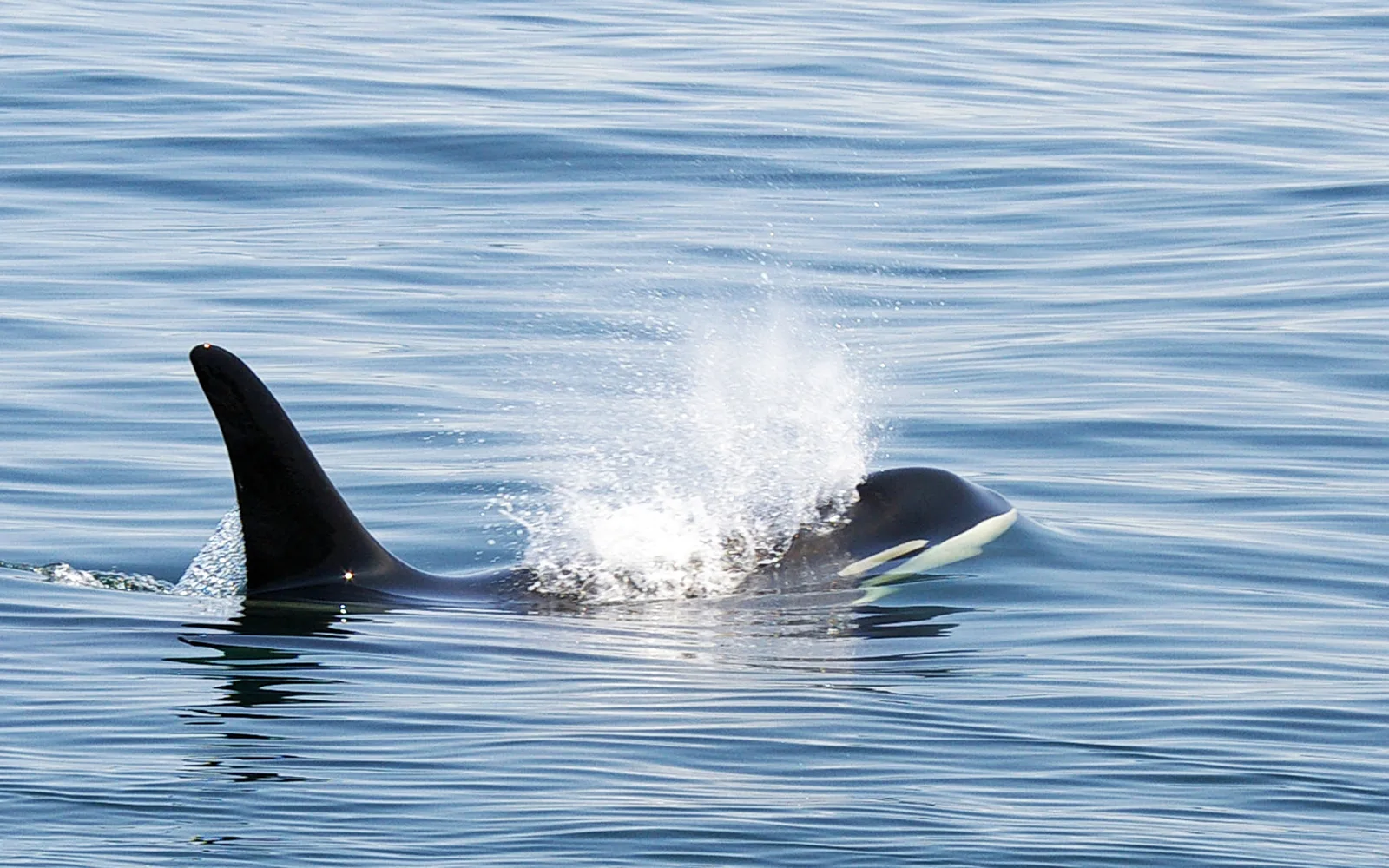
A solitary killer whale made a rare and unexpected appearance roughly 10 nautical miles off the coast of Montauk earlier this week, creating one of the more talked-about wildlife moments on Long Island this summer.
The large orca, distinguished by a towering seven-foot dorsal fin, surfaced near a group of dolphins before disappearing back into the Atlantic. The sighting was captured by students and instructors from the O'Seas Conservation Foundation Shark Camp, who were on the water with Dr. Craig O'Connell, known to many Long Islanders as "The Shark Doctor." O'Connell, who has spent more than a decade working the waters off the East End of Long Island, called the encounter one of the rarest things he has witnessed in local waters.
Many observers believe the animal could be the solitary male known as "Old Thom," a well-documented North Atlantic orca that typically patrols waters farther north around Cape Cod and the Gulf of Maine. Old Thom is known for traveling alone and often associating with dolphins rather than other orcas, behavior that matched what the Montauk group observed.
Orcas are almost never recorded this close to Long Island. While whales and dolphins are relatively common off the South Fork and Montauk in summer, a confirmed killer whale sighting remains exceptional. The event has generated significant interest among Long Island marine enthusiasts, boaters, and conservation groups who monitor the waters between the North Fork, South Fork, and the open Atlantic.
For Long Island residents who spend summers on the East End, the sighting serves as a reminder that the ocean surrounding the Island still holds surprises. From Montauk Point to the waters off Amagansett and East Hampton, the marine environment continues to draw researchers, whale-watch operators, and curious boaters. The presence of bluefin tuna, sharks, and smaller marine mammals in the area this season may have drawn the orca closer to Long Island shores in search of food.
Local conservation groups on Long Island have long emphasized the importance of protecting the waters that support both commercial fishing and recreational activities across Nassau and Suffolk counties. Sightings like this one underscore why careful observation and reporting remain valuable. Whether this particular orca continues to move through Long Island waters or was simply passing through remains unknown, but the moment has already become part of the 2026 summer conversation from Montauk to the rest of the East End.
For many Long Islanders, the story is a welcome break from more routine summer headlines. A genuine wild encounter off the tip of Long Island offers a sense of wonder that feels increasingly rare.
Loading comments…