
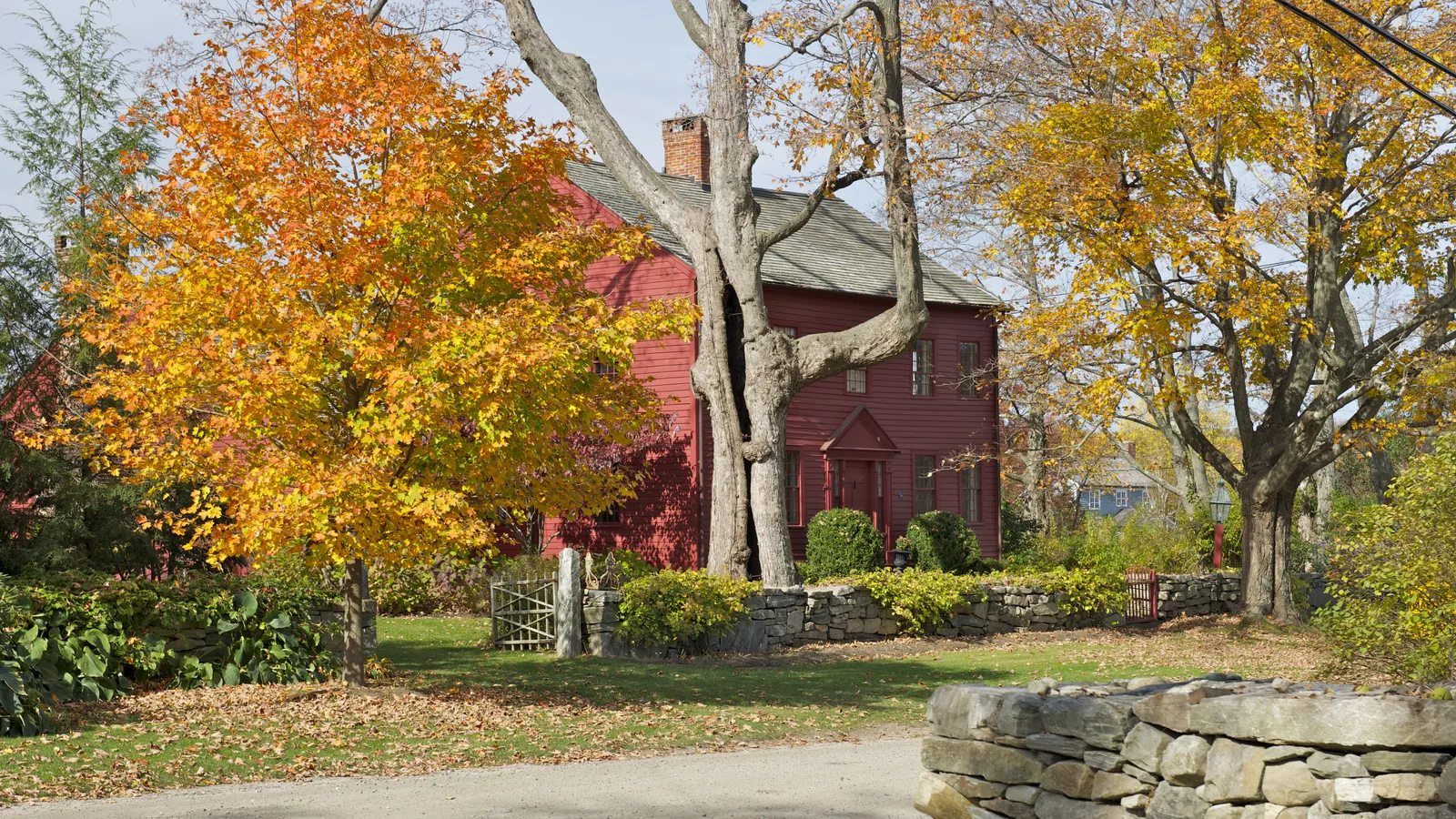
On James Lane in East Hampton Village stands a farmhouse that was already old when the Declaration of Independence was signed. Built in 1680 and left largely unchanged since 1750, the Mulford Farmhouse has reopened to the public after a comprehensive interior restoration by the East Hampton Historical Society, and it is open for touring through the fall.
The restoration returns the interior to the way it looked during the American Revolution, timed to the 250th anniversary of American independence. The house is open for tours from 11 a.m. to 4 p.m., Thursday through Monday, at 10 James Lane, and the society's calendar lists open visiting days through mid-November, including this weekend and Halloween.
One of the most intact colonial farmsteads in America
Mulford Farm is listed on the National Register of Historic Places and is considered one of the most significant intact English colonial farmsteads in the country. The framing and wood beams have gone largely undisturbed for three centuries, which is what lets scholars read the building the way a geologist reads rock layers, tracing each change the house went through over time.
Apart from brief interruptions, the property stayed in the Mulford family from 1712 until the East Hampton Historical Society acquired it in 1948. Furnished with period artifacts, the house now tells the story of the Revolution as East Hampton lived it. Colonel David Mulford helped lead the cause for independence on the South Fork, and the house does not simplify him: he was also among the largest slaveholders in the region, a contradiction the historical society presents as part of the full story.
The farmstead holds more than the house. The Mulford Barn, raised in 1721, was evaluated by the state in 1990 and ranked the second most important 18th-century barn in New York State. Beside it grows Rachel's Garden, a recreated 18th-century dooryard garden planted and maintained by the Garden Club of East Hampton with the medicinal, culinary and dye plants a colonial household depended on.
A free app tells the story even when the house is closed
Visitors who arrive outside touring hours are not shut out. A free augmented reality experience called 1776AR, funded by the Robert David Lion Gardiner Foundation, works on the farm grounds at any time. After downloading the app from the Apple App Store or Google Play, visitors walk the property to six engraved stones that act as markers, each one unlocking an episode of the Mulford family's Revolutionary War story, narrated by East Hampton Town and Village historian Hugh King. The society recommends a phone no more than a few years old and a pair of headphones.
The app traces Colonel Mulford's role in the lead-up to the Battle of Long Island in 1776 and the British occupation that followed, a period when East Hampton families lived under the control of the army their sons had gone off to fight.
Halloween week at the farmstead
The society's fall programming has found an audience. Its Goody Garlick walking tour on October 30, which revisits the 1658 witchcraft accusation against East Hampton's Elizabeth Gardiner Howell, an episode that unfolded 35 years before the Salem trials, is already sold out.
The farmhouse itself remains open for touring on Halloween Saturday and the Sunday after, both days from 11 a.m. to 4 p.m. Admission details and the full calendar are on the East Hampton Historical Society's site, and the grounds and the 1776AR experience are open whenever the gate is.
Mulford Farm is one of six historic properties the society stewards across East Hampton and Amagansett, a group that includes the Thomas and Mary Nimmo Moran home and studio, the Dominy Shops Museum, Clinton Academy and the East Hampton Town Marine Museum, the last of which is currently under renovation. For a village that dates to the 1640s, the farmstead on James Lane is the piece of that collection where the 18th century survives most completely, and this fall it is open five days a week.
Loading comments…