
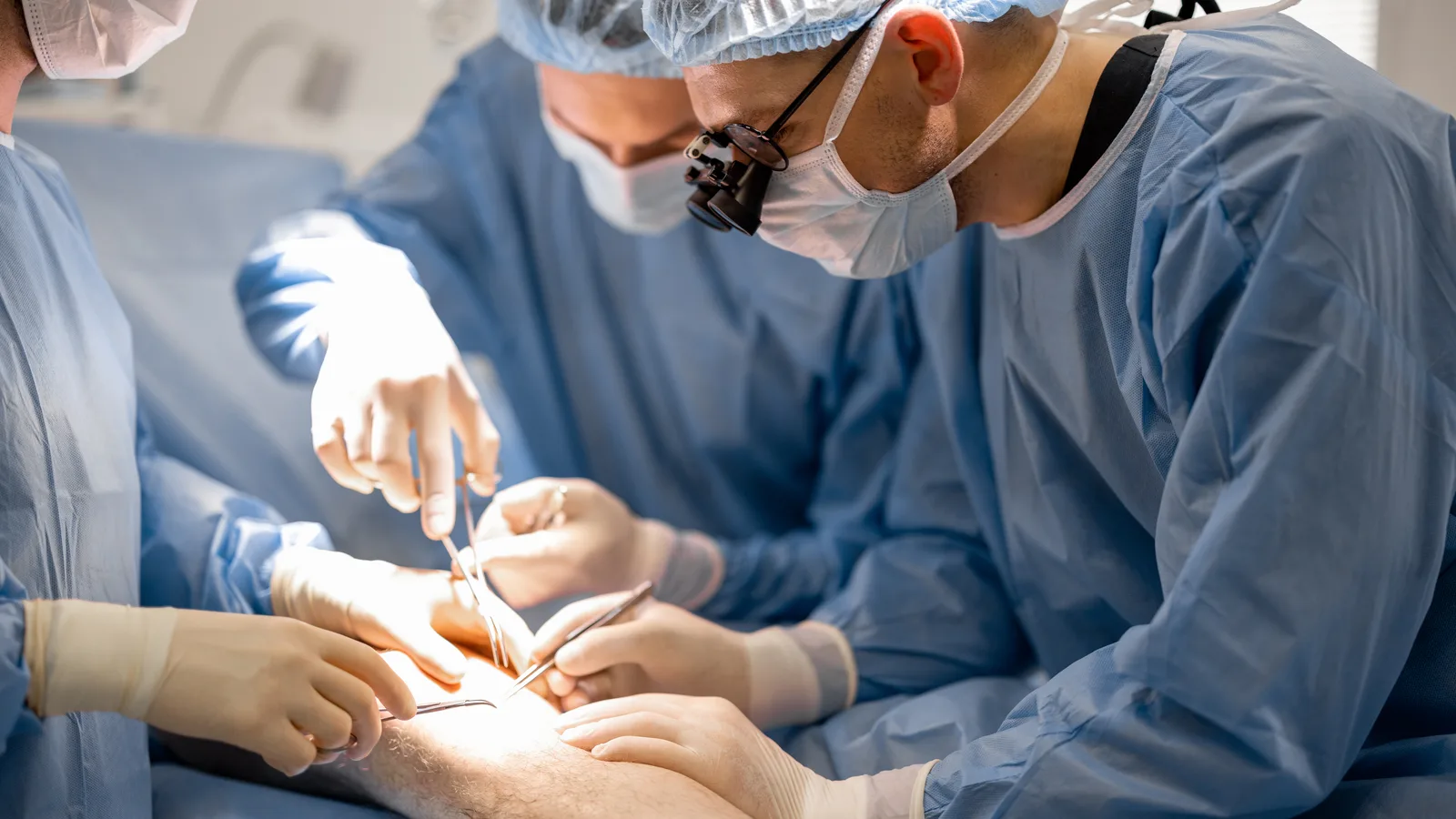
The first artificial thumb joint ever implanted on Long Island went in at the Northwell Lynbrook Surgery Center on May 22, and the hand it went into belongs to a fourth grade teacher who had spent three years struggling to turn a doorknob without pain. The device is a ball and socket small enough to sit on a fingertip, it works on the same principle as a hip replacement, and the surgeon who placed it is one of only about 100 in the country trained to do it.
Maria Vitale, 58, of Whitestone, teaches fourth grade at P.S. 12Q in Woodside. Like a lot of people who spend their days writing, painting and working with their hands, she developed arthritis in the basal joint, the spot where each thumb meets the wrist. Cortisone shots bought her little relief. Writing on her classroom smart board hurt. So did the painting and the do-it-yourself projects she loved. By this spring, both thumbs were going.
A hip replacement, shrunk to the size of a thumb
The implant she received is called the TOUCH CMC 1, made by the Swiss company KeriMedical and distributed in this country by Medartis. It is the first dual mobility thumb joint prosthesis available in the United States: a tiny artificial ball joint that replaces the worn surface at the base of the thumb while leaving the rest of the hand's architecture where it was. Surgeons in Europe have been implanting versions of it for about a decade. The Food and Drug Administration granted it premarket approval in July 2025, and the first one placed in an American patient went in that September, in Illinois.
Which makes the Long Island timeline remarkably short. Dr. Dana Cruz, a hand and upper extremity surgeon with Northwell's Orlin and Cohen Orthopedic Group, traveled to Switzerland and France in April to train on the technique with the European surgeons who developed it. A month later she was performing it in Lynbrook. Vitale's May 22 operation was the first of its kind on Long Island and only the second in New York State. Her right thumb followed on July 31.
The old surgery removes a bone. This one does not
What makes the procedure notable is not just that it is new. It is what it replaces. The standard operation for advanced basal thumb arthritis, performed for decades, removes the trapezium, the small bone at the base of the thumb, and then rebuilds a kind of sling from surrounding tendon to keep the thumb suspended. It works, but the hand gives something up: the joint is gone, and recovery is long.
The replacement approach keeps the anatomy. The damaged joint surface comes out, the ball and socket goes in, and the thumb keeps its normal mechanics, the way a hip keeps working after a hip replacement. The operation runs 30 to 60 minutes at an outpatient center, and patients go home the same day. Orlin and Cohen says the payoff is a faster return to function, and Vitale's experience tracks: she described the recovery from her first surgery as relatively easy, and she has already gone back to unlocking doors, turning doorknobs and brushing her teeth without the pain she had been managing for three years.
An extremely common problem, with a new local answer
Basal thumb arthritis is the second most common form of arthritis in the hand. By the practice's own numbers it affects roughly a quarter of men and 40 percent of women over 75, and it shows up earlier and harder in people whose thumbs work for a living: teachers, hygienists, hairdressers, carpenters, anyone who grips and pinches all day. The thumb's basal joint is the price the hand pays for being able to grab things at all, and when it wears out, the most ordinary motions, a key in a lock, a jar lid, a car door handle, become the hard part of the day.
Until this spring, a Long Islander whose thumb reached that point had two real options: keep taking injections, or have the bone removed. The third option now exists here, at an outpatient surgery center in Lynbrook, from a practice with offices across Nassau and Suffolk.
What it means if your thumbs ache
The procedure is not for everyone. It is intended for specific stages of basal joint osteoarthritis, and a hand surgeon has to weigh whether an implant or the traditional operation fits a particular hand, which is a conversation, not a foregone conclusion. Cruz remains one of a small group nationally performing it, which is exactly why the announcement matters: for now, this is not a surgery you can get in most American counties, and you can get it in Nassau.
Vitale, for her part, goes into the new school year with two rebuilt thumbs, a working grip and a summer of recovery behind her. For the considerable number of Long Islanders quietly opening jars with the sides of their palms, the useful sentence is this one: the thing that fixed her hands happened in Lynbrook, and it is here now.
Loading comments…