
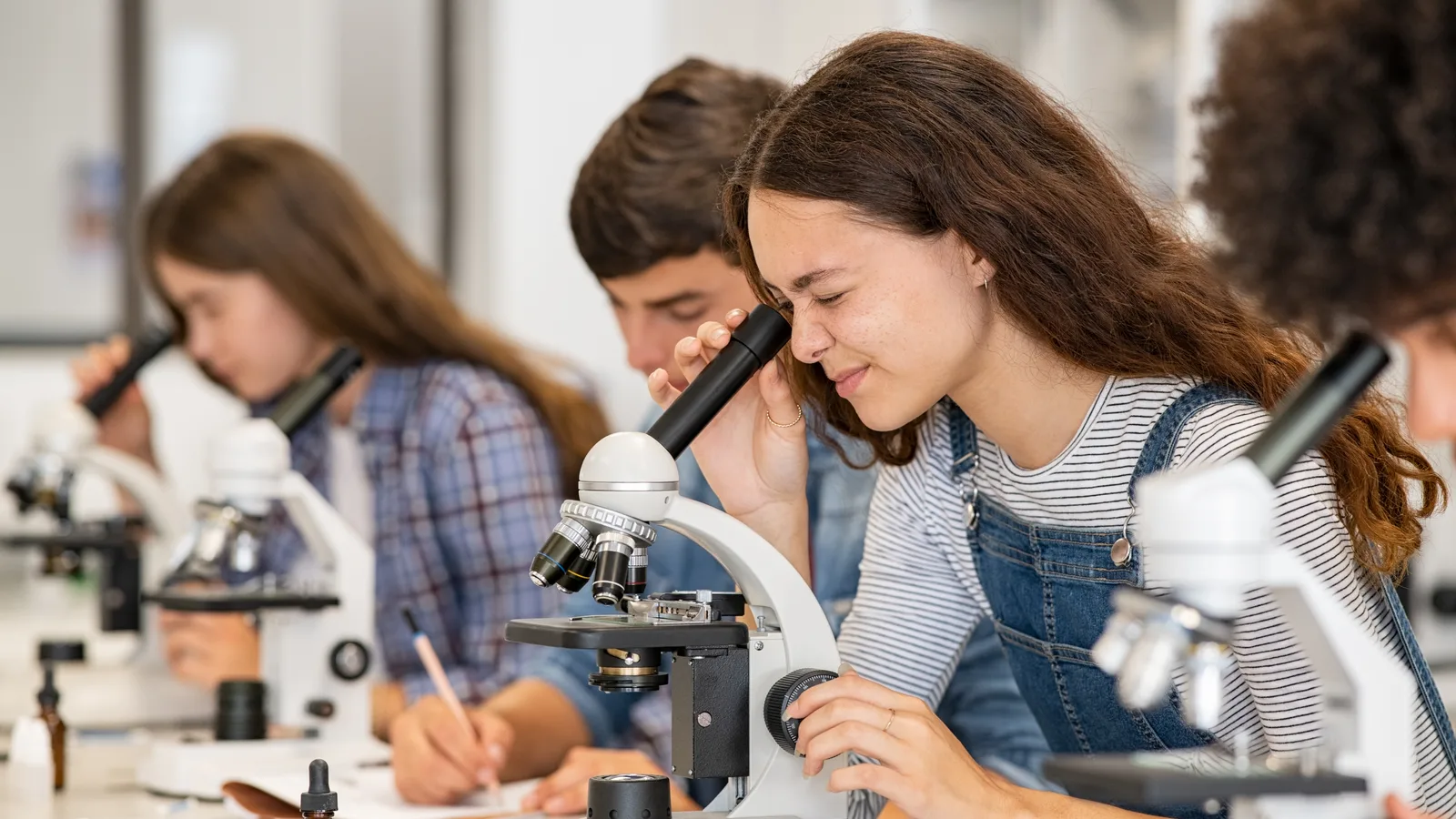
Hanna Ryan Heitefuss, an eighth grader at Long Beach Middle School, is one of 30 students in the country competing this week in the national finals of the Thermo Fisher Scientific Junior Innovators Challenge, the premier STEM research competition for middle schoolers in the United States. Finals Week runs October 23 through 28 in Washington, D.C., and the winners are announced Monday, October 27.
How steep the cut was
The competition, run by the Society for Science, started this year with 1,997 entrants, every one of them nominated off a strong showing at a Society-affiliated science fair. That field was cut to 300 on September 2 and to the final 30 on September 16. Hanna is the one carrying Long Beach, and Lido Beach, where she lives, into the last round.
Science that starts at her own beach
Her project grew directly out of where she lives. On the Society's finalist page she describes the beach as part of her routine, her community and her identity rather than a place she visits, and says the changes she has watched there, rising water and more frequent flooding, are what set the question. Her community saw what severe weather can do when Hurricane Sandy tore through the barrier island in 2012, and that history, she says, makes her want to protect coastal places beyond her own.
The question she chose: what does saltwater intrusion, salt pushing into freshwater areas near the coast, do to the living things in that water?
Mung beans and a crustacean's racing heart
Hanna mixed saltwater solutions at five concentrations, from zero to half a percent salt, and tested two very different organisms. She placed mung bean seeds in dishes across the range of concentrations and measured how long they took to germinate. Then she transferred Daphnia magna, a tiny freshwater crustacean sometimes called the water flea, into the different solutions for five minutes at a time and counted its heart rate under a microscope for 60 seconds.
The beans shrugged; germination showed no differences across the salt levels. The Daphnia did not. Higher concentrations of salt made the animals' hearts beat measurably faster, a sign their bodies were under stress. The finding points at something bigger than a petri dish: freshwater organisms may be sensitive to even modest salt creeping into the ponds and groundwater they live in, which is exactly what rising seas push into coastal freshwater on a barrier island like hers.
What her week looks like
Finals Week is not just a judging panel. The 30 finalists spend six days in Washington presenting their research and working through team STEM challenges that test collaboration alongside the science. The public gets a look on Saturday, October 24, when the finalists show their projects at the Science and Engineering Project Showcase. Winners are announced at the awards ceremony on October 27.
Hanna reached the finals by looking at her own shoreline and asking a testable question about it. Whatever the judges decide Monday, the research already says something true about the water around Long Beach.
Loading comments…