
Lindenhurst picked up two blue-and-gold New York State historic markers within days of each other this month, and together they stretch the village's recorded story from the Revolutionary War to the first Jewish burial ground on Long Island.
Both markers were funded by the William G. Pomeroy Foundation, the upstate nonprofit that underwrites the blue-and-gold roadside markers seen across New York State. The foundation awards the markers as grants to local historical organizations, which research and document each subject before a marker is approved, so each new post represents months of verified local history as much as a piece of cast metal.
A patriot of Neguntatogue
The first marker, dedicated October 17 at 20 East Montauk Highway, honors Jesse Ketcham, a Revolutionary War patriot who settled the land that became Lindenhurst when it was still known by its Native American name, Neguntatogue. The Lindenhurst Historical Society received the foundation grant for the marker.
Ketcham was born in Huntington in 1734, at a time when the town ran the full width of the island and took in what is now Babylon and Lindenhurst. He married Temperance Brush in 1761 and enlisted in 1776 in the First Regiment of the New York Militia under Captain John Wickes. Land deeds from 1789 and 1791 place his property in the Neguntatogue neck, one of eleven peninsulas along the south shore that kept names drawn from Native American languages.
In 1798, Jesse and Temperance Ketcham were among the twelve founding members of the first Presbyterian church of Islip and Huntington South, and Jesse was elected its first deacon. The congregation's Huntington South branch later became the Babylon congregation. Ketcham died in 1826 and is buried beside his wife in the Babylon Rural Cemetery. The marker's inscription records his dates, his militia service and his place among the area's earliest residents.
The oldest Jewish cemetery on Long Island
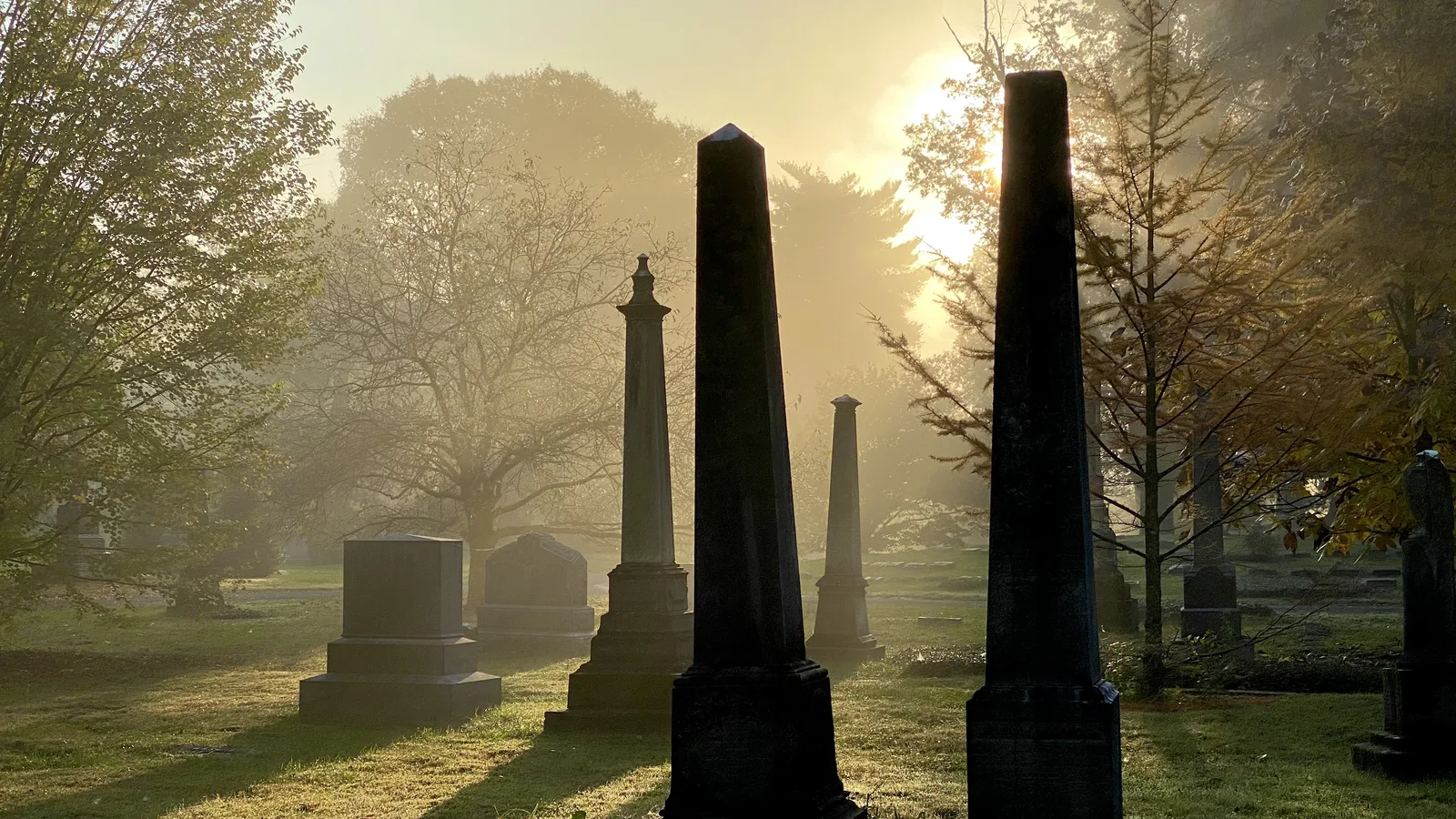
The second marker stands at 217 Sunrise Highway, at the Jewish section of Breslau Cemetery, and the history behind it reaches back before the village carried the name Lindenhurst at all. The Jewish Historical Society of Long Island received the grant for this marker and dedicated it days after the Ketcham ceremony.
Breslau Cemetery was incorporated in 1875, when the surrounding community was still called Breslau. In October 1876, the cemetery association sold a half-acre plot in its northeast corner to local Jewish community members for $135. That purchase created what is now considered the oldest surviving site of Jewish communal life on Long Island.
The grounds have passed through a chain of stewards that the marker traces: the Breslau Hebrew Cemetery Association, formally established in 1887, managed the site until 1934, when it was deeded to the Lindenhurst Hebrew Congregation. Congregation Beth El took over in 2006 following a congregational merger, and after a further merger in 2016 the cemetery passed to Congregation Beth Ohr, which owns it today.
Burials at the half-acre section date back to 1887, it holds more than 250 interments, and it remains in use. The village around it changed its own name from Breslau to Lindenhurst in 1891.
Seeing them
Both markers are on public roads and can be visited any time: the Jesse Ketcham marker at 20 East Montauk Highway, just east of Washington Avenue, and the Jewish Cemetery marker at 217 Sunrise Highway. The Pomeroy Foundation publishes the full inscription and research behind each one on its marker map.
Loading comments…