












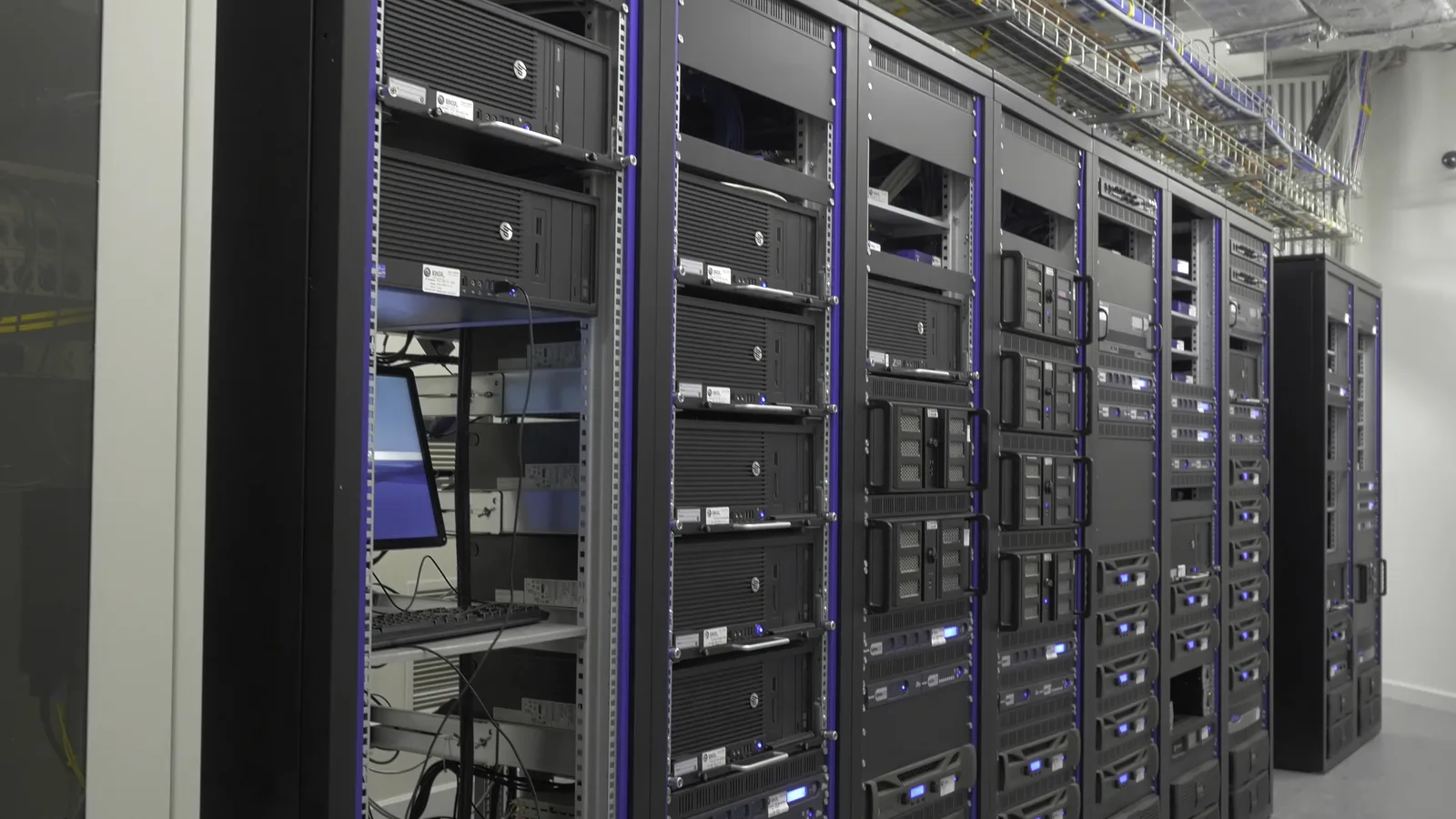
The hardware for Kitsune, a new supercomputer paid for by a $22.95 million National Science Foundation grant, has arrived at Stony Brook University. The university announced the delivery on November 25. Once it is running, the machine will be available at no cost to researchers across the United States, and the university says it will operate for at least five years.
What the machine is
Kitsune is built from 158 compute nodes, each with two AMD EPYC 9965 processors, plus two large-memory nodes. Every one of those processors carries 192 cores, part of AMD's fifth generation EPYC line. Put together, the system has about 61,000 compute cores and 125 terabytes of memory, with a peak performance of 6.7 petaflops in 64-bit arithmetic.
The university describes Kitsune as a new NSF-sponsored Tier 1 supercomputing center. It follows Ookami, an earlier NSF-sponsored system at Stony Brook, and the university says the new processors pack more cores and more computing throughput than the previous-generation server chips it had been using.
Where the name comes from
A kitsune is a fox spirit from Japanese legend, known for intelligence, magical ability and a very long life. The university notes that the fox is a close cousin of Wolfie, Stony Brook's Seawolf mascot, which keeps the new machine in the same family as Ookami, the earlier system it builds on.
Who runs it and who can use it
Kitsune is operated by the Stony Brook University Supercomputing Center and the Institute for Advanced Computational Science, working with the university's Research Computing and Innovation group. The University at Buffalo is a partner on the project. Robert Harrison, director of the institute and a professor of applied mathematics and statistics, and Alan Calder, a professor of physics and astronomy who directs the supercomputing center, are among the faculty leading it.
Access runs through NSF ACCESS, the National Science Foundation program that gives researchers advanced computing time without charge. That means a scientist at a college anywhere in the country can apply to run work on a machine sitting on the Stony Brook campus.
What it is for
The university lists large-scale simulations, autonomous AI workflows, data-intensive analysis and high-throughput scientific work as the jobs Kitsune was designed for, serving science, engineering and AI research communities. The announcement does not give a date for when the system will open to users; the hardware delivery is the step that comes first.
How to follow it
Researchers interested in time on Kitsune can watch the NSF ACCESS allocations site and the Institute for Advanced Computational Science at Stony Brook for the opening date.
Loading comments…