
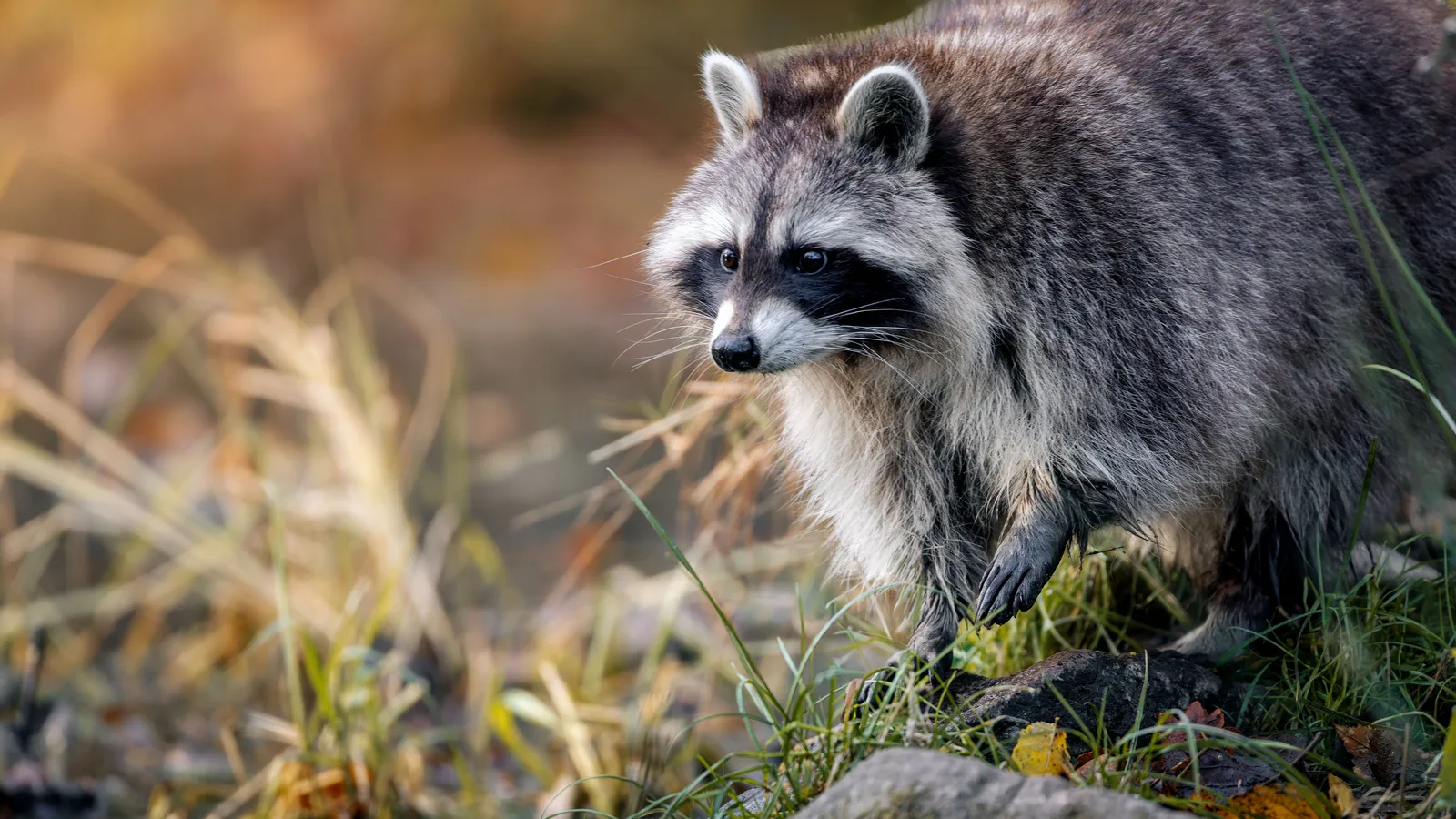
A raccoon found in Islip has tested positive for rabies, the Suffolk County Department of Health Services announced late last week. A resident spotted the animal behaving as if it were sick and reported it. Officers from the Suffolk County Police Department's Emergency Service Section responded and had the raccoon transported for testing, and the Wadsworth Center, the New York State Department of Health's laboratory in Albany, confirmed the positive result on August 6. No person and no pet was exposed.
One sick raccoon is not, by itself, news. The number attached to it is. The county counts this as the 37th terrestrial rabies confirmation in Suffolk since February 7, 2025, and that count describes a disease that had vanished from the county's land animals, with not one raccoon on the health department's published list of positives for nearly a decade before 2025, and is now working its way through the county's western towns.
Rabies did not used to be here
The county health department publishes its rabies testing results year by year, and the run of numbers tells the story better than any press release. From 2016 through 2024, virtually every positive rabies test in Suffolk County was a bat: one in 2016, six in 2017, three in 2018, zero in 2019, and so on, never more than a handful, and never a raccoon. Bats carry their own strain of the virus everywhere in New York, and a few positives a year is background noise.
Then came 2025: five bats, one feral cat, and 18 raccoons. Raccoon rabies, the strain that moves along the ground through the animals that raid your garbage cans, was back in Suffolk County. The 2026 confirmations, including this one in Islip, have pushed the total since that first February 2025 case to 37.
The positives so far have come from the western half of the county. The health department lists Babylon, Islip, Huntington and Smithtown as the four towns where the disease is established in the raccoon population. East of that line, no terrestrial case has been found.
A quarter million vaccine baits, starting next month
The county is not waiting for the virus to spread east on its own schedule. Together with the United States Department of Agriculture's national rabies management program, the health department runs an oral rabies vaccination campaign that works on a simple trick: get a raccoon to eat its own vaccine.
The bait is a small plastic sachet of vaccine coated in fishmeal, a smell raccoons will cross a yard for. When the animal bites the packet, the vaccine coats its mouth, its immune system builds antibodies, and that raccoon becomes a dead end for the virus. Vaccinate enough of them and the vaccinated animals form a living barrier that the disease cannot cross.
This spring, county staff hand tossed about 9,500 baits along the southern edge of the Long Island Expressway and the western side of the Sagtikos Parkway, drawing a vaccinated line through the middle of the outbreak zone. The much bigger operation begins the first week of September, when the county plans to distribute up to 250,000 baits across all four western towns, including inside the incorporated villages, over three to four weeks. Crews in marked county vehicles toss the sachets into sumps, storm drains, woods and hedges on weekdays between 9 a.m. and 4 p.m. If you live in Babylon, Islip, Huntington or Smithtown, expect to see them, and leave the baits where they land.
What to do, and what not to do
The instructions the county repeats with every confirmation are the ones that keep a wildlife problem from becoming a human one. Do not touch, feed, approach or transport wild animals, or stray dogs and cats. Keep pets indoors at night and do not let them roam. Make sure dogs, cats and ferrets are current on rabies vaccination, which state and county law requires, because a vaccinated pet is the wall between a rabid raccoon and your household. Clear away birdseed and open garbage, cap chimneys, and board up openings to attics and crawl spaces.
If you see a raccoon that looks sick or is acting strangely in the four western towns, do not handle it. Call the Suffolk County Police non emergency line at 631-852-2677 or the State Department of Environmental Conservation at 631-444-0250. A dead raccoon in those towns should be reported to the county's Bureau of Public Health Protection at 631-852-5999. And any bite or physical contact between a person and a wild animal, anywhere in the county, should be reported to the health department at 631-854-0333 on weekdays, or 631-852-4820 after hours.
The line on the map is the story
Rabies in a raccoon is almost always fatal to the animal and, untreated, to any mammal it infects, which is why the county treats every single confirmation as a public event. But the real contest is geographic. The virus is established west of the Sagtikos and absent east of it, and the county's plan amounts to holding that line with a quarter million fishmeal packets until the outbreak burns out behind it. For readers in the four western towns, the practical takeaways are a vaccinated pet, a called in report instead of a cornered animal, and no surprise when a county truck spends September seeding your neighborhood's storm drains with vaccine.
Loading comments…