
Somewhere past the horizon line at Robert Moses, out where the charter boats disappear on summer mornings, the floor of the Atlantic simply falls away. About 100 miles southeast of the harbor, the flat, sandy shelf that Long Island sits on cracks open into a chasm that runs another 350 miles out to sea, plunges to depths of two to two and a half miles, and stretches up to seven and a half miles across.
It is called Hudson Canyon. It is the largest submarine canyon on the entire Atlantic coast of the United States and one of the largest on Earth, and this week a thread on a Long Island forum filled up with locals discovering, in real time, that it has been out there all along.
They can be forgiven. The ocean is very good at keeping a flat face over almost anything. But the numbers deserve a minute, because the Grand Canyon in Arizona, the one people fly across the country to stand next to, runs about 277 miles long and about a mile deep. The canyon in Long Island's watery backyard is longer than that, and the water above its deepest reaches goes down more than twice as far.
It is the Hudson River's lost valley
The part that tends to stop people is not the size. It is the origin. Hudson Canyon lines up with the mouth of New York Harbor because it is, in a real sense, the continuation of the Hudson River.
During the last ice age, when a mile-high sheet of ice sat over New England and sea levels ran hundreds of feet lower, the coastline was out near the edge of the continental shelf. The land Long Island beachgoers now swim over was dry coastal plain, and the Hudson flowed across it, all the way out, before dropping over the shelf edge. Federal seafloor surveys still trace the vestige of that drowned riverbed, a channel called the Hudson Shelf Valley, running across the ocean floor from the harbor toward the canyon's head.
The same glacial era wrote the rest of the local map. The ridge of rubble the ice sheet bulldozed and left behind is Long Island itself. The Island and the canyon are siblings, built by the same ice, and one of them just happens to be underwater.
What lives down there
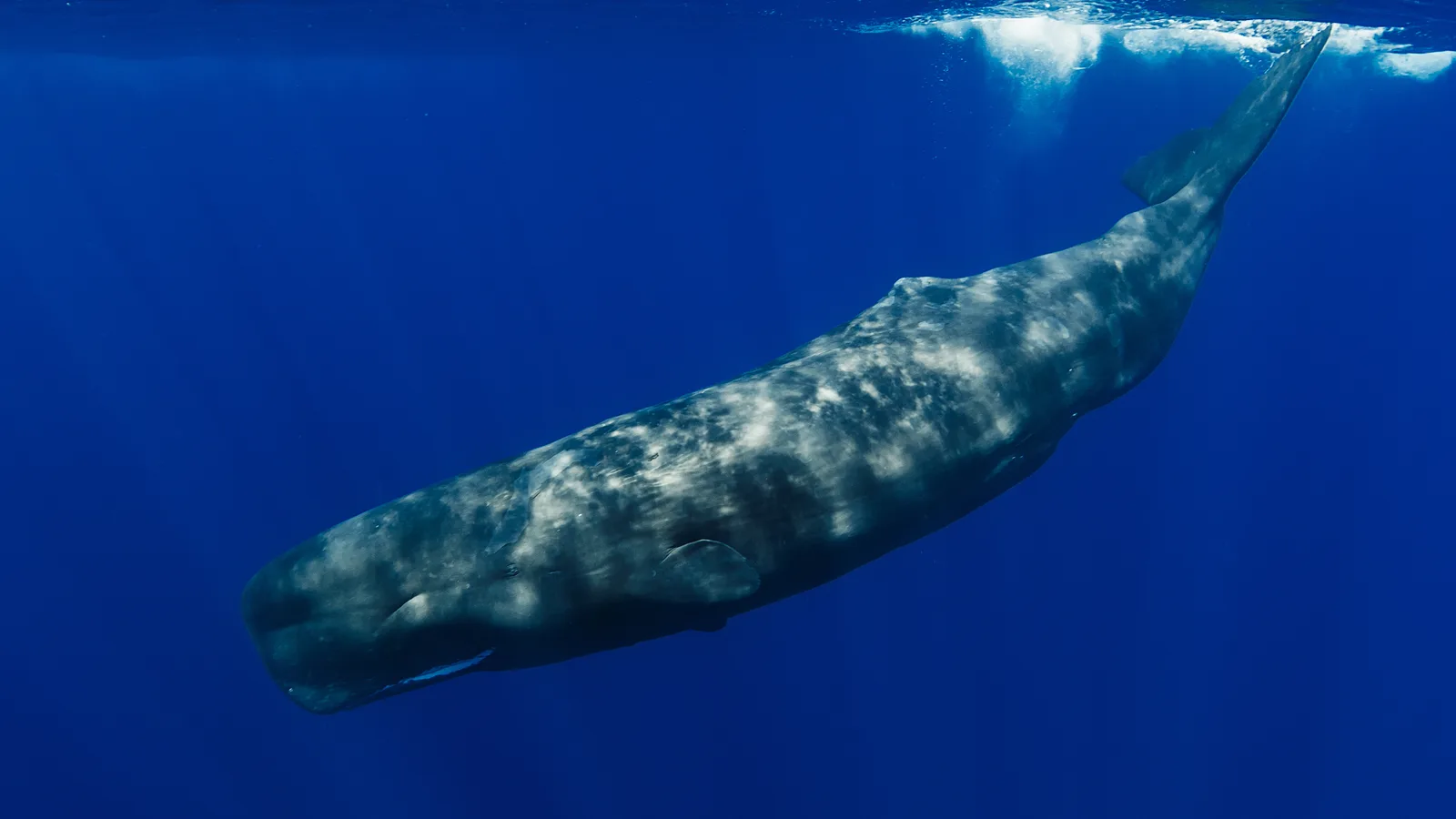
Federal scientists describe Hudson Canyon as an ecological hotspot, and the roster reads like another planet's. Sperm whales hunt in its depths. Sea turtles ride its currents. Its steep walls hold gardens of deep-sea corals that grow in total darkness, and surveys have photographed deepwater octopus drifting over its slopes. The canyon's mix of steep rock, soft sediment and upwelling nutrients concentrates life in a way the flat shelf around it cannot.
Long Island's offshore fleet has understood this for generations. The boats that leave Montauk, Captree and Freeport chasing tuna and tilefish in deep water are, in many cases, running to this canyon and its neighbors. What the deckhands call the edge, scientists call one of the richest stretches of seafloor in the western Atlantic. The waters around it hold human history too: shipwrecks dating to the mid-1800s rest in the area, and the region's Indigenous communities drew on these waters for more than 10,000 years before any of the current beach towns existed.
The push to make it a national marine sanctuary
Washington noticed before Reddit did. In June 2022, the National Oceanic and Atmospheric Administration began the formal process of designating Hudson Canyon a national marine sanctuary, the ocean equivalent of a national park. The public comment window that summer drew more than 17,000 responses, and the agency has been shaping the proposed boundaries and management plan since, with another round of public review to come before any final decision.
If it happens, the canyon would join a system of 18 underwater parks covering more than 629,000 square miles of American waters, and the New York region would gain its first. Sanctuary status is built to protect the corals, the whales and the wrecks while keeping the area open to the fishing and whale watching that already depend on it.
The takeaway for the beach chair
None of this changes a Saturday at Jones Beach, except in the way that knowing a thing changes it. The next time the ocean looks like a blank sheet of gray-green nothing, consider what the view actually contains: the drowned valley of the Hudson River running out under the swells, sperm whales working a canyon that out-measures Arizona's, and a landscape grander than almost anything on the continent, hiding behind the only thing on Long Island with no interest in showing off.
Loading comments…