
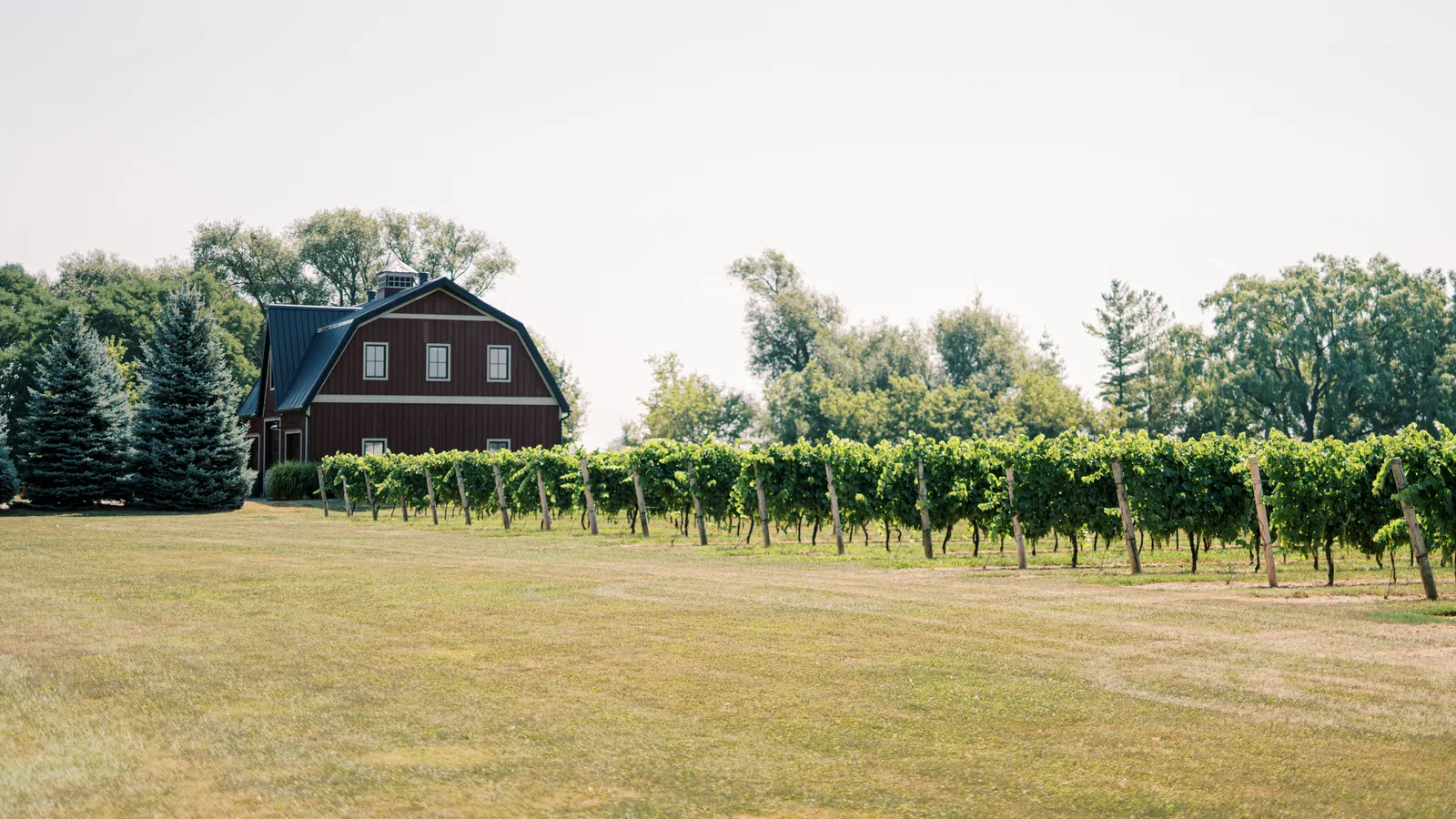
At the end of a half-mile driveway off Alvahs Lane in Cutchogue, behind rows of vines that predate every tasting room on the North Fork, sits the farm where Long Island wine began. For most of the last decade it has been the quietest corner of wine country. That is about to change: the 66-acre estate has been restored top to bottom, it is booking weddings under a centuries-old barn, and state records show a winery is now in the works at the address, one that would make its wine from New York grown grapes.
The potato farm that started everything
In 1973, Alex and Louisa Hargrave bought a rundown 66-acre potato farm on Alvahs Lane for about $230,000 and did something nobody on Long Island had done. They planted European wine grapes, the classic vinifera varieties, in Cutchogue dirt that had grown potatoes for generations. Locals thought the young couple had lost their minds. Instead they proved the North Fork could grow serious wine, and Hargrave Vineyard became Long Island's first commercial vineyard.
Every winery on the Island today, all the tasting rooms from Jamesport to the Hamptons, descends from that one bet. Louisa Hargrave later told the whole story in her memoir The Vineyard, set on this farm, with its 1600s-era farmhouse, its hand-hewn barns, and a hidden room beneath one of them where, the story goes, bottles sat out Prohibition undisturbed.
From Hargrave to Borghese to a long quiet
The Hargraves sold in 1999 to Marco and Ann Marie Borghese, who renamed the operation Castello di Borghese. Their son Giovanni took over in 2014 and still runs the winery and tasting room at the north end of the property, up by Route 48, where the oldest vineyard on Long Island marked its 50th harvest.
The southern 66 acres, the piece with the original farmhouse, the old barns and roughly 11 acres of vines in Pinot Noir, Merlot, Cabernet Franc, Sauvignon Blanc and Semillon, went up for sale in 2021 and changed hands in June 2022. The winery kept pouring up the road. The birthplace itself went quiet while its new owners got to work.
A restoration measured in centuries
What emerged in 2025 is called The Hidden JEM, a private event estate built around the farm's oldest bones. John Mazur and Brooke Cantone of the design studio LUMBER+Salt reimagined the English barn, a structure whose frame has stood on the property for well over two centuries, into an event space with a cocktail bar, reclaimed wood tables and a sound system tucked among the beams. The farmhouse next door, whose earliest section dates to about 1680, now sleeps a wedding party across six bedrooms.
Chef Lauren Lombardi handles the food, farm-to-table dinners served steps from the vines, and the estate is booking weekends through 2026 and 2027. The driveway alone is a half mile of vineyard on both sides, which is the kind of entrance no catering hall on Long Island can fake.
Wine is coming back to the source
The piece that was missing was the wine itself. The vines never left, but since the 2022 split the southern farm has been scenery rather than a producer. State records now show a winery taking shape at the address, the kind that makes its wine from New York grown fruit, which points at those 11 acres finally flowing back into bottles poured where they were grown.
For wine drinkers, that is the headline. The North Fork has dozens of producers now, but only one farm can claim the first vines, and until now you could not taste anything on it. A working winery at the original Hargrave farm would close a loop that has been open since the Borghese era ended on that side of the land.
What it means for your next North Fork run
Nothing to visit yet: the estate remains private event grounds while the wine plans take shape, so this is one to watch rather than a stop to add this weekend. Castello di Borghese still pours at the Route 48 corner, and a tasting there remains the closest you can get to the 1973 plantings today.
But keep the name in mind. Fifty-three years after a couple of optimists put French vines in potato ground, the exact spot where Long Island wine was born is lining up to make wine again. On an Island that loves a comeback, this is the oldest one there is.
Loading comments…